John of Matha
1160, present-day France – 1213, present-day Italy
“The hope of all who suffer, the dread of all who wrong.”
(excerpt from the poem entitled ‘The Mantle of John of Matha’)
John of Matha was a great figure of Christianity and the founder of the Order of the Most Holy Trinity, initially devoted to the redemption of prisoners. The operation of the Order was one of the key achievements of its time, and it aimed to achieve the highest levels of giving. According to multiple sources, they managed to free close to a million Christian slaves, even though the redemption of a single person could cost as much as five thousand pounds at the current rates. Yet what is even more telling is the sacrifice that the Trinitarian monks brought when they were unable to raise the necessary funds – they forsake their own freedom in exchange for others, thus redeeming their unknown enslaved fellow human beings, and patiently endured all the agonies of slavery, often to the point of death. Some sources speak of the sacrificial deaths of more than seven thousand Trinitarian monks. The work of the Order was both an important message and a call to the world to set in motion a chain of selfless actions for the benefit of others: had this endeavour been more widespread, it would certainly have brought a greater stability to our troubled world.
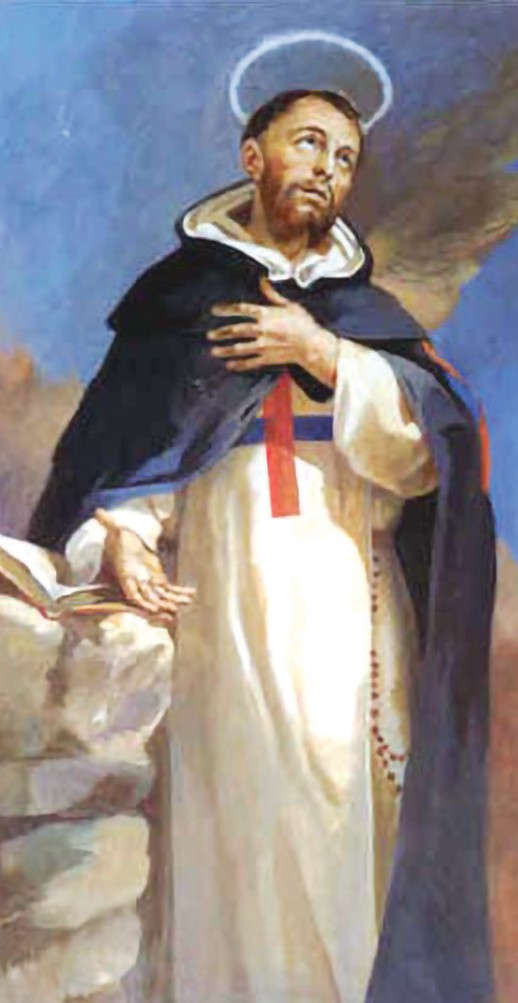
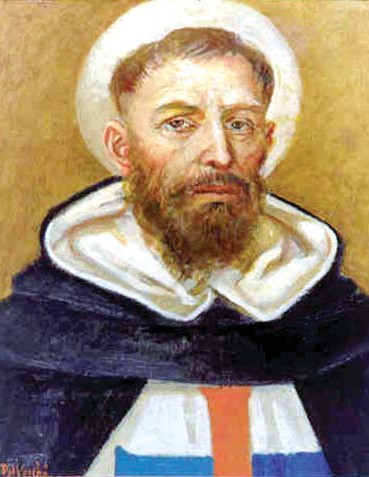
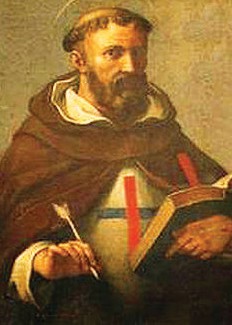
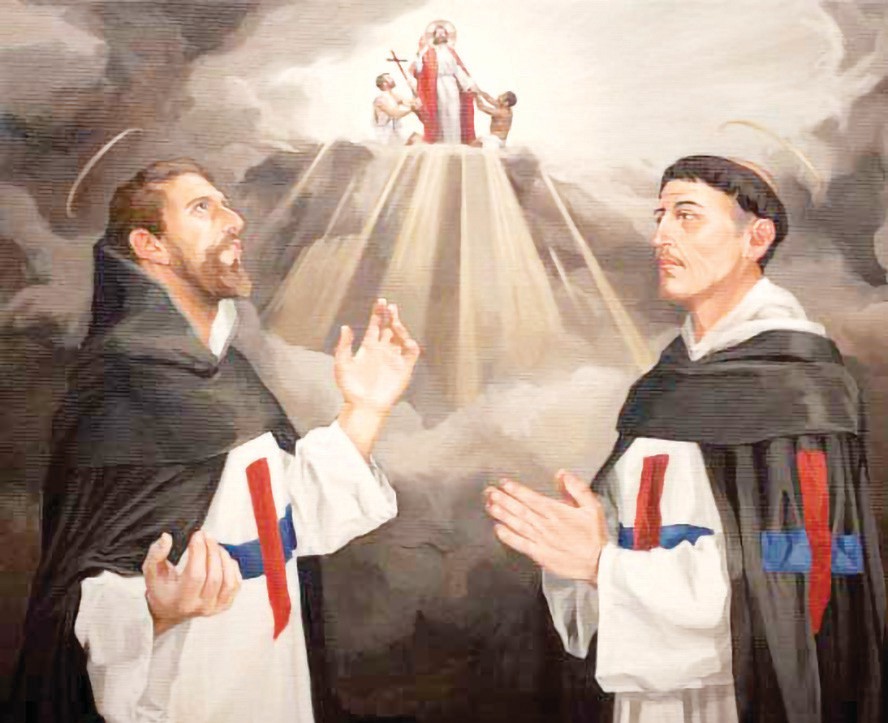
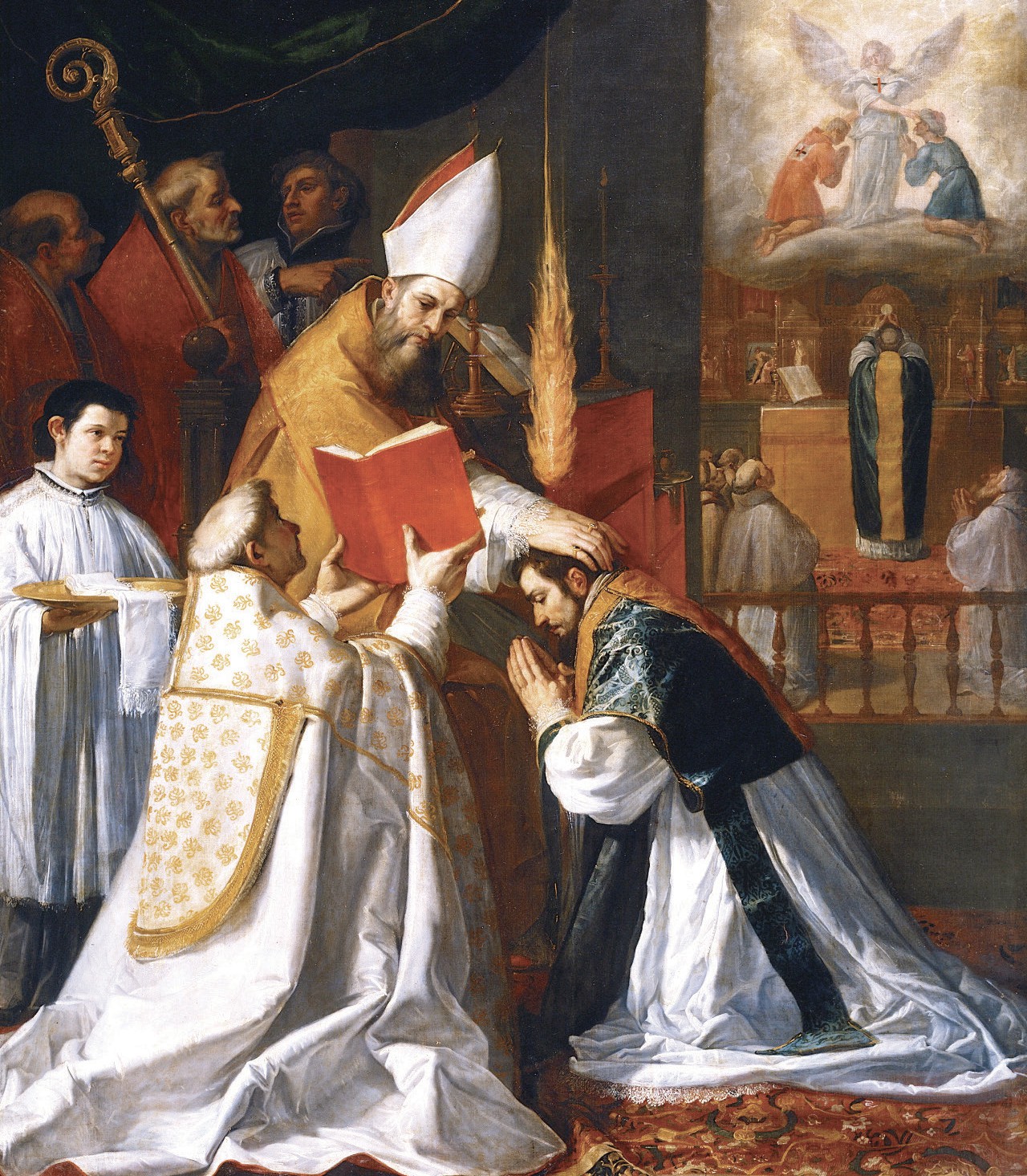
John of Matha was born in Faucon, Provence, in the area of the present-day France on 23 June 1160. It is believed that prior to his birth, his mother offered him to the Queen of Heaven. From a very young age, the young man displayed two particular virtues: the love of prayer and compassion for the poor. At his father’s request, he studied in Paris, obtained a doctorate and fulfilled his great desire: he was ordained a priest. His first mass proved to be a pivotal moment in his life, during which he had a remarkable vision: he saw an angel dressed in white robes, bearing a red and blue cross, raising his sword protectively over the captives. At the same time, Christ appeared to him and entrusted a lighter and a darker skinned prisoner to his care. Uncertain of how to interpret the vision, he turned to a holy hermit, Felix of Valois for instructions. According to the sources, the two of them – John and Felix – greatly resembled one another, both physically and mentally. Pope Innocent III – who was supposedly John’s childhood friend – named the order himself, dubbing it the Order of the Most Holy Trinity and even decided on their clothing: a white habit with a cross on the chest with a red vertical shaft and a blue horizontal shaft. (White symbolized the Father, while Blue symbolized the agonizing Saviour and Red captured the fiery love of the Holy Spirit for the monks and contemporaries at the time.)
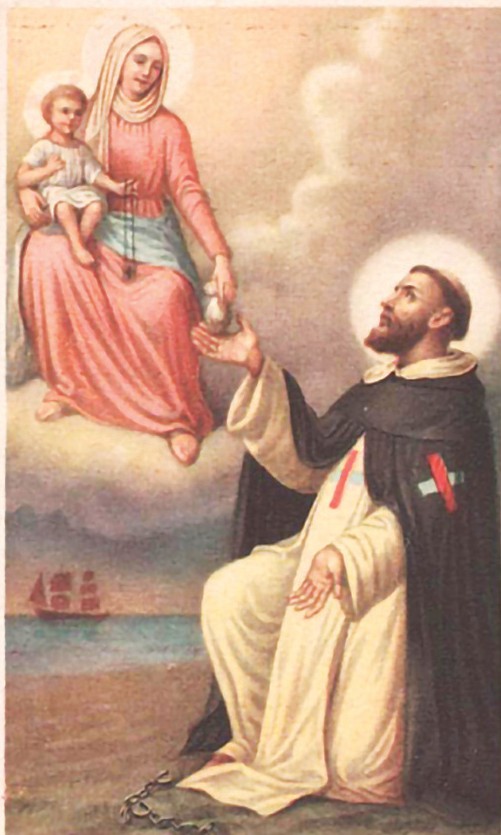
The order was hugely popular in the Middle Ages, which led to the establishment of more than eight hundred monasteries in a short time. Hospitals were set up to care for the freed prisoners, and shelters were established for the crippled. The order also worked to free and even convert dark-skinned slaves. The Trinitarian monks were known for their fine diplomatic skills and strict ascetic way of life. The Pope wished John to be his cardinal, yet he continuously refused the offer. Instead he went to Tunis to free slaves, where he suffered severe abuse at the hands of non-believers. He later went to rescue Christian slaves held by the Moors, and returned to Tunis, where he miraculously managed to free another hundred and twenty slaves – while his own ship was almost completely destroyed by the Muslims. He organised all the minute tasks of the Order: the redemption of prisoners and its many complications were mainly his responsibility, while the training of new members was the main task of his spiritual companion and good friend, Felix Valois.
The final period of John’s life was marked by the conversion of the most unrepentant sinners. He travelled to Rome, where it is said that he could convert anyone he met, even the greatest evildoers. Despite their great success, John and his disciples shunned all forms of wealth: their convents were deliberately characterised by the most austere, harshest conditions possible, and they lived poor, ascetic lives. It is said that they only rested for a few hours a day. They rose at three in the morning and spent their free time with prayer, contemplation, manual labour, and study. From their various holy sites, their monastery close to Paris, in Cerfroid, is particularly noteworthy. The two founders of the order died at a very young age, due to their intensive lives. Felix Valois died in 1212, while John of Matha passed away on 17 December 1213. There are still many Trinitarian sisters in the world today, alongside the secular Third Order Trinitarians.
“Father, only by your power can we ascend to you. Help us, the useless, to pay our just dues.
Jesus, only by the power of your weakness can we ask for your kingdom to come.
Help us, the heedless, to break free from the chains of our self-destruction.
Holy Spirit, only in your presence can we find true unity.
Help us, the restless, to overcome our spiritual divisions.
Father, Son and Holy Spirit, the ancient curse of fallen man,
…which was shed upon us in the blood of Adam, Behold, the holy blood of Christ has broken forever.”
The redemption of captives originates from the words of Jesus in the Bible and the sixth corporal work of mercy: “For I was hungry and you gave me something to eat, I was thirsty and you gave me something to drink, I was a stranger and you invited me in, I needed clothes and you clothed me, I was sick and you looked after me, I was in prison and you came to visit me.” (Mt. 25:35–36.)