
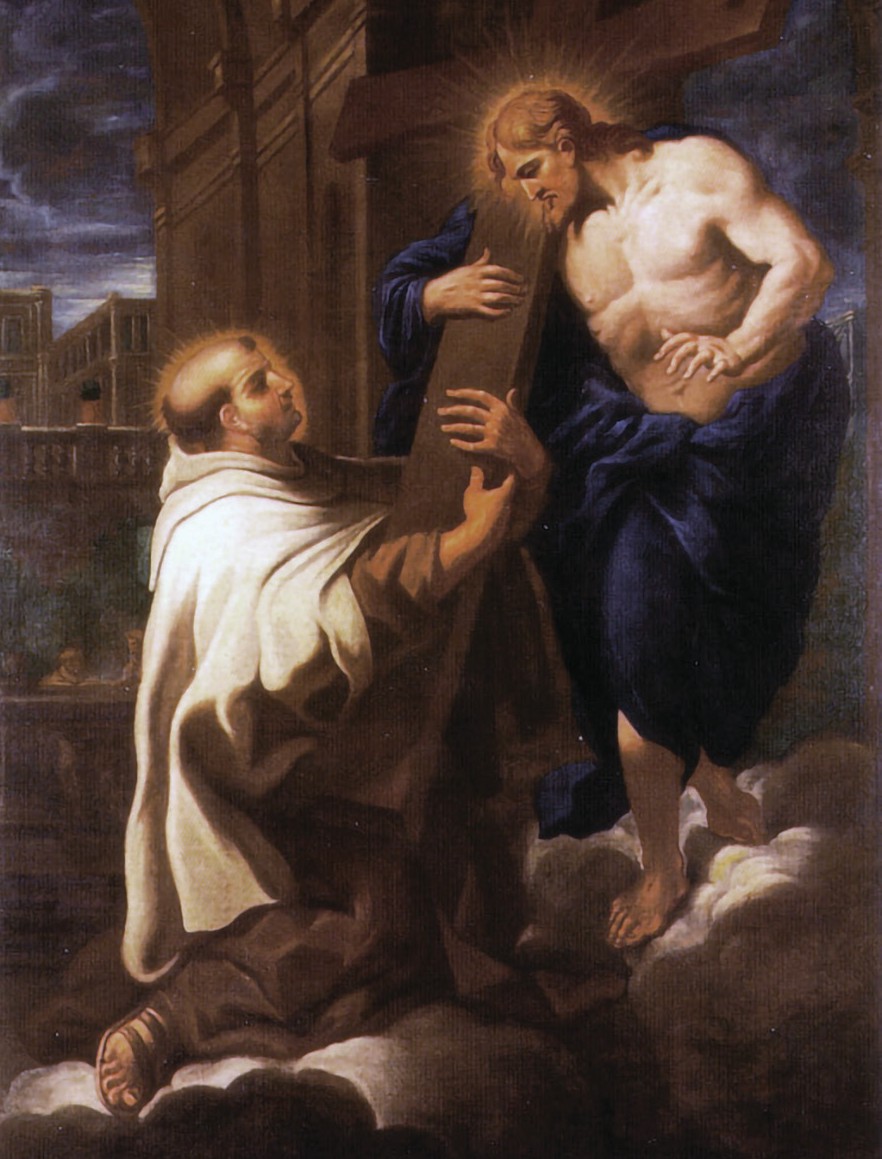
John of the Cross
1542–1591, present-day Spain
John of the Cross, one of the most significant Christian saints of the Middle Ages, was born Juan de Yepes y Álvarez on 24 June 1542 in Fontiveros, Castille. Few people realise that he was one of the most important masters of his time who, through his brilliant life, achieved things that had a profound impact on the development of the whole world and the evolution of spirituality. He is often confused with John the Baptist due to their similar names. Naturally, many venerate John of the Cross, yet the “treasures” he accumulated are truly respected within the Carmelite order, which he was a member of. The order sought to observe and uphold the strict lifestyle of the prophet Elijah and the hermits who lived a holy life on Mount Carmel in the Holy Land.
Many know John of the Cross as a great poet whose divine poems (which, unfortunately, many misunderstand and consider poems of love) inspired countless Catholic mystical poets. Others revere him as a great philologist and theologian who wrote lengthy commentaries to his religious poems. Yet still, most probably the most important element of his vast body of work was the programme he developed to lead monks through the stages of their spiritual journey from darkness to light. This is what he refers to passing through the dark night of the soul, from the initial tentative steps until the final stage of the unification with God. His observations and investigations are great assets that come as a great assistance even for modern man.
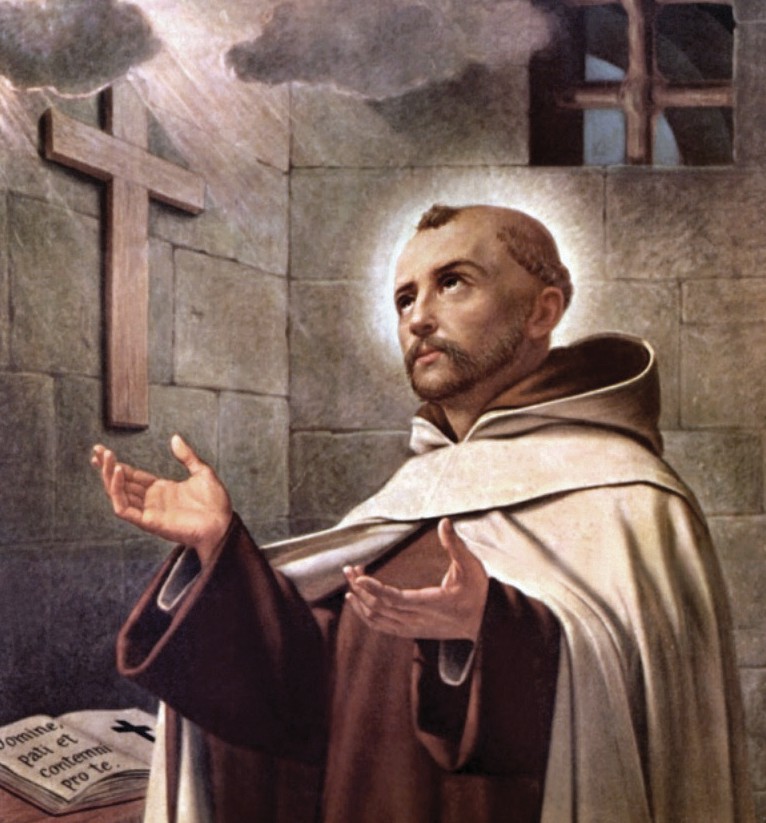
His father died shortly after his birth and John grew up in extreme poverty. He was a mild mannered, pure child, characterised by the virtues of chastity and humility. His life was full of wonderful events – once, for example, he nearly drowned in a lagoon, but was rescued by a beautiful and mysterious woman. At the age of twelve, he was already working at a hospital and spending his nights studying, as his ambition was to become a monk. He joined the Carmelite order at the age of twenty-one. Still, one of the most pivotal events in his life was his encounter with Teresa of Avila in Medina del Campo in 1576. They jointly initiated a series of reforms that helped monks who had strayed from the teachings to find their way back to the imitation of Christ. Their movement, the Discalced Carmelites, was one of the most important reform efforts of the Catholic Church, which was formally recognised in 1580. The Discalced sought to implement an uncompromised way of life that followed the example of Christ.
John moved into the first monastery of the Discalced Carmelites and set an example to his brethren. An enormous spiritual presence was evident behind the miserable circumstances, which the Christian faithful believed to be none other than Jesus Christ, who shone the light of his blessing through the lives of his followers. The records indicate that the visitors to the monastery were moved to tears of devotion by this power. Unceasing efforts and a pure lifestyle were at the heart of the Discalced. The reforms were considered too extreme by the Church – John was arrested by the members of the Carmelite Order on the orders of Pope Gregory XII and he was imprisoned in Toledo. He was repeatedly flogged, questioned and tortured, yet could not be broken. Finally, he was miraculously released from prison.
Throughout his life, he endured countless physical and spiritual temptations. It is said that he often woke up with the marks of beatings from the devil on his body. He wrote his most beautiful poems in the midst of his greatest suffering. His two main works of interrelated content – the Ascent of Mount Carmel and The Dark Night of the Soul – are pillars of Christian literature. According to contemporary accounts, John emanated divine purity and all things were elevated in his presence. A pleasant fragrance was often felt exuding from his body. He foretold the time of his death and finally ended his deprived life devoted to the salvation of others on 14 December 1591. Upon his death, a radiant globe of light appeared around him and the scent of roses emanated from John’s wounds. His body did not decompose, and the stigmata of Christ appeared on the body, while miraculous healings took place at his tomb.
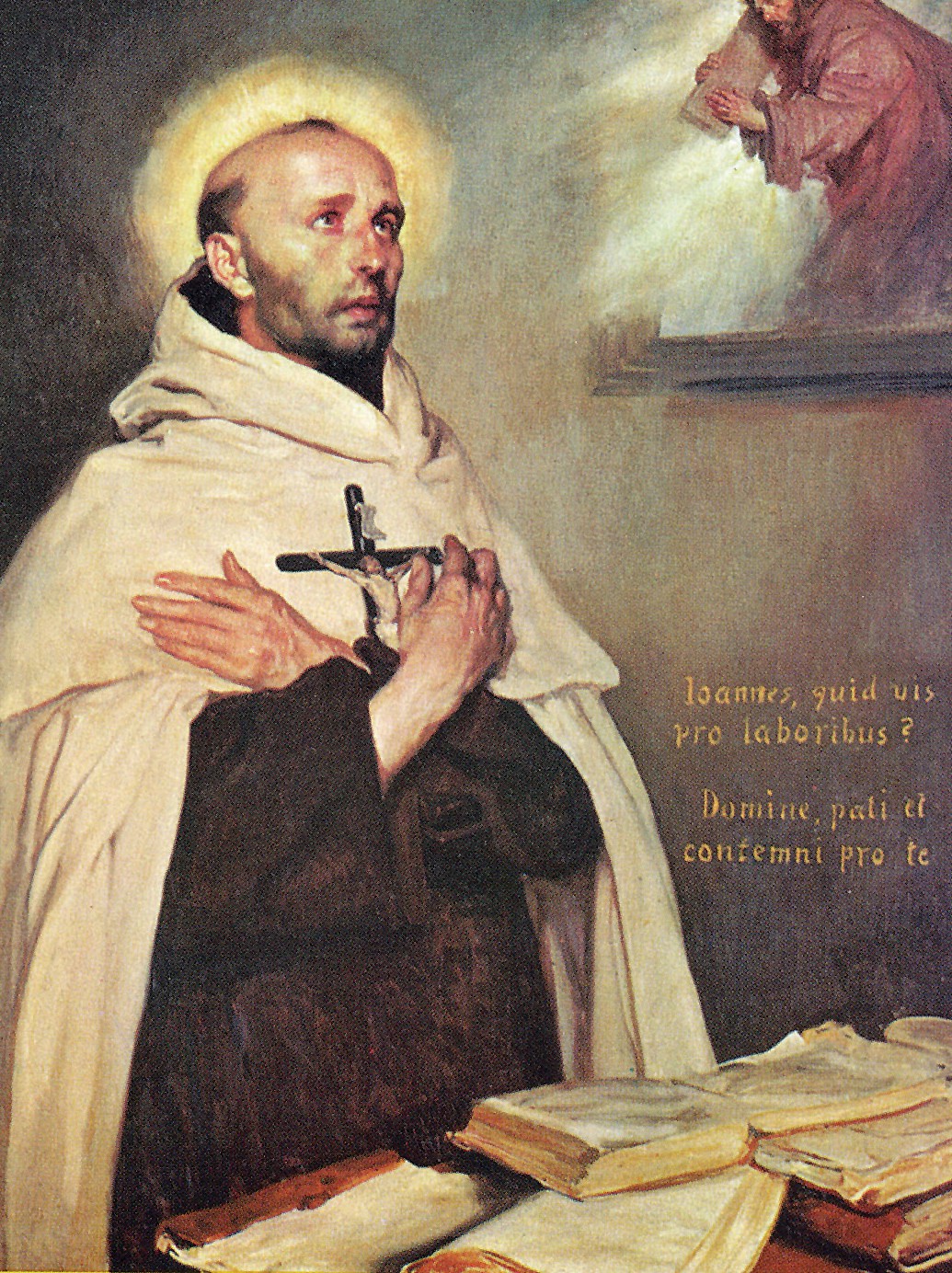
“This dark night is an inflowing of God into the soul, which purges it from its ignorances and imperfections. (…) Herein God secretly teaches the soul and instructs it in perfection of love.”
“If one truly seeks God, they must abandon all for God’s sake.”
“A person makes progress only by imitating Christ, who is the Way, the Truth, and the Life. No one goes to the Father but through him, as he states himself in St. John. A serious believer is not afraid to follow Christ and does not want to live a life of sweet comfort.”
“Remember always that you came here for no other reason than to be a saint; thus let nothing reign in your soul that does not lead you to sanctity. (…) Be like a statue, carved by one, painted by another, gilded by a third.”
“In a dark night,
With anxious love inflamed, O, happy lot
Forth unobserved I went, My house being now at rest; In darkness and in safety,
By the secret ladder, disguised, O, happy lot!”



