
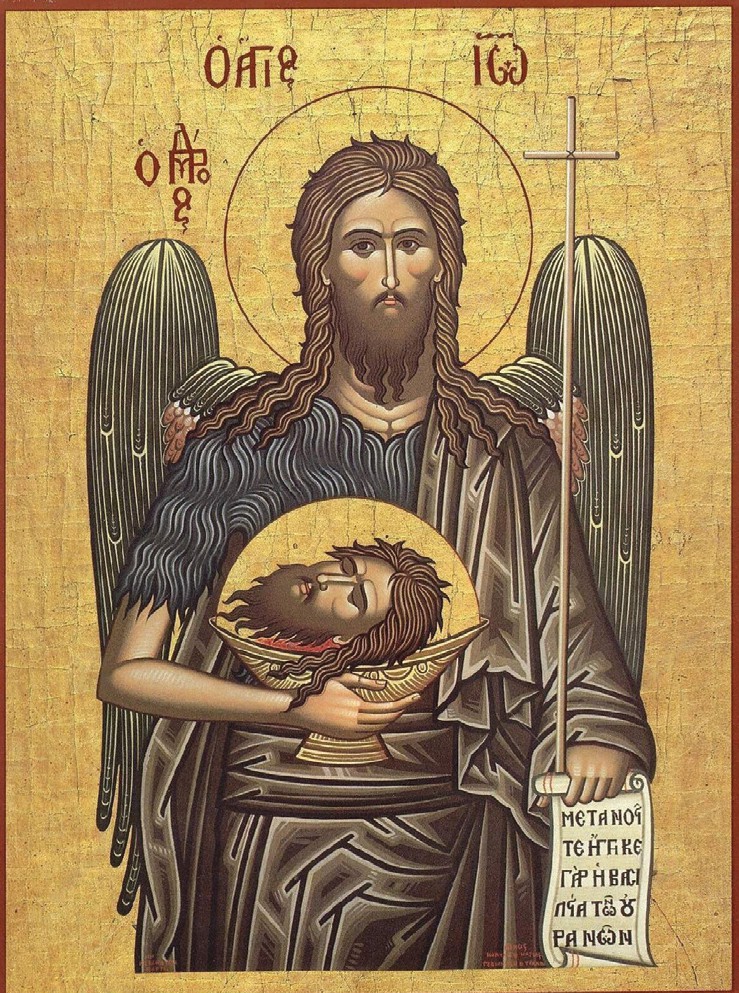
John The Baptist
1 BCE–29 CE, present-day Israel
John the Baptist, the great Jewish prophet who prepared the way for Jesus Christ and who is considered by many to be the last prophet, was born in Ein Karem in Judea in 1 BCE. According to Christian faith, the most important event in Earth’s history, the incarnation of God in Jesus Christ, actually took place. Many religious scholars believe that countless great figures were involved in the preparation of this extraordinary event. One of these prominent figures is John the Baptist, a child of the Jewish people, whose birth and life are recorded in both the Quran and the Bible. His coming and mission, just as that of Jesus Christ, were foretold hundreds of years before his birth.
He came from a priestly family. His parents, Zechariah and Elizabeth, members of the priestly order of Abijah, lived unblemished lives. The news of John’s birth, just as that of Jesus, was announced to his aged, childless parents by the archangel Gabriel. Zechariah received the angel’s prophecy in disbelief and could not speak until the birth of his child. The archangel Gabriel also reported the birth of the prophet to Jesus’ mother, Mary, who lived many miles away. Mary went to see Elizabeth, to whom she was related. The first meeting between John and Jesus thus took place in Zechariah’s house, in the womb of Elizabeth and Mary. The angel’s words of welcome not only announced the birth of John, but also revealed that it would be his task to prepare the Jewish people for the arrival of the Messiah. The very meaning of his name heralds the coming of a new age: “God is gracious.”
According to religious scholars, John was raised in a strict Jewish community of pure morality, secluded from the world – the Essene order. He later ventured forth into the wilderness and, like his prophetic predecessors, he led an ascetic life, eating locusts, wild honey and wearing clothes of camel’s hair. Due to his lifestyle and character, many of his contemporaries regarded him as the reincarnation of Elijah. He had many followers, some of whom later became disciples of Jesus. Through his sermons and baptism, he helped people recognise their errors and sins, and prepared the way for the Messiah through the repentance of hearts.
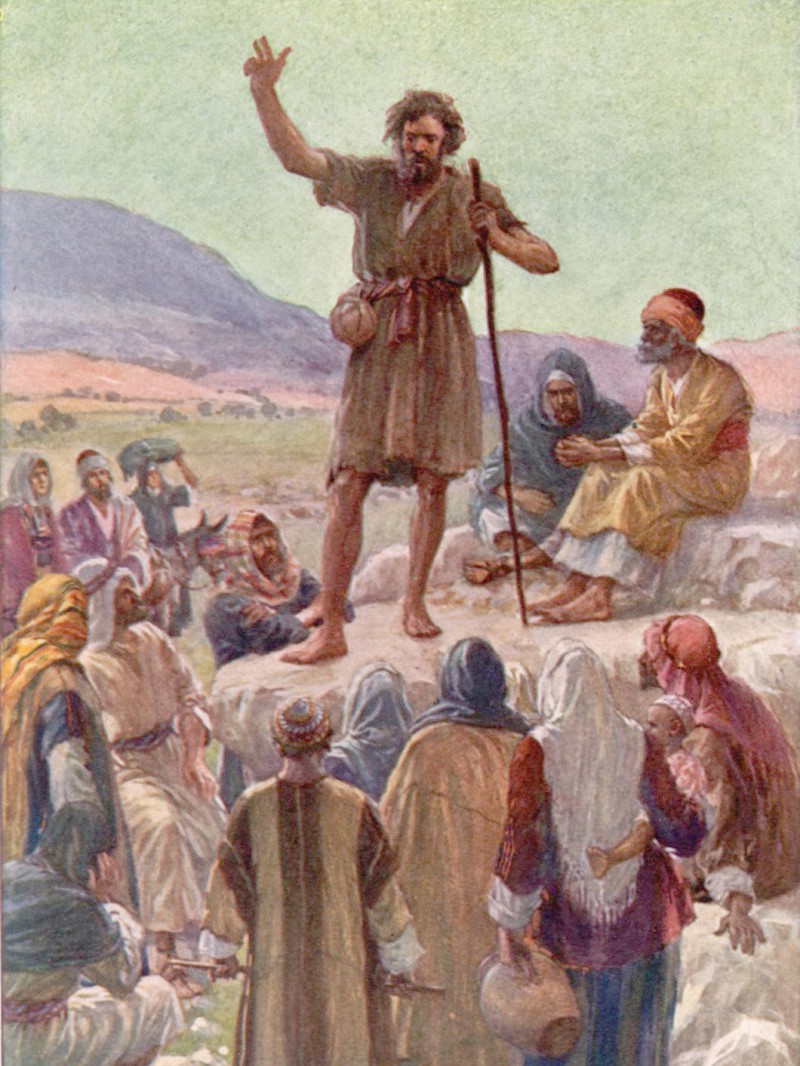
Standing in the waters of the Jordan River in a fur coat with a leather belt around his waist, John was a vehement man, preaching in a glowing voice: “Repent! For the kingdom of God is near!” This was his most important message, which he often proclaimed with great pathos. His enthusiasm spread to others and set off a veritable fever of repentance. John baptised with water, immersing the disciples in the river. This was always preceded by a rite of purification, and those who took part in the ritual were born anew. According to some religious scholars, John’s baptism by water brought a kind of initiation experience to those who experienced it.
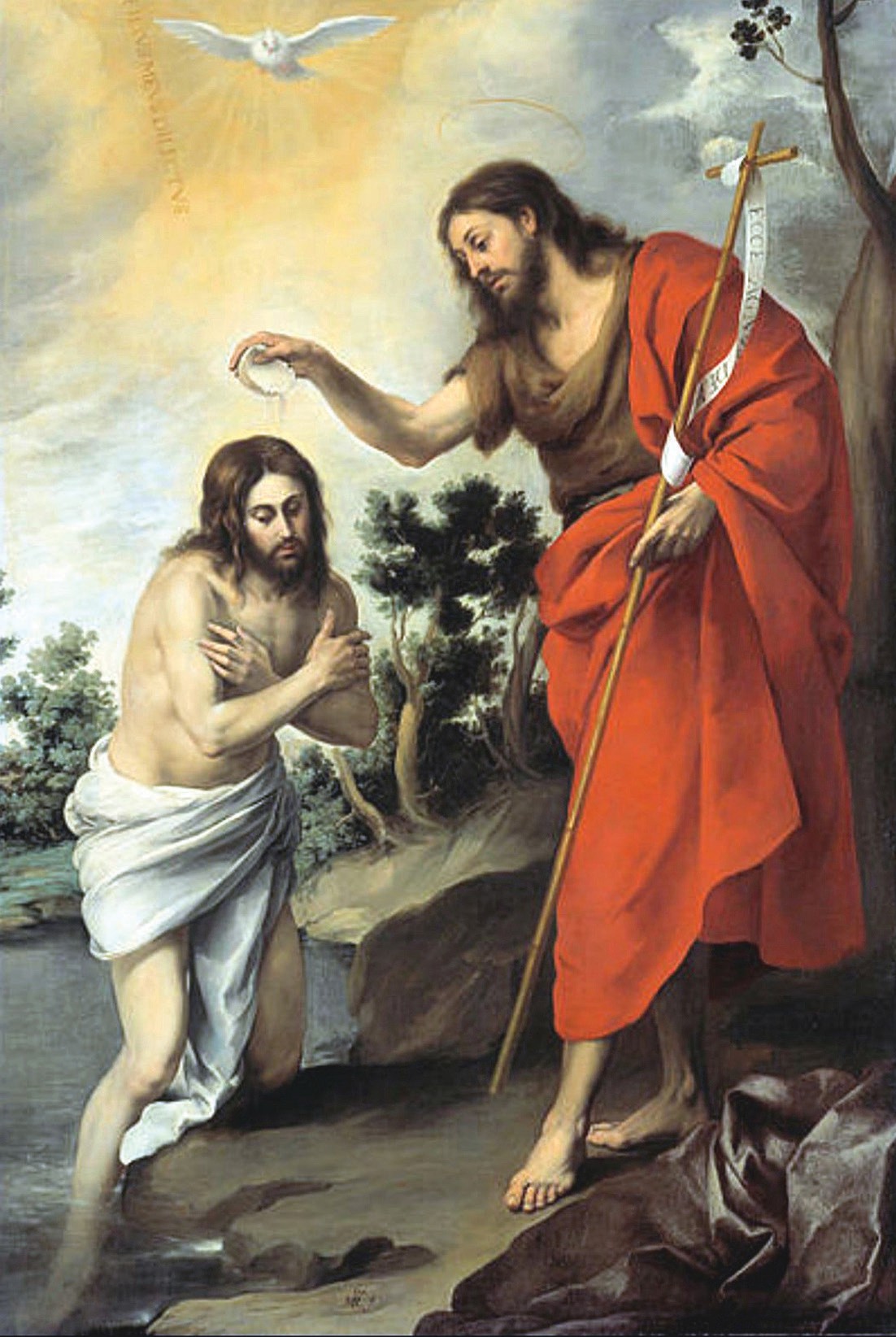
John the Baptist was one of the first to recognise Jesus as the Saviour. However, although he came before him, he also had to struggle with the fact that Jesus differed from all expectations. The life of John the Baptist stands at the crossroads between the Old and New Testaments. He was the last great representative of the old world and the first representative of the new era. This duality was manifested as a struggle in his soul. The most important event in his life was undoubtedly the moment when he baptised Jesus in the Jordan River. In fact, this marked the beginning of the entirety of Christianity.
Shortly after Jesus’ baptism, Herod Antipas, the son of Herod the Great, who ordered the massacre of the innocents in Bethlehem, had John imprisoned for fear that he would incite a rebellion against him. His death was finally brought about by Herod Antipas’ immoral wife, Herodias, who used the erotic charms of her own daughter, Salome, to beguile her husband at a banquet. Captivated by Salome’s dance, Herod promised to give her anything she asked for. At her mother’s suggestion, the girl asked for John’s head on a platter. In his sacrificial death, John the Baptist was also a forerunner of Jesus. John, considered by many to be “the greatest among those born of women” said of Jesus Christ, “he is the one who comes after me, the straps of whose sandals I am not worthy to untie.”
“There was a man sent from God whose name was John. He came as a witness to testify concerning that light, so that through him all might believe. He himself was not the light; he came only as a witness to the light.”
(John 1:6–8.)
The words of Jesus Christ on John the Baptist: “I tell you, among those born of women there is no one greater than John; yet the one who is least in the kingdom of God is greater than he.”
(Luke 7:28.)
“And so John the Baptist appeared in the wilderness, preaching a baptism of repentance for the forgiveness of sins. The whole Judean countryside and all the people of Jerusalem went out to him. Confessing their sins, they were baptized by him in the Jordan River. John wore clothing made of camel’s hair, with a leather belt around his waist, and he ate locusts and wild honey. And this was his message: “After me comes the one more powerful than I, the straps of whose sandals I am not worthy to stoop down and untie. I baptize you with water, but he will baptize you with the Holy Spirit”
(Mark 1:4–8.)
“I am not the Messiah but am sent ahead of him.”
(The prophetic words of John the Baptist in John 3:28)



