John Vianney
1786–1859, France
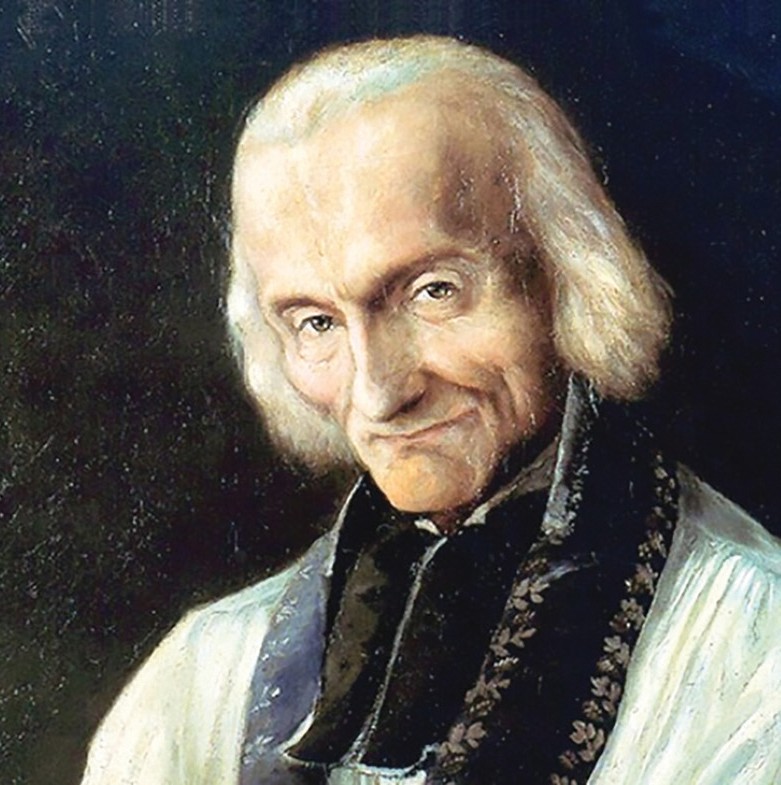
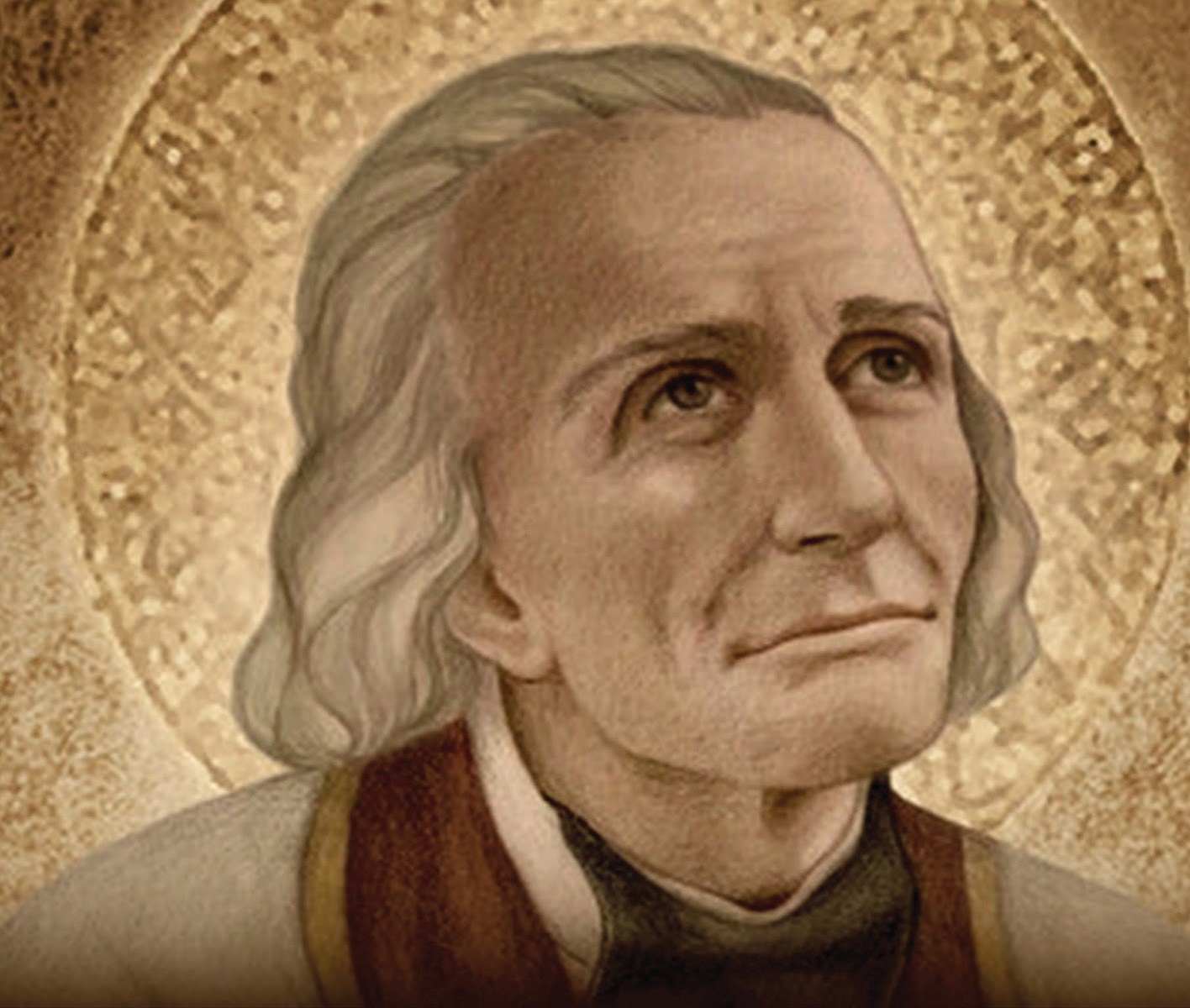
John Vianney, the great French saint, the parish priest of Ars, was born Jean Marie Baptiste Vianney to peasant parents on 8 May 1786 in Dardilly, near Lyon. This simple parish priest of modest talents became one of the most popular saints of all time, lifting millions out of religious indifference after the French Revolution. Perhaps there was no one who could instruct people in the matters of sainthood better than him. When he began his work in the 230-strong Ars, spiritual life was at a virtual standstill, he found an empty church and people who had lost their faith were leading a stale and debauched life. During the forty-one years of his ministry, he not only changed the spirit of the small parish, but his work had a great impact on the religious life of the entirety of France.
His mother was deeply religious, and her family began and ended the day in common prayer, kneeling in the fields to recite the noonday ‘Angelus’ prayer. Due to the religious opposition rampant in the country in his childhood after the French Revolution, his religious pursuits were rather clandestine. At the age of eleven, he made his first confession in a darkened room, and two years later he took his first Holy Communion in a barn, before setting his heart on becoming a priest. His skills were so meagre that he had great difficulty in acquiring even the most rudimentary knowledge. He failed many exams and was even dismissed. Yet as providence would have it, he found a true helper in a certain Abbé Balley. Eventually, with his continuous support, the over-age boy completed his seminary studies.
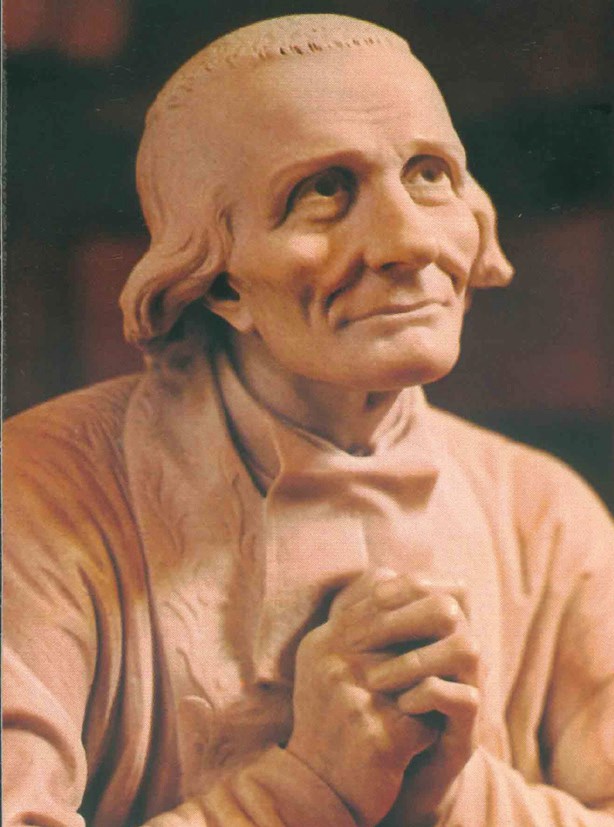
He was ordained a priest at the age of nearly thirty. When he was appointed parish priest of the smallest parish in France and arrived in Ars, he began his ministry by making a plan for saving souls and eradicating all evil from his parish. His first victory was to arrange for the closure of all four taverns in the village – which initially had a total of sixty families – one by one. The faithful first took notice of his humble and authentic life example and his sermons. With unquestioning determination, he took a stand against rampant sin. In the meantime, he kept vigils, sleeping 3-4 hours a day, praying and constantly fasting. He ate only once a day, a meal of potatoes cooked a week in advance.
He constantly did penance for others, scourging himself and wearing a penitential vest. Years later, he referred to his excessive self-mortification as a ‘youthful fad’. Whenever he came into money or other wealth, he quickly distributed it to others. His persistence transformed everything around him. Even the most hardened sinners were converted, and the village began to take on a kind of devout, holy atmosphere. Word spread throughout the country and more and more people came to Ars, initially just to witness the miracle of the village. While the plague ravaged the country, Vianney’s hometown was not affected. He bought a plot of land where he established a school and orphanage for the destitute, abandoned girls called Providence.
From 1828, miraculous powers were accredited to his prayers, having multiplied grains and flour. He had a deep, inspired wisdom that could not be learned anywhere. In the final period of his life, a steady stream of pilgrims and patients came to him for thirty years. Many miraculous healings took place in his presence, yet he humbly attributed the miracles to St Philomena. For years, he spent usually 14-16 hours a day in the confessional. His confessions did not last long as he peered into the souls of those who came to confession. When a devotee asked him how he knew all the details of his life, he simply replied, “Your guardian angel told me.” There are also many stories of how he was assailed by the devil at night. He was investigated by the Inquisition, and they spread false rumours about him.
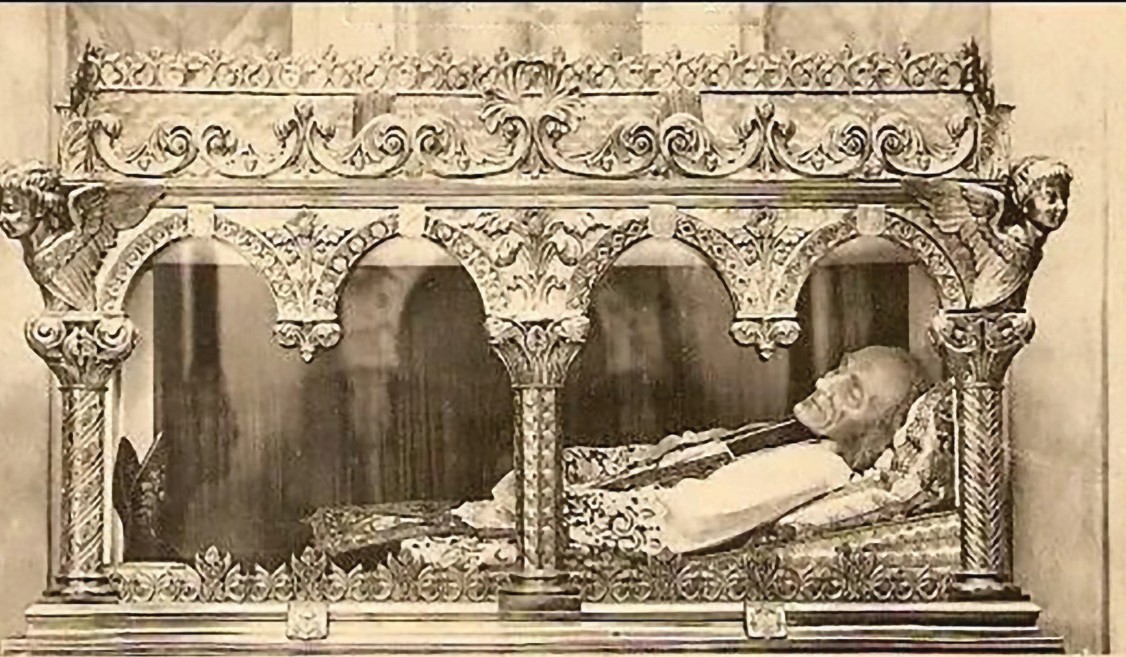
As he grew older, he was increasingly tempted to leave his congregation due to his desire for solitude. In the final years of his life, nearly a hundred thousand people sought him out. His condition gradually deteriorated until 4 August 1859, when a great storm swept through Ars, and he retired his soul to the Creator. The news of his death spread like wildfire, and a huge crowd of people set out for Ars from all directions. The roads were covered with pilgrims on foot and in wagons. Almost everyone in the crowd gathered in the church and the people were sobbing in the square. The uncorrupted body of St John Vianney was laid to rest near the altar of the church of his former parish. He was canonised by Pope Pius XI in 1925 and made the patron of parish priests in 1929.
“Let us work, my children, let us work! The day will come when we will find that nothing was too much for heaven.”
“He who lives in love, is not proud, does not wish to dominate others, nor blame or mock others. They do not inquire into the intentions of others, do not believe that they are better than others, and never consider themselves superior to their fellow men. Those who love do their best to avoid causing pain.”
“Do not try to please everybody. Try to please God, the angels, and the saints — they are your public.”
“The guilty will kill the poor sinner in the end.”
“A cross borne simply, without those movements of self-love which exaggerate its suffering, is no longer a cross.”
“See, my children, a person who is in a state of sin is always sad. Whatever he does, he is weary and disgusted with every thing; while he who is at peace with God is always happy, always joyous. . . Oh, beautiful life! Oh, beautiful death!”