Josephine Bakhita
around 1869, Sudan–1947, Italy
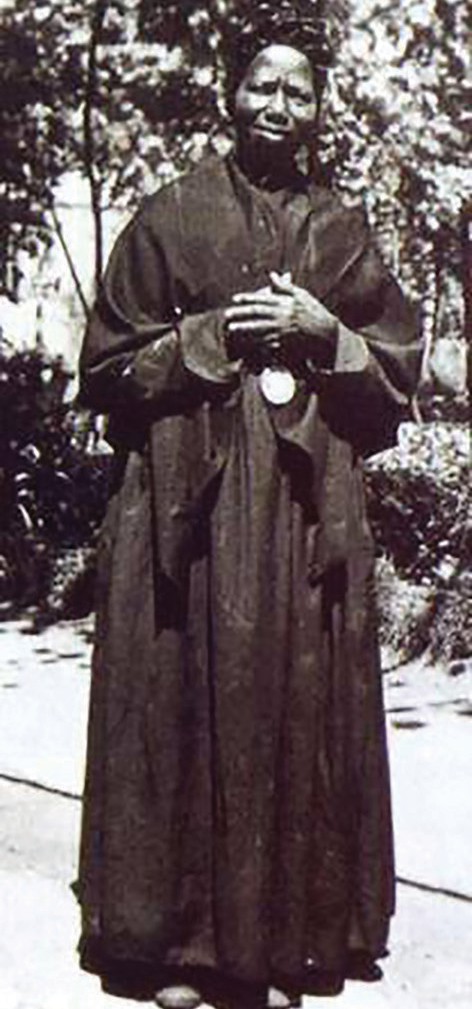
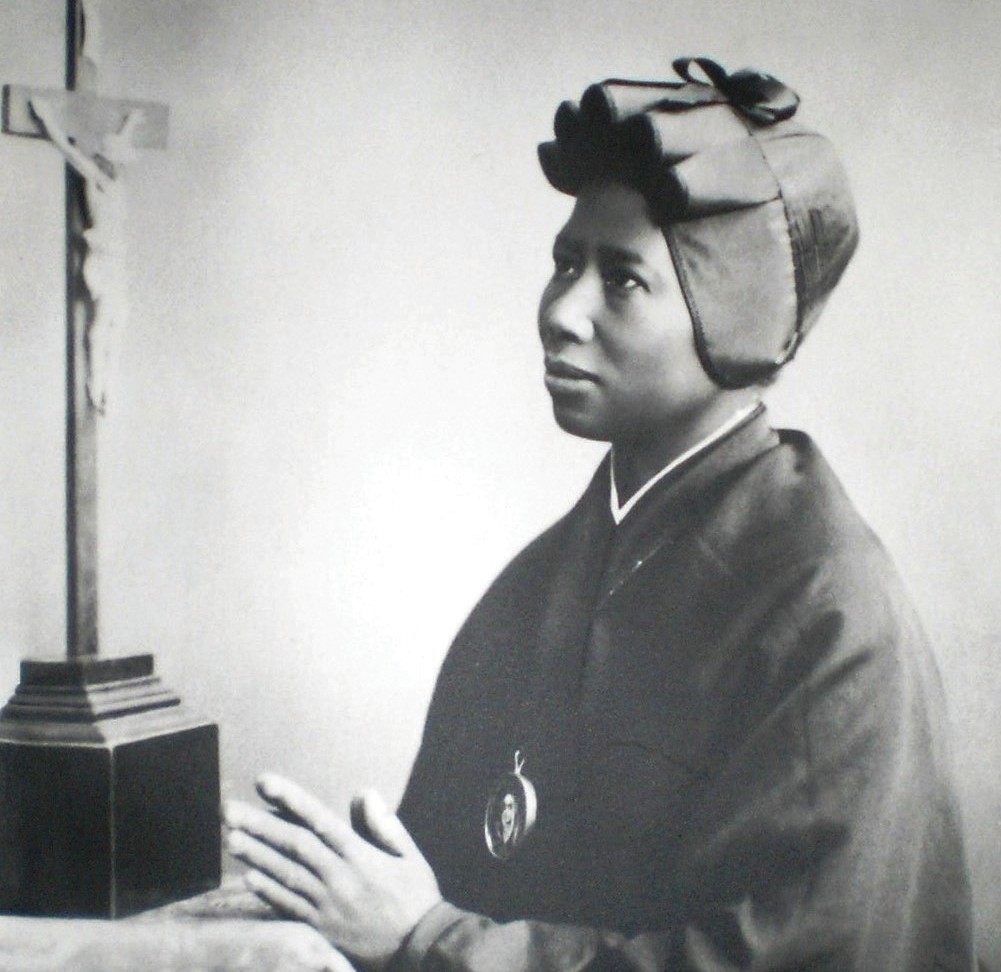
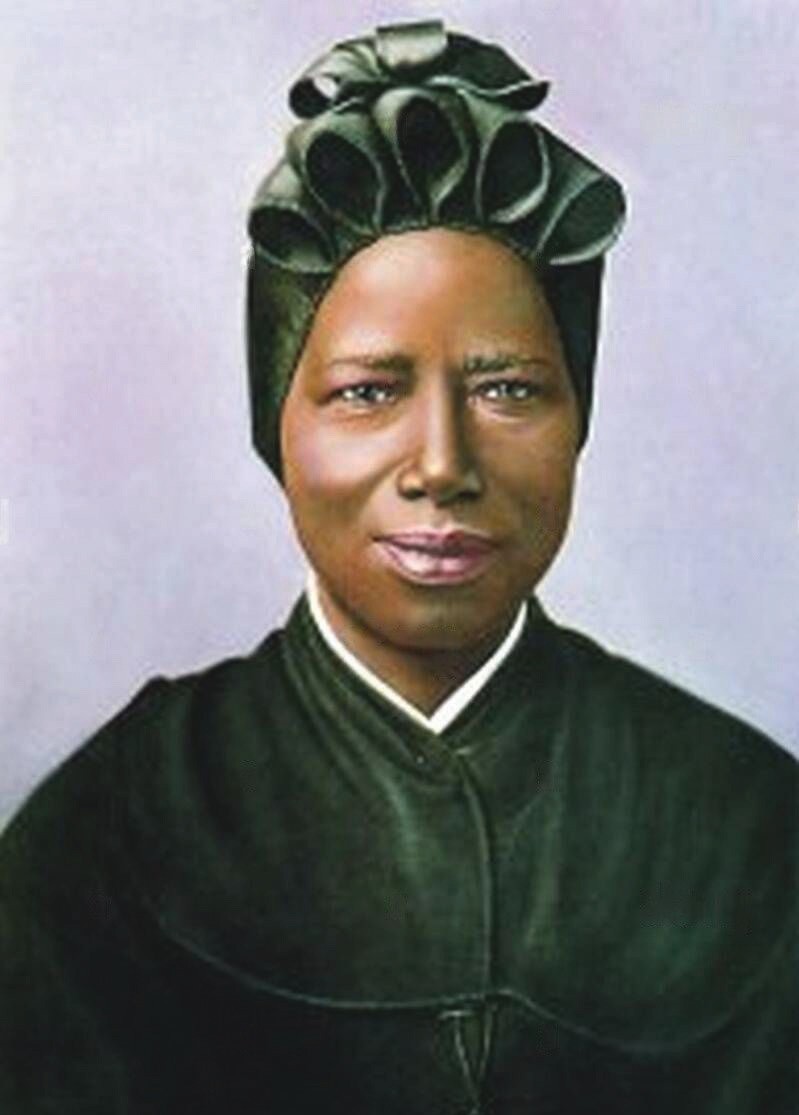
Josephine Bakhita, Canossian Christian and slave-turned-nun was born into a wealthy family in Darfur, Sudan, around 1869. Her happy and carefree childhood ended at seven years of age when she was seized by Arab slave traders who forced her to walk nearly a thousand kilometres barefoot. She was then sold, traumatising the child to such an extent that she even forgot her own name. Her slave masters gave her the name Bakhita, or ‘lucky’. Until the age of seventeen, she was bought and sold like a commodity on the slave market, which was still flourishing in Africa at the time.
She was subjected to severe daily physical and moral humiliation, which she endured with superhuman humility and obedience. In addition to the scars of regular floggings, on one occasion she was left with over a hundred wounds on her body, which were sprinkled with salt to leave a permanent mark. For days she suffered alone, between life and death. True to her name, her fate took a turn for the better in 1882, when the general from whom she had suffered so much abuse sold her to the Italian consul. From that point on she lived in decent conditions as a domestic servant. When the consul decided to return to Italy, he took Bakhita with him and gifted her to the Michieli family as a nanny for their daughter.
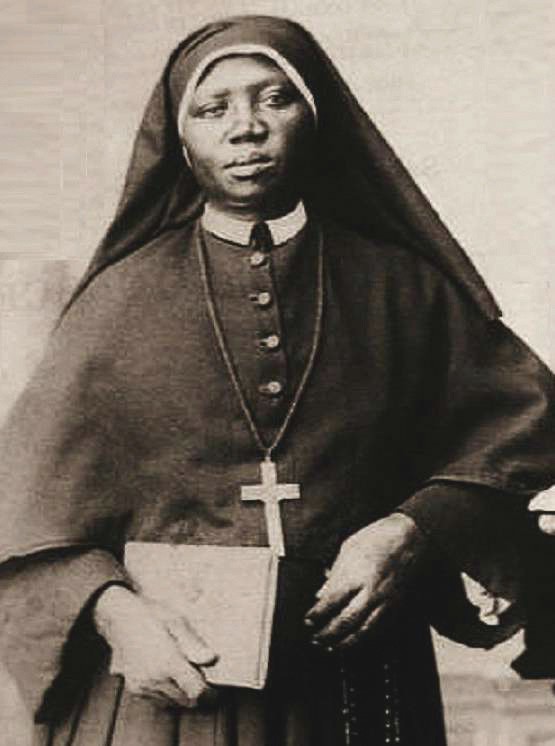
The next turning point came when the family decided to return to Africa. In preparation, they entrusted their daughter and Bakhita to the care of the Canossian Sisters in Venice, who welcomed her by saying “This is your home, stay with us.” Even more so than her wounds, the truth she experienced when she heard about the Saviour for the first time was burned into her memory. It was a great liberating experience to know that there was a far greater Lord above all her former masters who was none other than love itself who wished her the best and who would never forsake her. In the light of Christ’s sufferings, Bakhita’s tribulations suddenly made sense to her: it became clear to her that everything in her life took place to bring her closer to God. Once she understood that the Lord was suffering for her and for all people, hope was rekindled in her heart. She knew and felt that she was loved permanently and eternally and whatever happened to her that love would remain with her and her life was perfectly in order.
When her master volunteered to take her and the child to Africa, Bakhita chose to stay and live the life of a monk instead. Her case was brought to a court and on 29 November 1889, the court ruled that Italy does not recognise slavery and Bakhita was free to decide her fate. This way, Bakhita indirectly helped the liberation of many other souls. On 9 January 1890, she was baptized, confirmed and received under the name of Josephine Margaret Fortunata (Latin for ‘lucky’). For Josephine, being a nun was no problem at all. Serving the “Master” – the name she used for Jesus Christ – meant she simply carried on with her old life.
When her superior asked her about the difficulties she had with the three vows she had to take when she joined the order, she said that obedience was no problem for her, as she was used to it as a slave and the same applied for her vow of poverty (a slave must not own anything), while she kept the vow of chastity throughout her life. At first, she attracted a great deal of attention as a person of colour and many people kept a distance from her, yet through her open heart, kindness, simplicity and humility, Madre Moretta (“Black Mother”) eventually won over everyone she met. Her everlasting smile and unwavering faith in the God of Love made her capable of helping many people through her personal example.
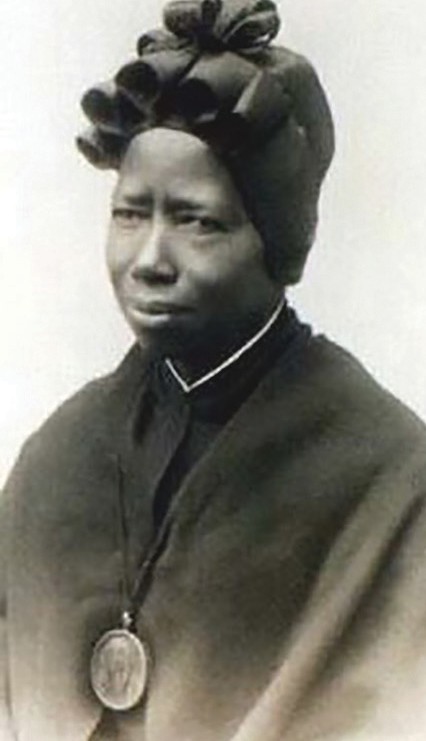
After three years of her novitiate, she took her vows at the Congregation of the Canossians in Verona on 8 December 1896. She was relocated to Schio in 1902. She took her perpetual vows in 1927. After decades of service and a lengthy period illness, she passed away on 8 February 1947. On her deathbed, she re-experienced the suffering of her days in slavery and frequently said to the nurses caring for her: “The chains are too tight, loosen them a little, please.” As her final words, she exclaimed: “Yes, I am so happy: Our Lady… Our Lady”. She was canonized on 1 October 2000 by Pope John Paul II. Since 2015, the day of her death is recognised as a day of prayer and awareness against human trafficking. Bakhita became the patron saint of slaves and enslaved people as well as the patron saint of Sudan, representing human freedom and forgiveness.
“If I were to meet the slave-traders who kidnapped me and even those who tortured me, I would kneel and kiss their hands, for if that had not happened, I would not be a Christian and a nun today.”
“Poor things, perhaps they didn’t know what they were doing to me: they were the masters and I was their slave. Just as we are accustomed to doing good, the slave owners did evil out of habit, not out of ill intent.”
To those who visited her during her long illness and asked her anxiously how she was, Bakhita smiled and replied: “As the Master wishes.”
To a priest who wished to see her reaction and challenged her with the following doubt: “Suppose that the Lord does not want you in Heaven!” she replied: “Well, if He does not want me in Heaven, let Him do what He likes, and let Him put me wherever He likes. When I am with Him and where He wishes, I am perfectly fine. He is the Master, I am only his humble creature.”
To another priest who wanted to hear more about her life story, she said: “The Lord has loved me so much. We must love everybody… We must be understanding and compassionate!” – “Even with those who tortured you?” – “Why not? poor things! They did not know the Lord!”