Kinga of Poland
around 1234, present-day Hungary–1292, present-day Poland
Kinga of Poland, of the House of Árpád, a prominent Christian saint and betrothed to Boleslaw V High Duke of Poland, patron saint of Poland and Lithuania, “the mistress of Sandec” and protector of the poor was born around the year 1234 in Esztergom, Hungary as the child of Hungarian monarch Béla IV and Maria Laskarina, firstborn princess of the Byzantine Empire. She was also known as Cunegunda, and was deeply revered as the mother of the people. She was born into a very special family. Her niece was Saint Elizabeth of the House of Árpád while her sister was St Margaret of Hungary – Margaret was canonised and Princess Violant and Constance were beatified. According to some sources, upon her birth, her mother felt unspeakable joy instead of pain. Even as an infant, Kinga showed signs of being a peculiar child.
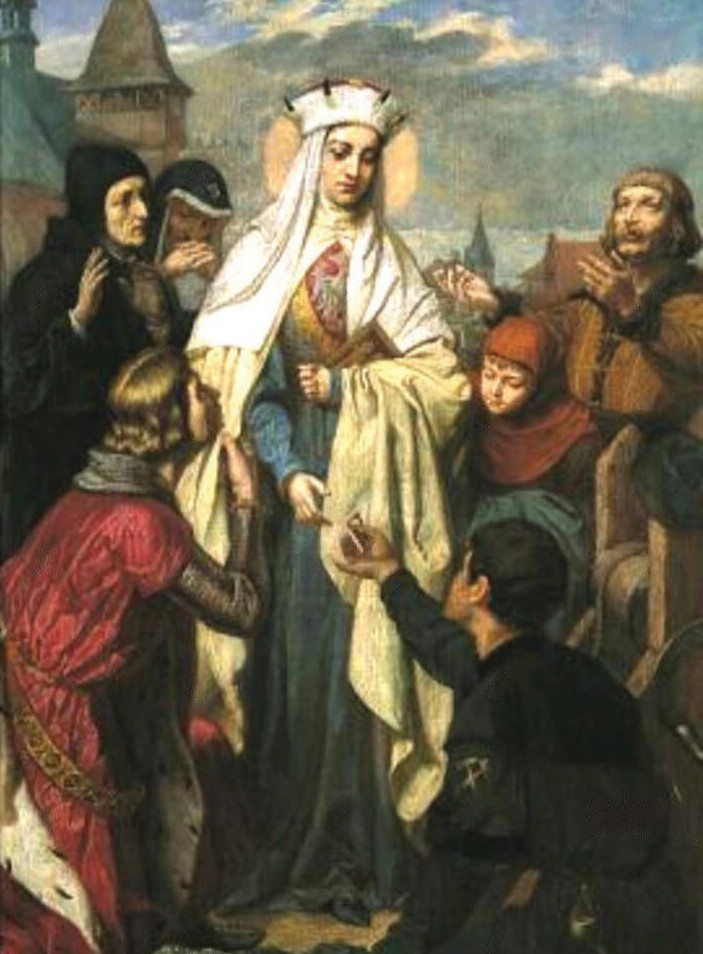
As she grew up, not only did she witness some of the great exemplary lives of her family, she was also influenced by the Franciscan and Dominican friars who attended her father’s court. At a young age, she swore a vow of chastity and managed to have her husband, Boleslaw V do the same. According to one legend, when she visited Hungary after the Mongol invasion, she accompanied her father to the salt mines of Maramures, which was later named the Cunegunda Mine after her. The impressive sight of the salt blocks reminded her that the Polish people had to make do with boiled salt. She asked her father to grant her the mine so he could supply salt to her people. Béla IV consented and in turn, Kinga removed her wedding ring and tossed it into the depths of the mine, signifying that she had become its mistress. Subsequently, with the help of miners, the salt mines of Wieliczka were opened, where the ring was miraculously discovered.
According to another story, the queen, fleeing from the Mongols with her fellow nuns, threw a ribbon behind her when she reached the Pieniny mountain range, which turned into a waterway, which is still known as the Dunajec River. The Mongols managed to cross the river with great difficulty, then Kinga threw down her comb, and from it sprang a dense forest, which stopped her pursuers in their tracks. She was also known for her presence of mind: on one occasion, she learned of a plot against her father through divine revelation. Kinga appeared on the spot, and led Béla IV unharmed out of a circle of thirty drawn swords, which she even confiscated from the conspirators.
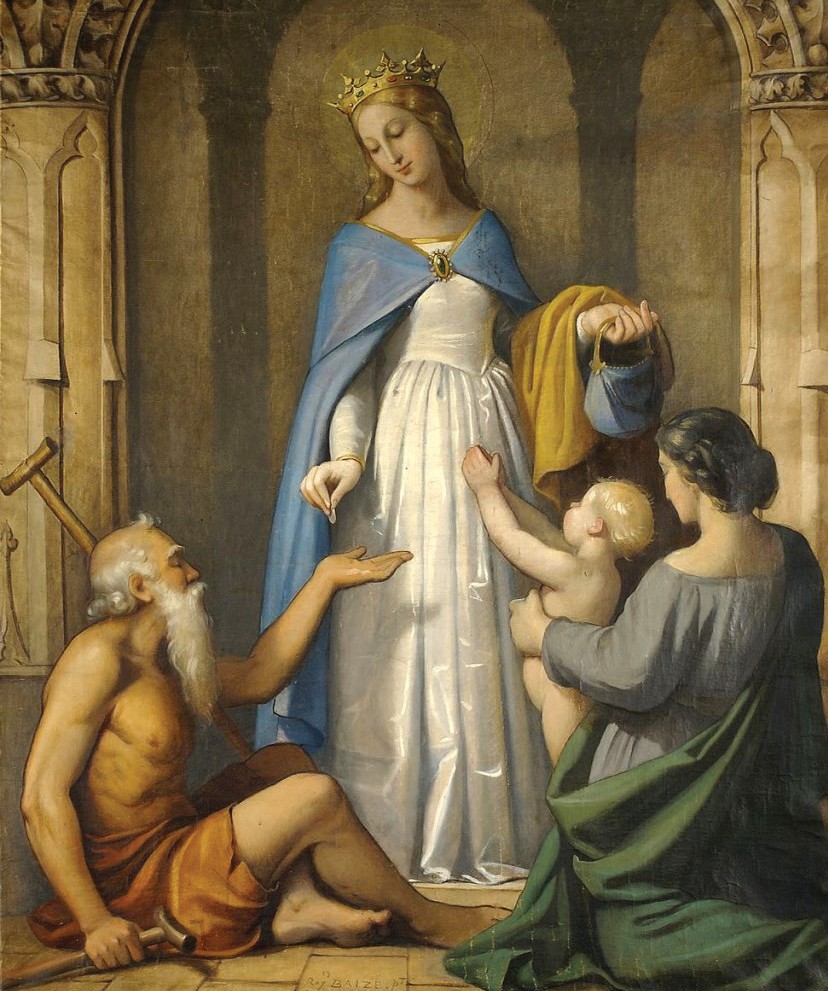
She heroically withstood the third Mongol attack on Poland. She evacuated the local population and the Clarissan Sisters to a castle into the Pieniny Mountains and then took charge of its defences. Not only did she boost the morale of the castle defenders with her courageous actions, she also set an example of trust in divine providence. She managed the region of Stary Sacz and its environs with great care, which her husband had entrusted to her, and which she governed prudently until the end of her life. Various sources refer to her as the “mistress of Sandec”. Her humane behaviour and kindness to the people are well-documented. She cared for the poorest through her laws and acts of charity. Her behaviour mirrored a spirit of service rather than an attitude of dominion.
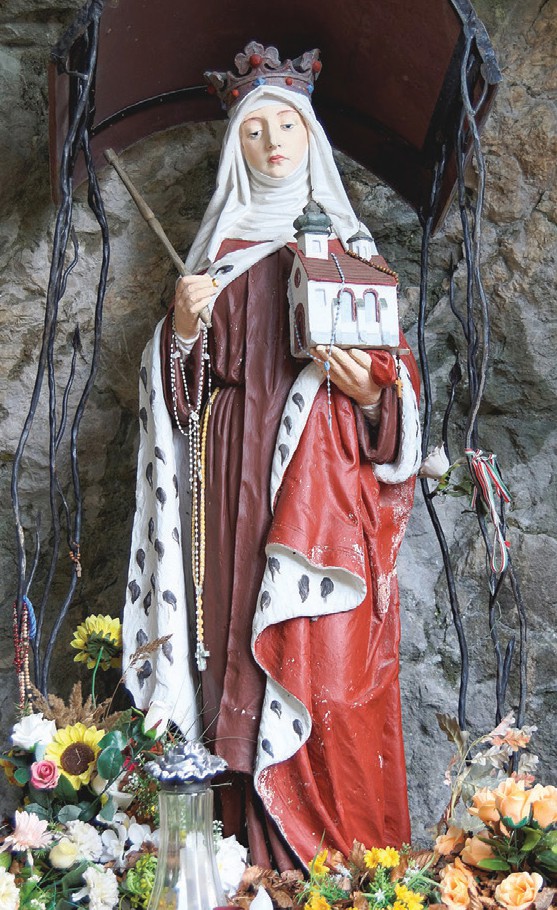
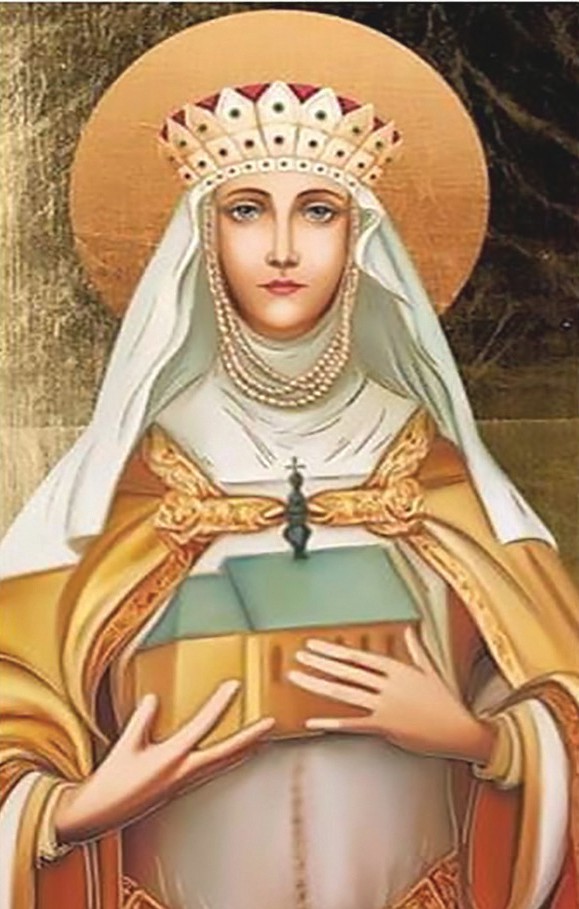
She used her own wealth to support the people impoverished by the Mongol invasion and also supported the economic reconstruction of the ravaged settlements. Through her life of devotion, Sandec became a settlement of contemplation and prayer. During her lifetime, Saint Kinga founded many monasteries and churches and played a major role in spreading the veneration of the Virgin Mary. Following the death of her husband, she gave away all her belongings, removed her crown and donned the veil of a life of penitence, moving to the monastery of Saint Clare in Stary Sacz, which she established and which is considered the birthplace of Polish music. She dedicated the rest of her life to deepening her devotion and tending to the sick. Following her example, the widowed Polish queens later chose to retire to a convent.
Her last words uttered in her final hour on 24 July 1292 stand testimony to her devotion to Christ: “Father, into your hands I commend my spirit!” Her glorified body exuded a heavenly fragrance and healing powers. Thousands of people flocked to her tomb in Stary Sacz and countless miraculous cures were attributed to her. Her resting place is a still a major pilgrimage site. Kinga was beatified in 1690 and finally canonized in 1999. Her figure represents chastity, self-sacrifice, humility and greatness of soul.
“My beloved sisters, should you retain this state of holiness in which I leave you, and love one another in Christ, and avoid all social relations unbecoming to your state, I swear to you, I myself will become an intermediary between God and you so that the glory of God will never cease in this monastery until the day of the final judgement.”
(Kinga of Hungary spoke these words to her fellow sisters on her deathbed)
“Fear not, Mary! Your prayer has been heard by the Lord. You will give birth to a daughter for your boundless joy and for the strengthening and special aid of many souls. For the Lord intends through the life, example and merits of this child to enlighten and help a neighbouring nation.”
(According to the chronicles, Kinga’s mother was praying to the Virgin Mary at a church during her pregnancy when she heard these words)
“My dear beloved daughters, why do you offend the virtue of chastity? For I, unworthy among women, have seen nothing of my own husband other than his two hands and face.”