Ladislaus I of Hungary
1046, present-day Poland–1095, present-day Hungary
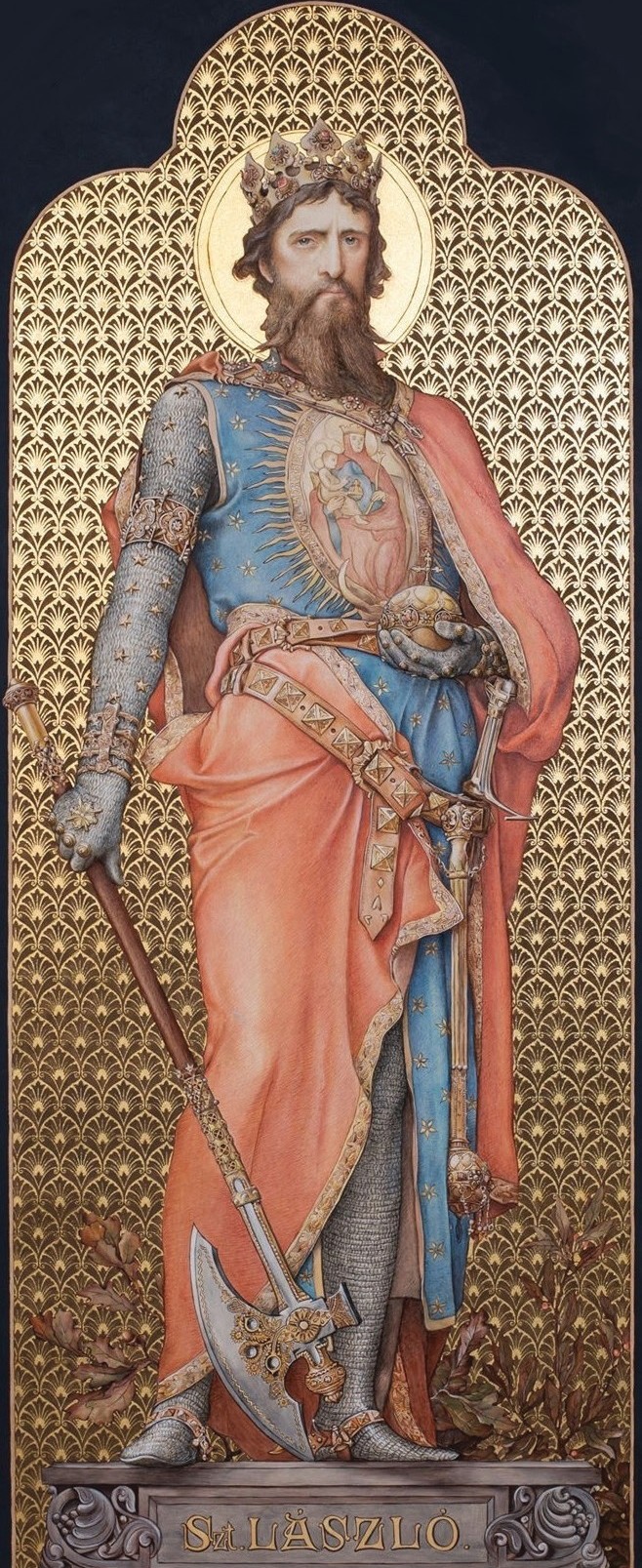
Saint Ladislaus, the first knight-king of Europe, Christian monarch and the patron saint of the Székely people, Hungarian soldiers as well as neighbourhood watches was born on 24 June 1046 in the Polish Kingdom. His father was the Hungarian monarch Béla I, the son of Vazul and grandson of Koppány. His mother was Piast Richeza, sister of the Polish prince, who was related to the ruling house of the Holy Roman Empire. László inherited both his father’s courage and his mother’s gentle and religious nature. He was named Ladislaus, meaning “God-given glory of the people”. He was a handsome man of tall stature, a fine warrior, a true gentleman, a sensitive and noble soul, and a wise ruler.
He was highly respected and loved in his time. During his reign, Hungary became a strong and independent country. László married twice. One of his wives was Piroska, future Byzantine Empress, who was subsequently canonised. Like most Hungarian kings of the Árpád dynasty, László possessed the supernatural power, inner purity and holy sense of mission typical of initiates, which in the ancient Hungarian religious world was derived from the mythological Turul, the sacred bird symbolising divine presence. As a warrior saint, his task was to bring peace to Hungary. Although he was asked to lead the Crusades and was offered the throne of the Holy Roman Empire, he instead chose to carry out what God had ordered him to do.
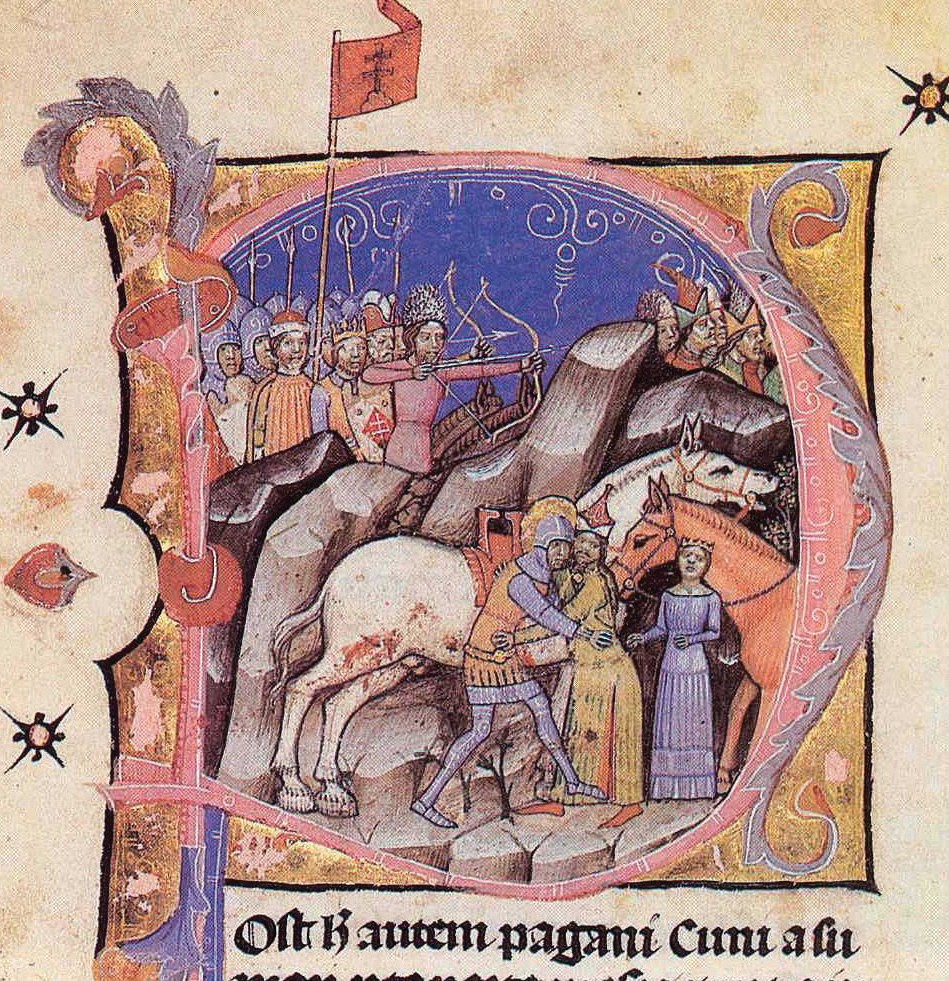
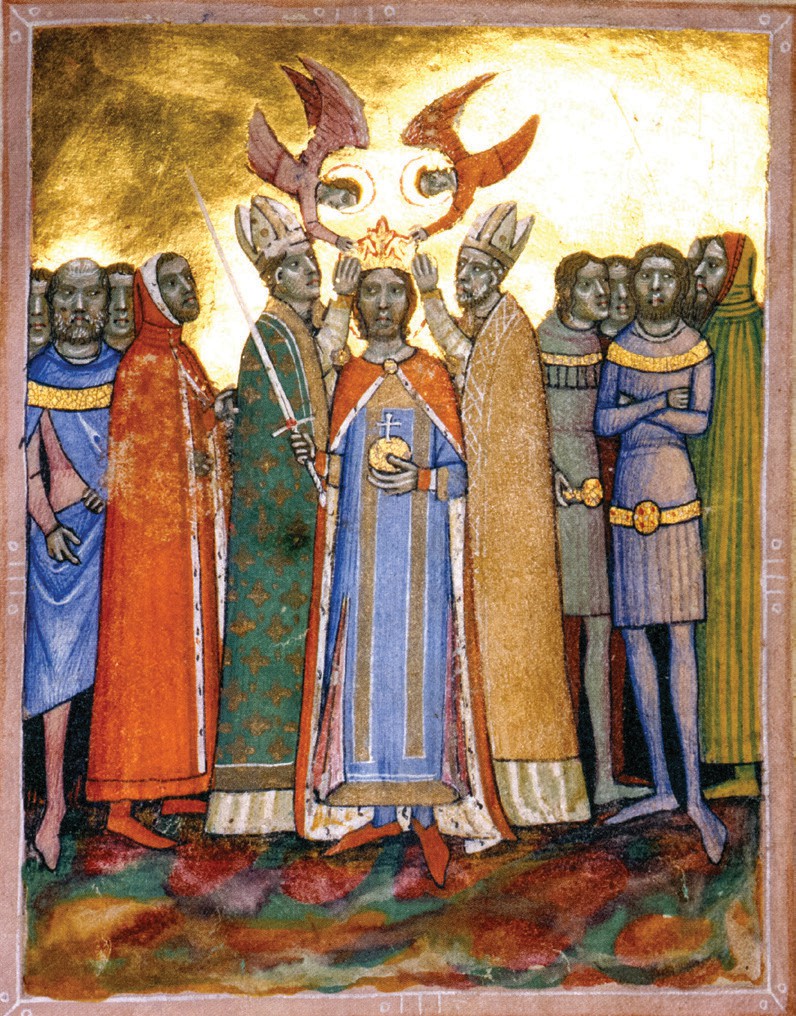
Following the death of his brother Géza, he accepted the request of the Hungarian lords to govern the country in April 1077, yet was only crowned with the Hungarian Holy Crown in 1081, after Solomon had abdicated. Solomon later plotted against Ladislaus, hiring one of the king’s bodyguards to murder him in his sleep, yet the king awoke from his slumber in time due to a peal of thunder. Ladislaus prayed extensively for Solomon, who finally died a penitent pilgrim in 1087. Ladislaus also prayed before battles, and galloped to the frontlines on his horse called Szög (Nail), with his fearsome battle-axe in hand. When asked why he was not afraid, he replied that his guardian angel was with him day and night.
He visited his soldiers wounded in battle, talked to them, and many were healed by the touch of his hand. He mourned the fallen, including the enemy soldiers. The king ordered the establishment of churches, abbeys and bishoprics. The veneration of Ladislaus is still present in Hungarian folk traditions and his heroic acts were captured in a number of works of art throughout the Carpathian Basin. The Eastern kindred people of the Hungarians assumed Western Christianity due to the influence of Saint Ladislaus.
His legends tell of many miraculous events: he drew a spring for his thirsty soldiers during battle, obtained food through prayer, a healing spring appeared under the hooves of his horse and with the help of an angel he found an herb to cure the plague (which has since been known as St Ladislaus herb, or gentian). On one occasion, he escaped his pursuers by making the mountain split in two as a result of his prayers (according to Hungarian legend, this was how the so-called Cleft of Torda was formed). On another occasion, a sudden mist descended on him and according to popular legend, this marked the creation of the Milky Way.
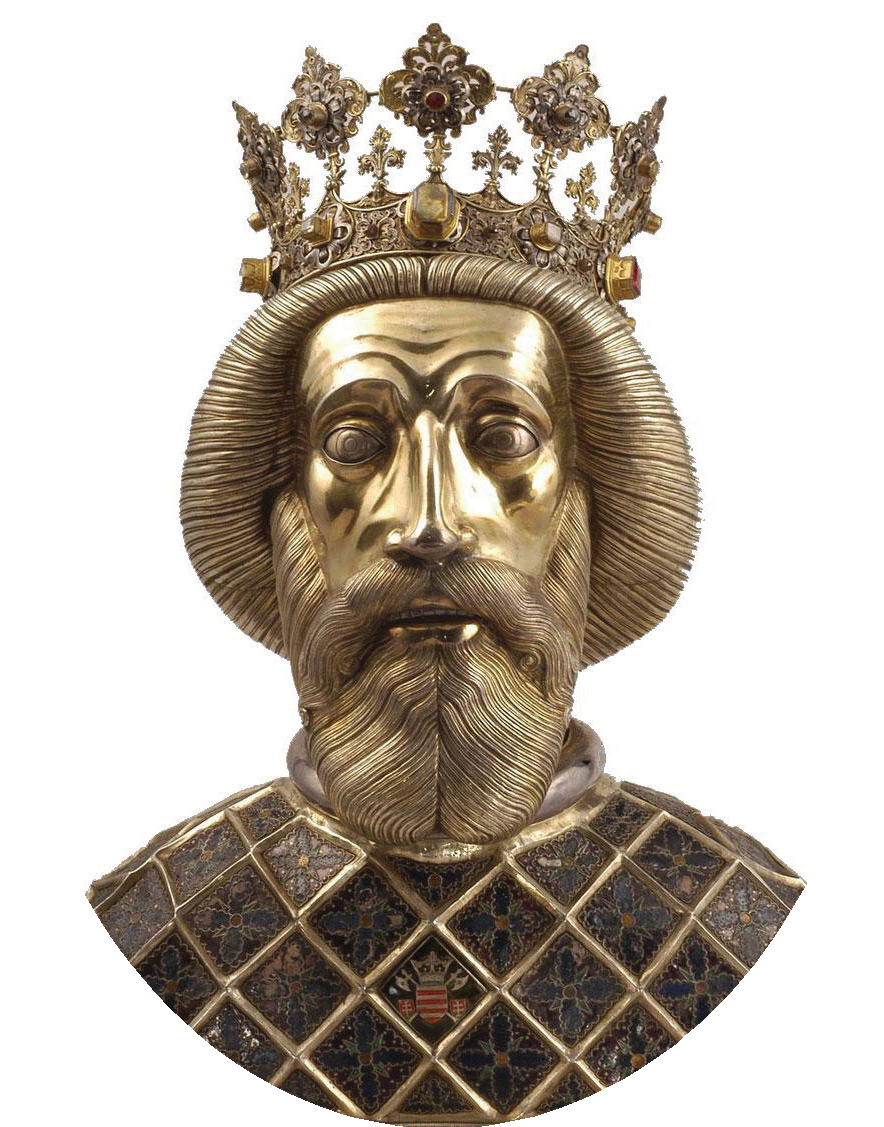
Ladislaus died a sudden death on 29 July 1095 while rushing to his brother-in-law’s aid. He was buried in the Benedictine monastery he established on Kupavárhegy in Somogyvár. The whole country mourned the loss of their beloved king for three years. His body was transferred to Várad, according to his will. Legend has it that the carriage left Nagykereki for Várad at its own will, where a series of miraculous healings took place at his tomb. Ladislaus was canonized on 27 June 1192 at the initiative of King Béla III. On this occasion, two radiant stars appeared in the sky, shining down from the heavens for two whole hours. A number of miraculous healings also took place when he was canonized. His head was placed in a reliquary, which has since been sought out by those seeking cures and consolation. Saint Ladislaus is the protector of the weak and poor and people turn to his aid in their day-to-day struggles, seeking morality and strength based on faith. He is venerated as a saintly man who was a true blessing to the whole world.
“Solomon knew no mercy in battle. Géza was prudent, cautious, and even when he won, he was lenient in his pardon. Ladislaus, on the other hand, seemed to have incorporated the better side of his two companions. He lacked the fierce anger and vengeance of Solomon, yet he was not as cautious as Géza. There was a strength in him of the likes of Gilgamesh.”
(Excerpt from the Arvisura, a collection of the ancient histories of the Hungarian people)
“He shone forth as the evening star in the mists, as the full moon shines in her days, as the sun shines: shining in the midst of his people.”
(Hungarian historical legends)
“Hail O merciful Saint Ladislaus! Sweet protector of Hungary, precious pearl among the sacred kings, radiant amongst all stars. Thou art the servant of the Holy Trinity, follower of Jesus Christ, pure vessel of the Holy Spirit, chosen knight of the Virgin Mary.”
(Song of Saint Ladislaus, around 1500)