Maximilian Kolbe
1894–1941, Poland
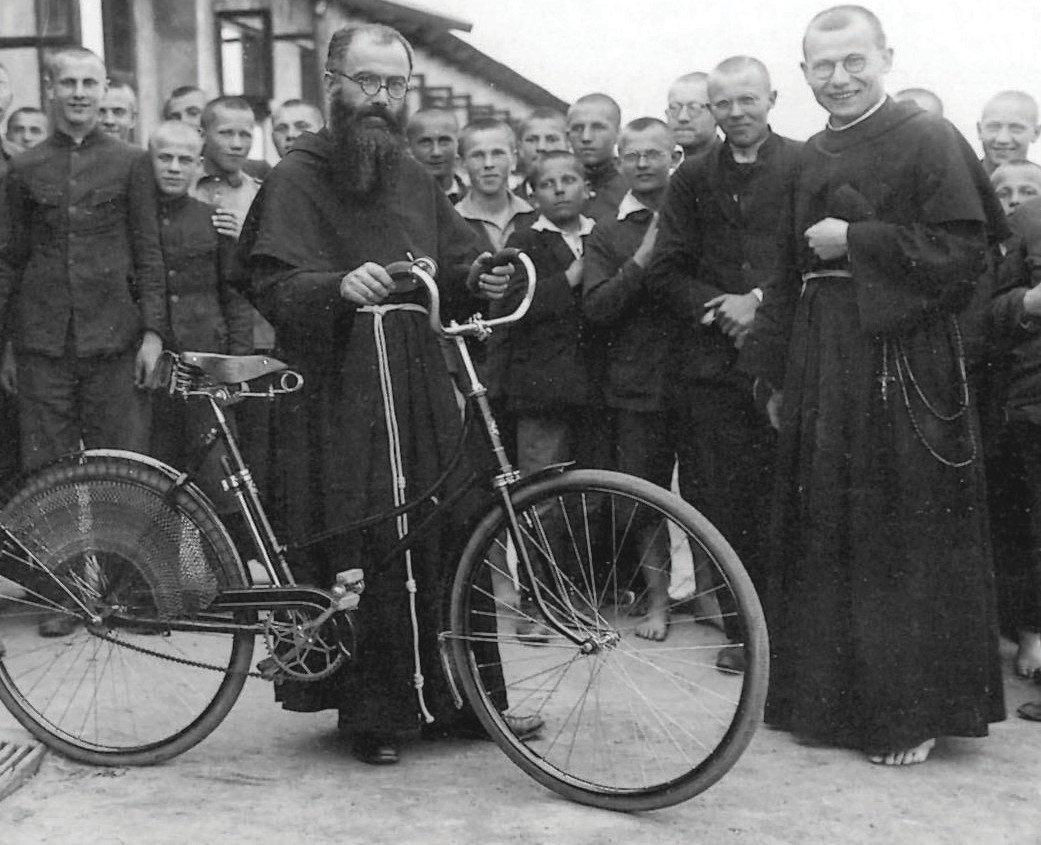
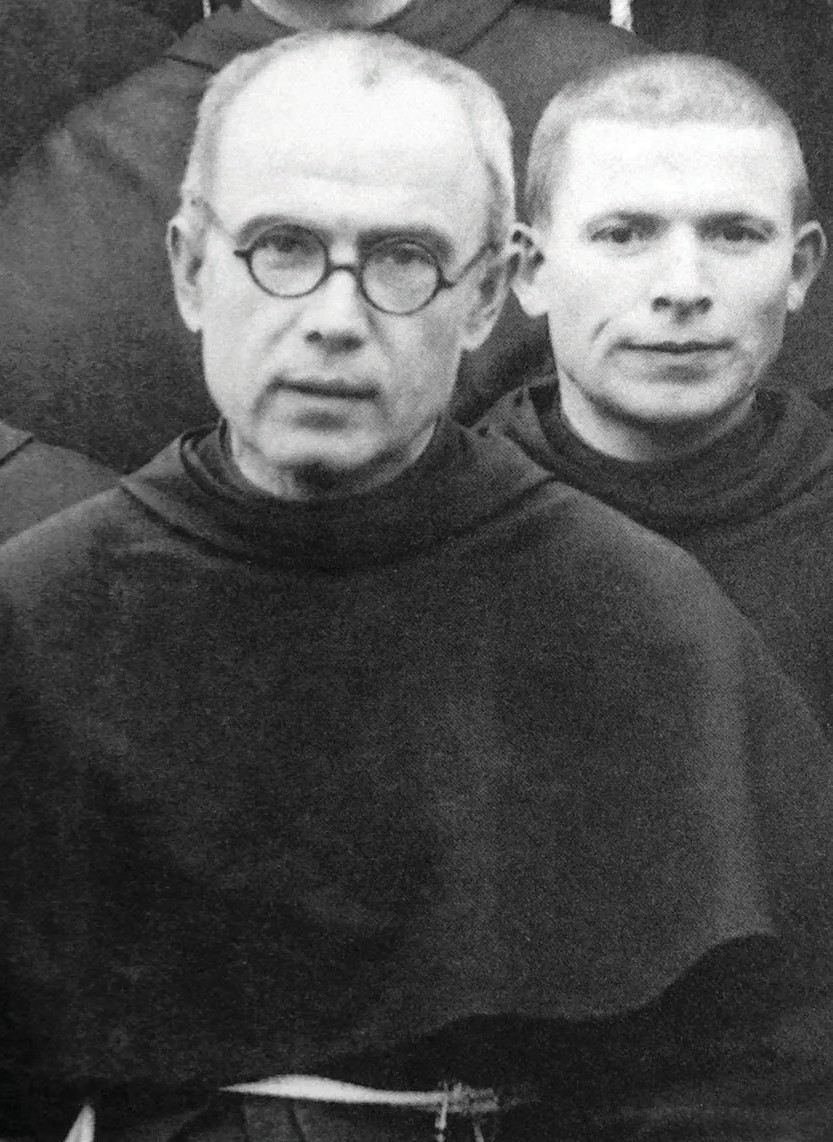
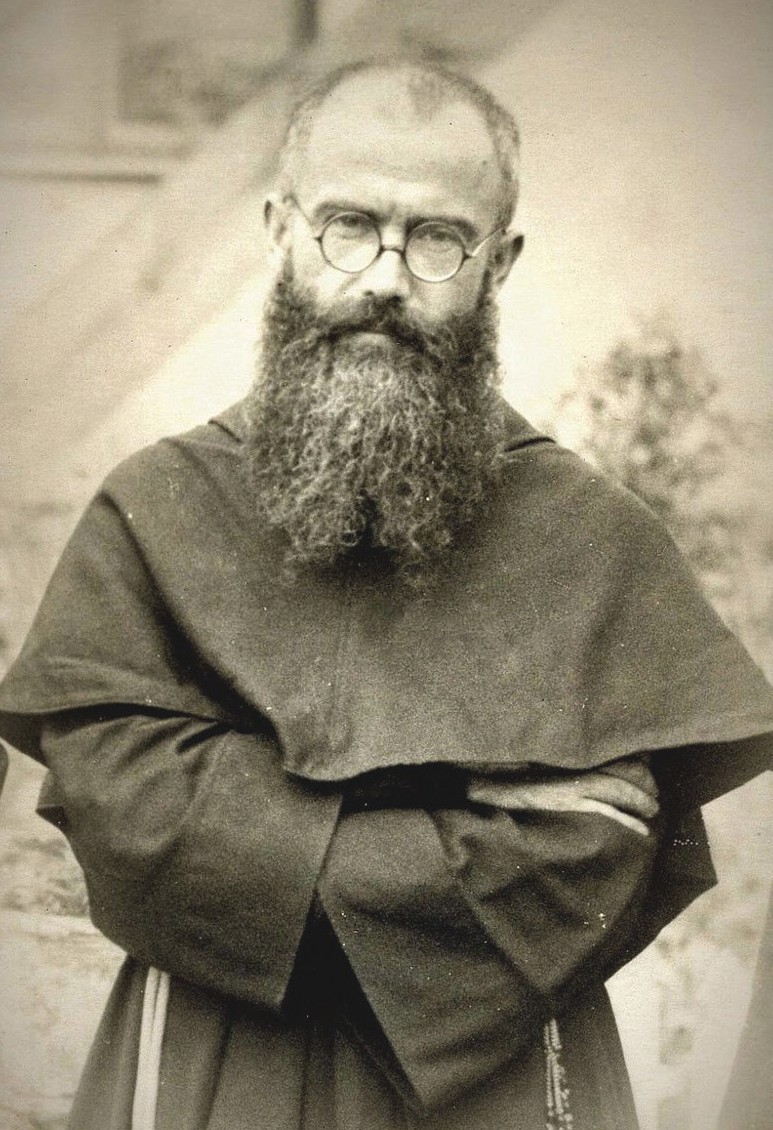
Father Maximilian Maria Kolbe, Polish Conventual Franciscan friar and martyr was born Raymund Kolbe in Zdunska Wola, in the territory of the Kingdom of Poland, which was then part of the Russian Empire, on 8 January 1894. Even as a little child, he had a defining vision. In his prayers, he asked the Virgin Mary to reveal the future to him. The altarpiece of the Virgin Mary came to life and presented him with two crowns, one white and one red, accompanied by these words: “The white is the crown of purity, while the red is the crown of martyrdom. Both await you. Do you accept them?” Raymund replied: “I do.” This marked the beginning of a slow, deliberative process that led to the realisation of his life’s motto: “Lift the world up to the Immaculata” (The Immaculate Virgin Mary).
He completed his secondary education studies at a small Franciscan seminary in Lwow. He excelled in mathematics and physics, yet also made inspirational drawings: well ahead of his time, he designed a rocket-powered aircraft capable of landing on the moon, which was later recognised by an expert as the Apollo 11. At the age of 15, he began his novitiate in Lwow. From this point on, he was known as Father Maximilian, whose goal was to attain the maximum, or perfection. Inspired by his love for the Virgin Mary, he chose the name of Maria as well as Maximilian. He began his philosophical and theological studies in Krakow, before continuing at the Pontifical Gregorian University in Rome and the Seraphicum College of the Conventual Friars Minor. He was particularly influenced by the writings of Thérèse of Lisieux, fully relying on Thérèse’s guidance.
Maximilian was ordained a priest in Rome on 28 April 1918, at the age of just 28. On his return to Poland, he became a teacher and hospital chaplain, before becoming a professor of philosophy and church history. Throughout his life he was met with much incomprehension that even within his own order few recognised him as a consistent executor of the Immaculate One. Two of Poland’s great biographers, Jan Dobraczinsky and Maria Winowska, uncovered a wealth of astonishing facts about him. Father Kolbe carried out his life’s work while almost continuously ill, often resulting in life-threatening situations due to his weak constitution, which included symptoms of lung disease at a very early age.
When he approached his superiors with the idea of publishing a journal entitled The Knight of the Immaculata, according to one of Father Kolbe’s biographers they reacted by exclaiming: “This sick idler vomiting blood wants to publish a journal?” As a clear sign of providence and divine presence, the “Knight” journal, which was launched without any capital, became a free newspaper with a circulation of one million by 1939. The establishment of the organisation Missionaries of the Immaculate Mary, whose members supported Our Lady’s work in the world through prayer, the offering of their sufferings and sacrificial work, was equally successful. (The group started with 25 members and grew to a membership of 700,000 in two decades.)
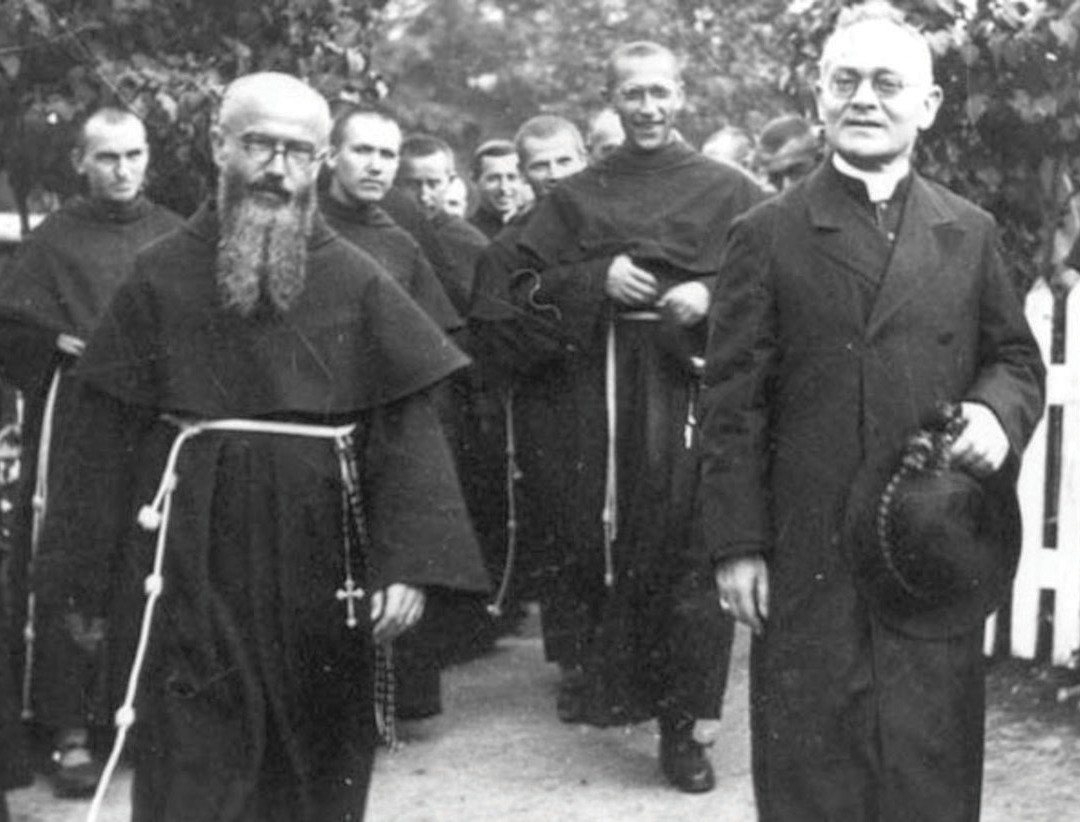
The monastery in the barrack-town of Niepokalanow established in Teresin, located near Warsaw, which is now the largest Franciscan monastery in Poland was another of his noteworthy initiatives. Maximilian poured the old wine of Franciscan poverty and simplicity, and the serenity of the spirit that originated from it into a new wineskin fit for the modern age. In 1930, also by divine inspiration, he obtained from his superiors the permission to establish a Franciscan monastery in Nagasaki, Japan and to organise a mission in Japan. After an absence of six years, he was again made head of the monastery in Niepokalanow.
In 1939, shortly after the outbreak of war, he was arrested by the Gestapo and imprisoned for four months. Two years later, he was arrested again for broadcasting anti-German programmes on his radio and harbouring Polish, Jewish and Ukrainian refugees. He was deported to the concentration camp in Auschwitz as prisoner 16670. He instilled courage and hope in many of his fellow captives by maintaining their faith in human benevolence. When a prisoner escaped from the barracks where Maximilian Kolbe was living, the commander sentenced ten inmates to death by starvation in retribution. Father Kolbe volunteered to give his life in place of a father of two. The prisoners were locked up in a half-buried bunker to die a slow death by starvation. All the while, prayer and singing led by Father Kolbe could be heard from the bunker. Two weeks later, he was the only one still alive. Finally, his life was terminated on 14 August 1941. Father Maximilian raised his arms and calmly waited for the lethal injection while praising the Virgin Mary: “Ave Maria!” Pope John Paul II referred to Father Kolbe as the “martyr of charity.”
“Once Napoleon was asked what was needed to win a battle. He answered: “Three things are needed: Money, money, and still more money!” Just so, when it is a matter of sanctifying souls, one needs prayer, prayer and still more prayer. If prayer is lacking, the soul becomes weak…”
“Supernatural obedience becomes her will; chastity becomes her virginity; poverty becomes her renunciation of earthly goods. Our soul belongs to her; she rules our thoughts; she controls our will, so that it loves only her will and, in her, the will of Jesus Christ, of the Sacred Heart. Our body belongs to her, so that it might be spent willingly for her in work, toils and sufferings. All that we are and all that we have is hers.”
“Saints are people who cause the people around them to become saints.”
“Excessive comforts breaks our momentum. Yet we don’t want to be left standing still and miss out on our development.”
“In all things I discover the grace of the Immaculata.”
“How much help it would be for us if, for example, the sisters, particularly in contemplative orders, would offer their sacrifices, their sufferings, their devotions… and the patients could do the same… how many, how many souls could be saved if they offered their sufferings!”