
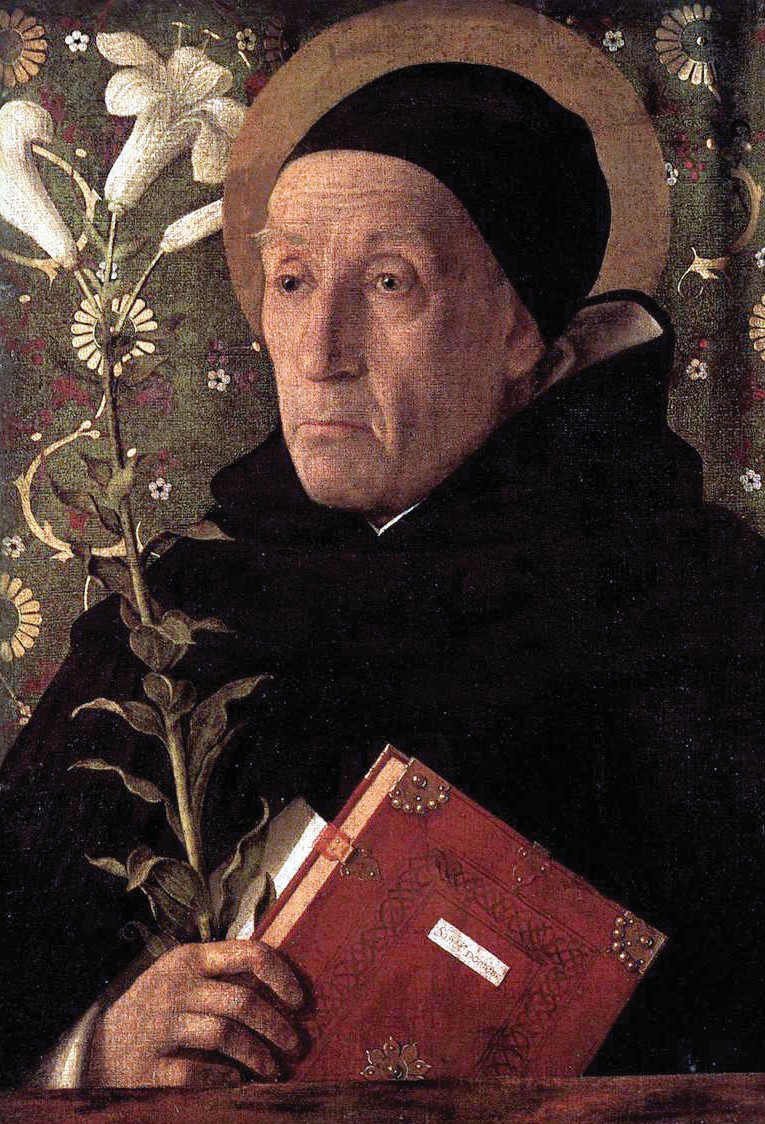
Meister Eckhart
1260–1327/1328, present-day Germany
Eckhart von Hochheim, the great master of Thuringia and one of the most prominent figures of Christian mysticism, was born around the year 1260 in Hochheim, Thuringia. Many consider him the first great German philosopher as well one of the key figures of the scholastic school, referred to as the man “from whom God hid nothing”. However, his works were unavailable for over five hundred years due to an enforced inquisition – as a result of which his own order removed his writings from the Dominican Order’s literary register. His rehabilitation consisted merely of publishing a volume of his writings in 1960. The brilliant master, who can rightly be considered one of the most influential figures of the renewal of thought and intellectual life, is still only little known.
At fifteen years of age, he joined the Dominican convent in Erfurt before being ordained as a monk. One of the main aims of his order was to spread the teachings of Jesus, and Eckhart’s knowledge and abilities were well-suited to these tasks, therefore it is no wonder that he had an extraordinary career within his order. After completing his studies at the most distinguished schools of the time, he briefly served as a magister and later a doctor, teaching at the most prestigious universities. He was made the prior of Erfurt and subsequently the Dominican Provincial of Thuringia, followed by the Provincial Superior of Saxony in 1307 and was appointed head of the order’s theological training in 1323. In the meantime, he also served as the head of the Dominican Department at the University of Paris for some time.
In this period, he also travelled throughout the provinces under his supervision and their monasteries, preaching incessantly. He was also the supervisor of a number of Dominican women’s convents, all the while working on his writings that were later published in the form of his famous works. Meanwhile, he was constantly travelling, teaching and providing commentary on the Bible, while preaching the Gospel whenever possible. One might rightfully wonder how it was possible for him to carry out so much creative, intellectual work in the midst of so many obligations. In addition, there are many other mysterious elements to his life, which is compounded by the fact that no useful or published biographies of him were written, either in life or in the subsequent years.
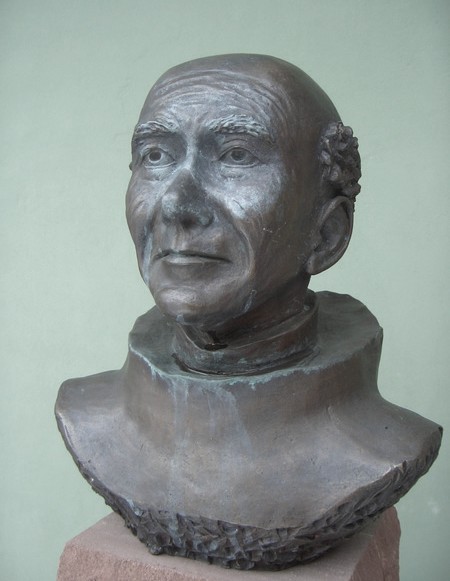
Eckhart’s ordeals unexpectedly began at the height of his career in 1325: he was accused with the charge that his teachings could have easily lead simple and uneducated people into error. In the proceedings, all the usual means of the time were employed against him: envious people hired false witnesses, and the jealousy of the other heads of order and the incomprehension of simpletons turned into hatred. Although it was his duty to fight against heresies while in office, he was still condemned for spreading “heresies”. Even Pope John XXII deemed some of his teachings to be “very bold and suspicious of heresy”. However, before he could be tried, Meister Eckhart disappeared, which is why there are no records of the end of his life and his final resting place is also unknown.
The records of the Dominican Order do not mention this mysterious disappearance, and instead they believe that Eckhart died in Avignon or Cologne in 1328, before the end of the Inquisition proceedings were concluded. We must also mention two of his fellow members of the Order, Henrik Seuse and Johann Tauler, whom Eckhart met and even taught in Cologne. The three of them were referred to as the “Mystic Triumvirate”. Despite the long-lasting ban, Eckhart’s works and teachings attracted many followers: the lay organisation the Friends of God continued to disseminate his writings even after his death, which hugely influenced Christian mystic thinking, including the likes of Jakob Böhme, Nicolaus Cusanus, and Angelus Silesius, while Dr. Rudolf Steiner, the originator of Anthroposophy, frequently highlighted the greatness of Meister Eckhart. Interestingly enough, his name survived with the title of “Meister”, despite the fact that monks do not usually bear such titles. It is a sad fact that the Catholic Church, which Eckhart served so fervently, was the one that condemned its own follower and great teacher.
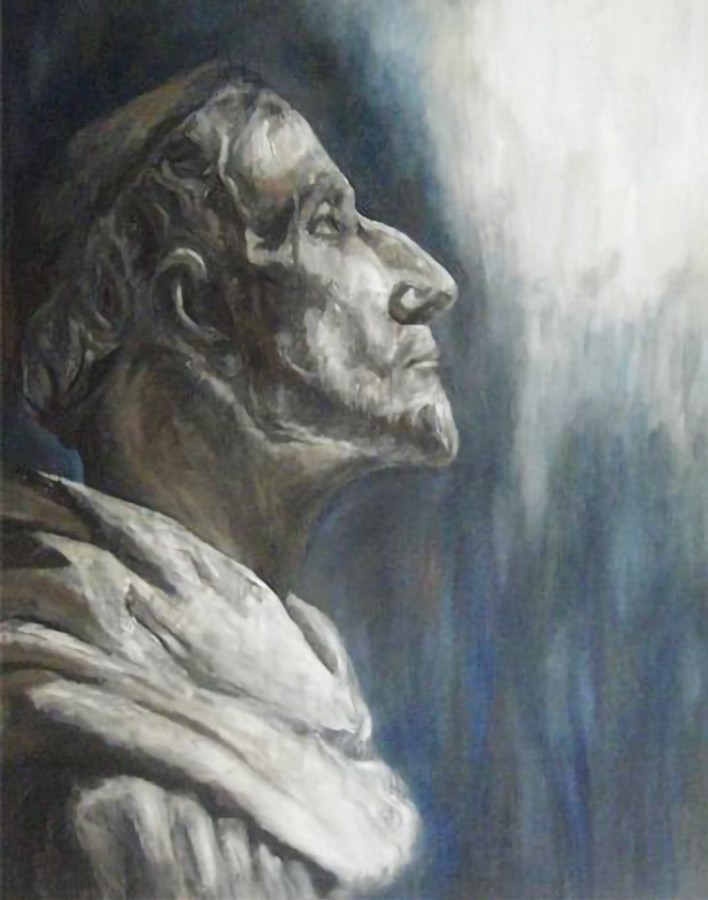
“The quickest horse that carries you to perfection is suffering.”
“Man should not be satisfied with an imagined God; for when the thought passes, God also passes. One should rather have an essential God who is far above the thoughts of men and all creatures. This God does not disappear unless we turn our back on him of our own accord.”
“If we are free from all created things, we are filled with God.”
“Go completely out of yourself for God’s love, and God comes completely out of himself for love of you. And when these two have gone out, what remains there is a simplified One.”
“God brings forth His Son in thee, whether thou likest it or not, whether thou sleepest or wakest; God worketh His own will.”
“Were a person in so great a rapture as St Paul once experienced, and he learned of a sick person who needed a cup of soup from him, I consider it far better that you leave your rapture out of love and serve the needy person with what is a bigger love by far.”
“God consumes, eats us, until we are totally consumed. Eaten and made a part of [the divine]. That’s why Holy Communion is [such a great mystery of the faith].”
“We are all meant to be mothers of God…for God is always needing to be born.”
“In the midst of the silence, there was spoken in me a secret word.”
“The Ultimate and Highest leave taking is leaving God for God, leaving your notion of God for an experience of that which transcends all notions.”



