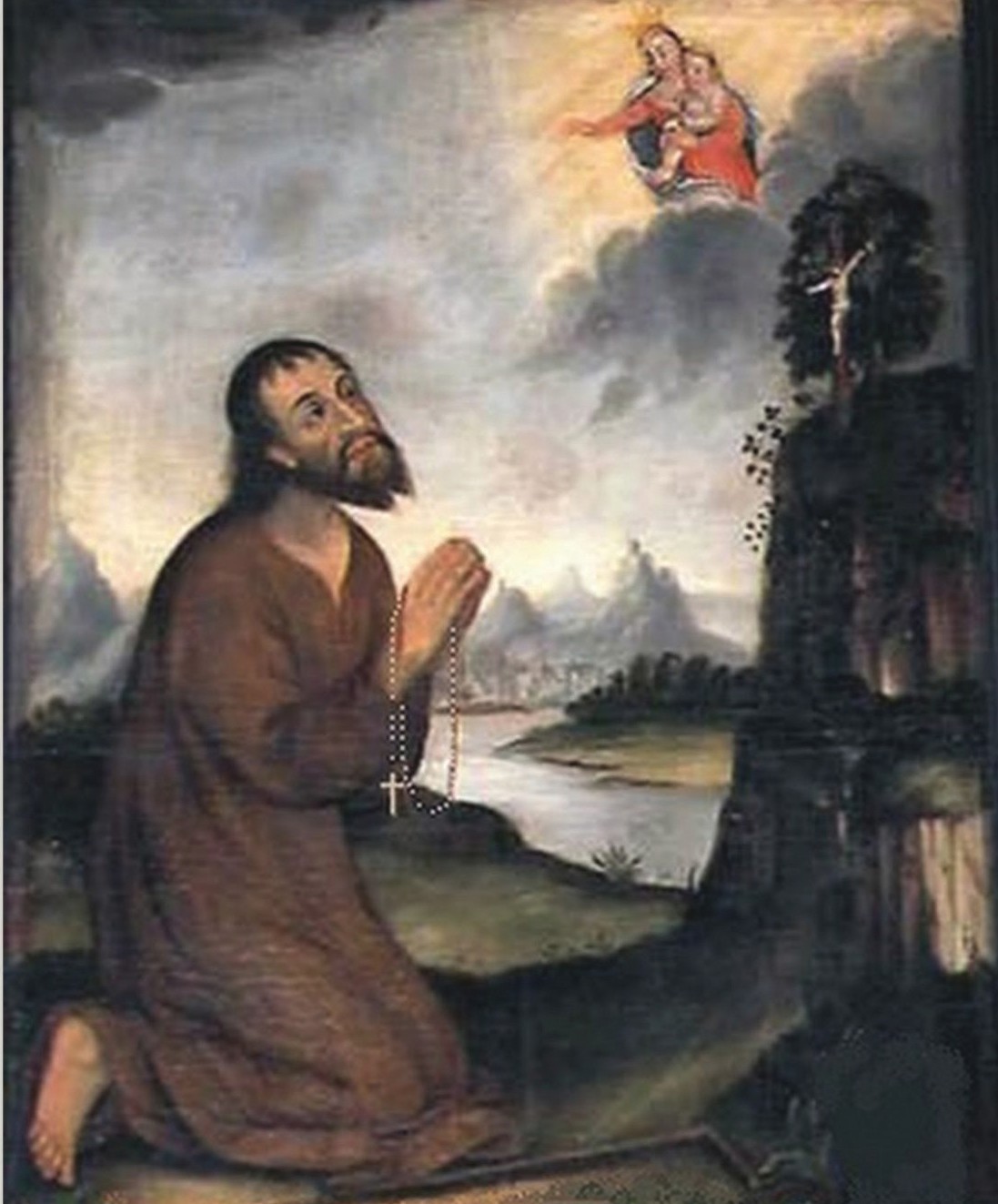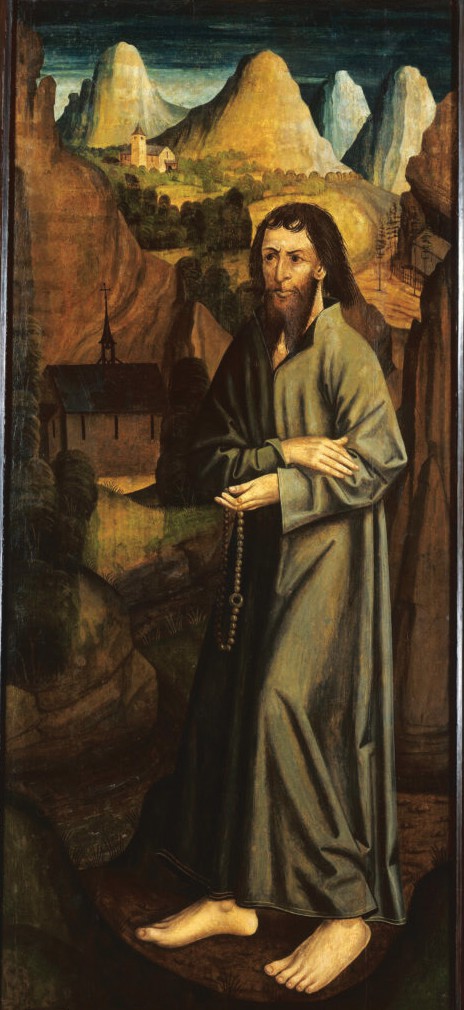
Nicholas of Flüe
1417–1487, present-day Switzerland
Nicholas of Flüe (or Brother Klaus), the hermit of Obwalden and the patron saint of Switzerland, was born on 25 September 1417 in the mountain village of Flüe as the first-born child of well-to-do peasant parents. From an early age he sought out opportunities for prayer and fasting. At the age of sixteen, while praying, he had a vision of a “tower reaching to the sky”, the tower of his life in the heart of his homeland, and felt a deep longing for retreating and atoning for people’s sins, yet he still joined the army in 1440 at the time of the civil war between the provinces.
After four years of war, he came home, married and had five sons and five daughters. He built a house, tilled the land and later served as a councillor and a judge. Even when married, he loved solitude and often retired to pray. His visions continued to call him to fulfil his mission, and a heavenly voice reminded him that he should “surrender to God’s will.” It is said that he had fought great battles with the devil. These were not just spiritual struggles, but, according to the testimony of the villagers, battles that left physical marks, which continued throughout his hermitage.
At the age of fifty, he decided to dedicate the rest of his life to God as a travelling hermit. This was preceded by a lengthy period of agonizing, yet he finally managed to commit himself to God’s will thanks to his wife, the wonderful Dorothea Wyss. The difficulty of his decision is illustrated by the fact that one of his sons was about to get married, the other had just obtained his first job in the civil service and his wife had just given birth to their tenth child, while his other family members and relatives found his intentions unacceptable. Finally, Dorothea, who stood beside him throughout his struggles, his search for God and the entire painful process for over two years, and from whom he had asked permission, agreed to his request. She personally sewed the robe of coarse cloth that he wore then he set out.
On 16 October 1467, the barefoot Nicholas first journeyed to Alsace, which at the time was the centre of the Bogomil movement, those “Dear to God”, his distant spiritual relatives. On his way, however, he met a mysterious peasant who told him to return to his own people and serve God there, rather than be a burden to other, foreign people. These words, and his subsequent nocturnal vision, made him overcome his fear of the mockery of those who knew him and return to his homeland, the Ranft ravine near his home, the site of the vision in his youth. At this point, the depression that frequently plagued him since his childhood disappeared for good. He lived the austere, holy life of a hermit, drawing ever closer to God.
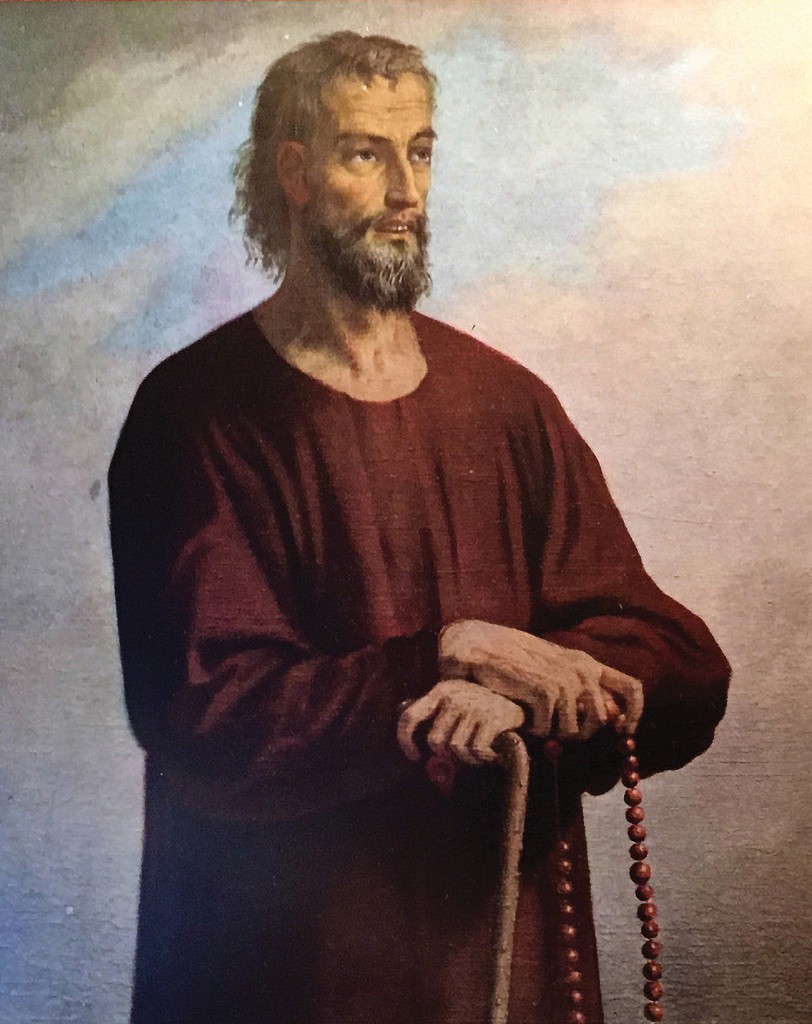
Previously, he fasted four days a week, yet for the following nearly 20 years, he ate no food at all. This was widely disbelieved and he was repeatedly investigated, observed and tested by the authorities and ecclesiastic bodies. He demonstrated the truth of Christ’s words by his own life example: “Man shall not live on bread alone, but on every word that comes from the mouth of God.” His daily bread consisted of long hours of prayer and atoning for his people. He took only the Eucharist when he had the opportunity, and drew mystical strength from it. News of the hermit of Ranft spread quickly among the people who venerated him as a saint even in his life. A chapel was built next to his hermitage.
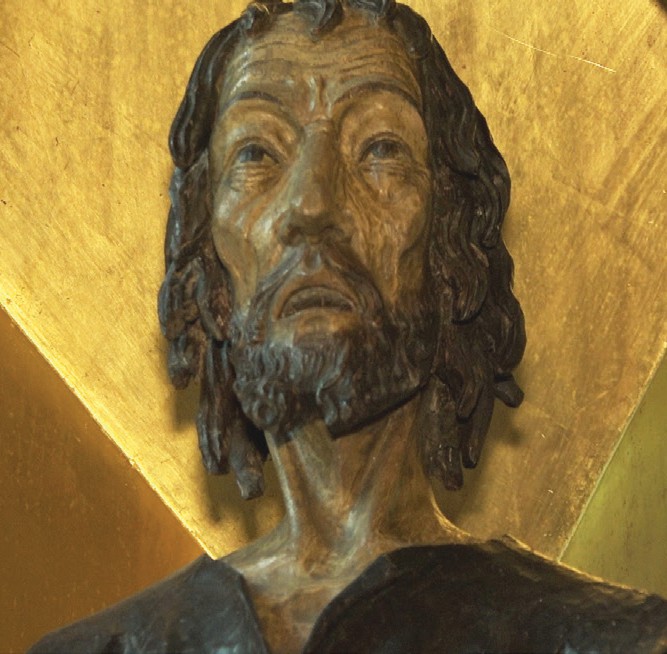
He didn’t speak much, but when he did, his words were full of wisdom. He could read people’s minds and he gave advice to those who came to him. He was a kind of “Swiss Starets”. He helped honest, humble people, yet exposed those with ulterior motives. Most of his visitors were frightened by Brother Klaus’ fearsome gaze and many were embarrassed by his prophet-like visage. He was a man with unkempt hair, yet his face was noble, and his skin was wrinkled, parched and earthy, as if dusted with powder. His tall and lean body was clothed in a single garment. He was visited by many local lords, and his opinion on political matters was often sought out and respected. In times of crisis, he firmly stood up for unity and saved his people from civil war. His advice established the foundations for the confederation of the Swiss cantons and the country’s subsequent neutrality.
In the final period of his life, he was thronged by huge crowds. Nicholas died while lying prone on the ground on 21 March 1487. At his tomb in Sachseln, countless miraculous healings took place. Although he was venerated as a saint by the people during his lifetime, it was not until 15 May 1947 that he was canonised by the Church.
“Don’t push the hedge too far! […] If you stay within your boundaries, no one can defeat you, you will be stronger than your enemies and you will win. Yet when tempted by greed and a desire for domination, you begin to extend your dominion, your strength will not last long.”
(Brother Klaus’ message to the Swiss)
“Peace is always in God, for God is peace, and peace cannot be destroyed; but discord is destroyed. Seek, then, to keep the peace.”
(Brother Klaus’ message to the government in Bern)
“God tested me with his file and spurs, that is, with grave temptations. He gave me no rest day nor night, and I sank so low that the company of my dear wife and children became burdensome to me.”
“God does not allow man to taste contemplation as if he were going to dance, and conversely he refuses to make him contemplate as if he were fighting in battle.”
“Provided I have humility and faith, I shall not go astray.”