Novalis
1772–1801, present-day Germany
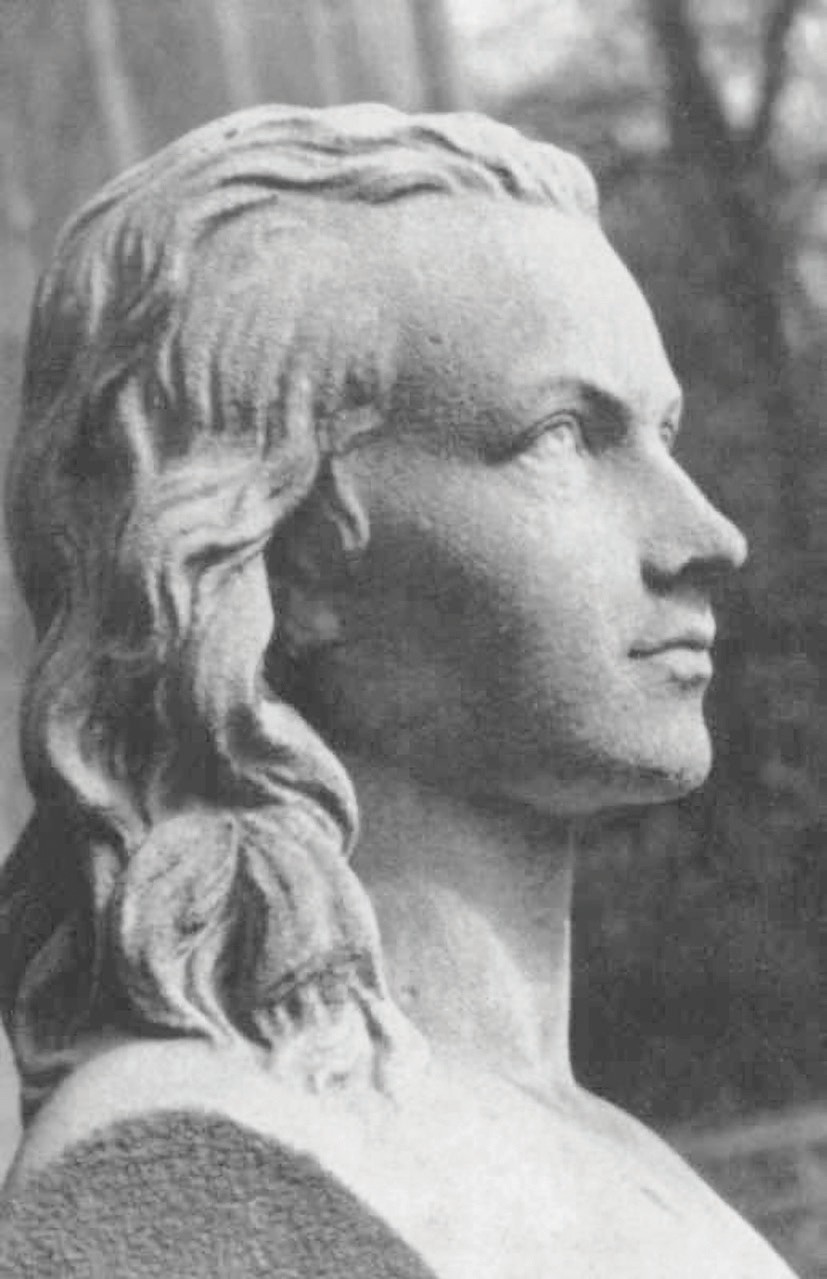
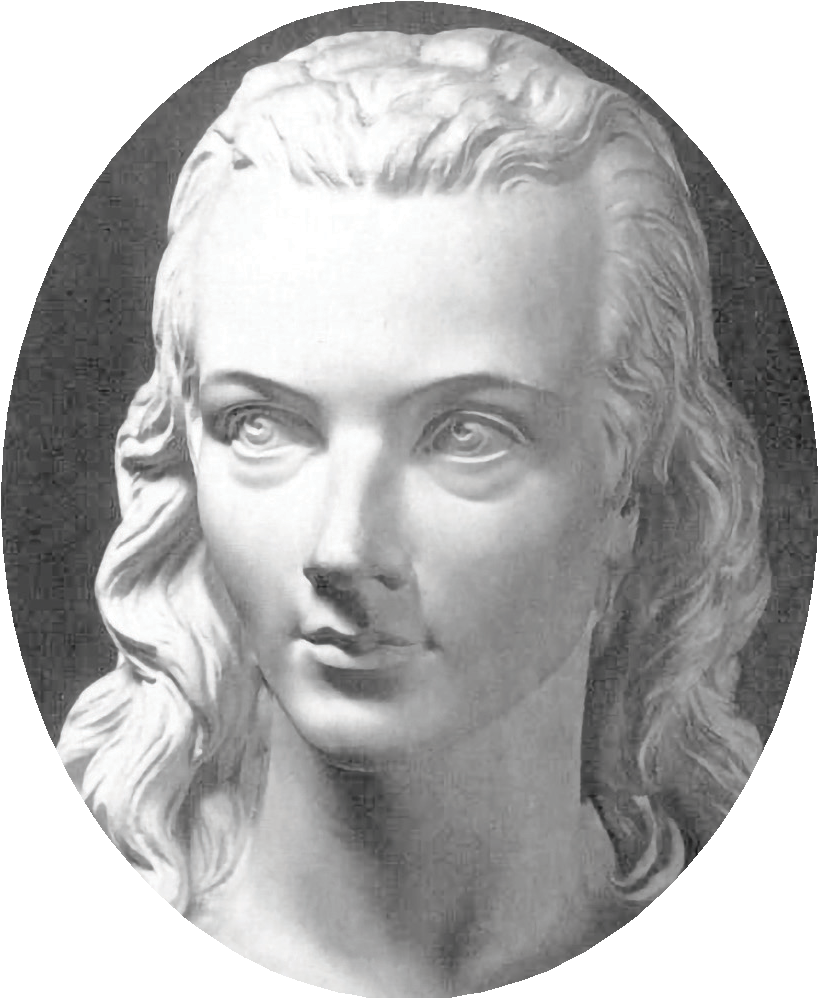
Georg Philipp Friedrich von Hardenberg the great writer, poet and mystic of Romanticism, known as “the poet of the Blue Flower” and who is considered by many to be an outstanding spirit, was born in the palace of Oberwiederstedt in the Electorate of Saxony in a noble household of Pietistic faith on 2 May 1772. His subsequent pen name originates from his ancestors known as the “de Novali”. According to the great scholars of spiritual science, his works created during his brief, 29 year-long life carried some of the most important messages ever presented to mankind.
He was sent to a parochial school at ten years of age, yet he was unable to cope with the strictness and confinement of the school and thus was taken for some time to his uncle’s household, where he familiarized the writings of French enlightenment. From 1790, he studied philosophy at the University of Jena before going on to study law in Leipzig. In Jena, he attended the historical lectures of Schiller. Subsequently, they developed a close relationship and he kept a vigil at the bedside of Schiller, who was dying of tuberculosis. The 1790s marked the beginning of the early or Jena Romantics. This movement and circle of friends included many of Europe’s greatest minds, such as the Schlegel brothers, Fichte, Schelling, Tieck and the young Novalis. They often met at the house of A. W. Schlegel, where they had dinner, talked, played music and read their writings to one another.
Friedrich worked as a clerk, while writing poems and philosophical treatises. In 1794, he met the 13 year-old Sophie Kühn, the love of his life – a year later they were secretly engaged. The same year, he had another crucial encounter, when he met Hölderlin for the first time. Sophie later succumbed to tuberculosis at the age of 15. The shock of her death had a lasting impact on his thoughts and works. For a time, he even sought out death, and tragically, when he found love again later in his life, he died before it could be fulfilled. “My favourite study is basically called like my bride: Sophia is her name—philosophy is the soul of my life and the key to my most own self,” he wrote, referring to the spiritual entity that many mystics referenced before him.
He studied a wide range of subjects, and in addition to natural sciences, he was also well-versed in law, philosophy, politics and economics. He was passionate about nature and in 1796, he began working at the nearby Weißenfels salt mine. In 1797, he commenced his studies at the Mining Academy of Freiberg, where he was introduced to underground mining. While studying and working in the local salt mine, he fell in love and became engaged to the foreman’s daughter. At the same time, his desire to work was rekindled and his famous works of art began to see publication. These works were, in his own words, fuelled by a single ideal: “love, the final end of the world’s history”.
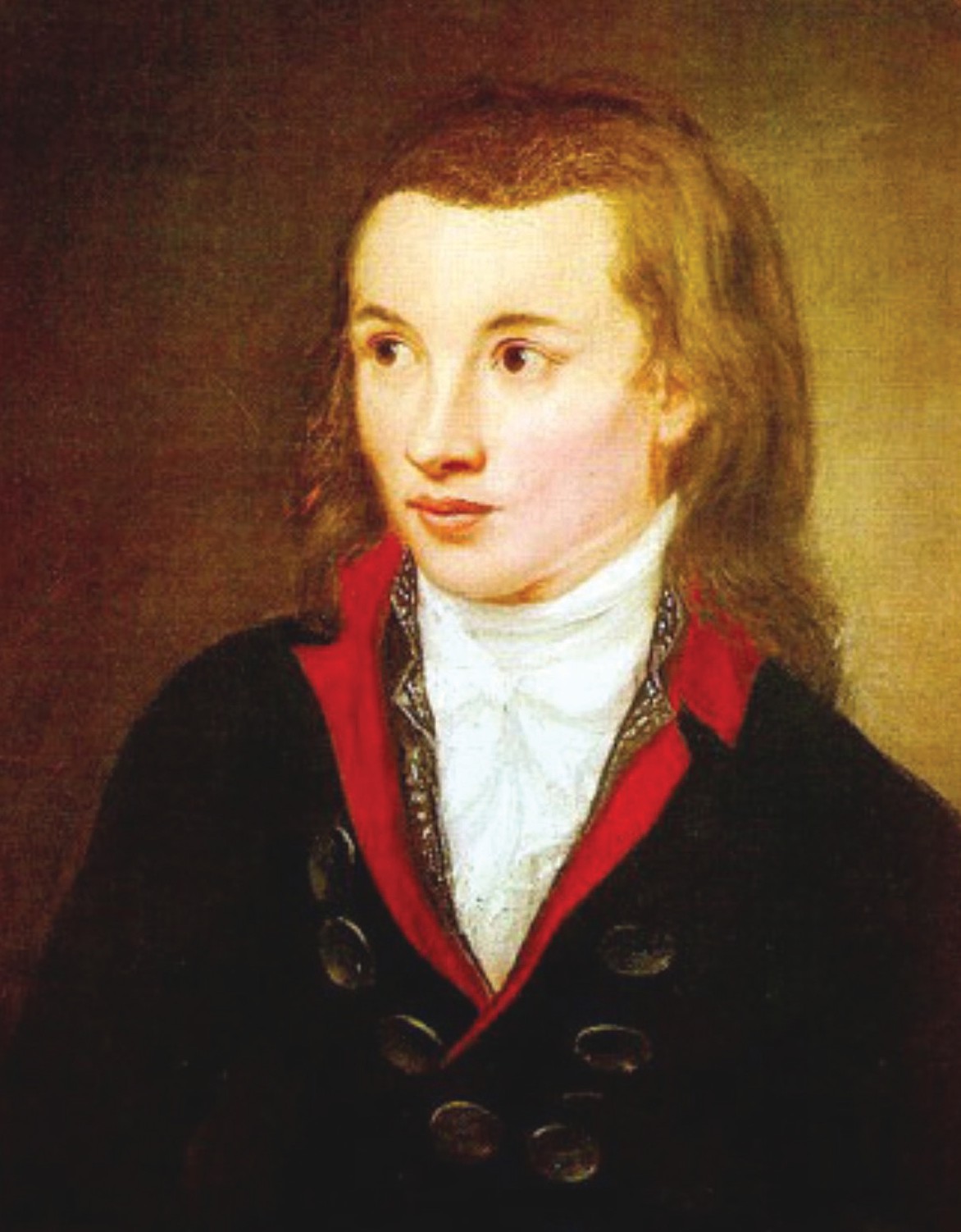
Novalis considered the mystical and the mysterious to be the essence of poetry. He believed that poetry is related to the prophetic and religious nature of man and that beauty, truth and love should be the pursuit of life. In 1798, he published his first collection of fragments entitled Blüthenstaub (Pollen), followed by a succession of great works including Hymns to the Night and Heinrich von Ofterdingen. His affinity with Christianity was unusual amongst his Romantic contemporaries: for example, in his essay entitled Christianity or Europe, he envisaged the creation of a universal Christian Church to restore the cultural, social and spiritual unity of Europe, which had been shattered by the Reformation and Enlightenment. For Novalis, practical action was just as important. He consciously sought for the ties between science and poetry. He outlined the rigorous philosophical programme of German Romanticism, establishing the symbol of German Romanticism as “the Blue Flower” that appears in the dream of the protagonist of his novel Heinrich von Ofterdingen – the flower of the distant and unattainable, which became a symbol of Romantic languor.
Novalis died in Weißenfels on 25 March 1801. Heinrich Heine wrote the following of him: “Novalis saw marvels in everything, and charming marvels they were. He listened to the language of the plants, he knew the secret of every young rose, finally he identified himself with all nature, and when autumn came and the leaves began to fall, then he died.”
“Once it has become clear to man that the world is the kingdom of God, and once he has been fully convinced of this great conviction, he may go boldly and calmly along the dark road of life, and face the storms and dangers with deep, divine calm.”
“We dream of a journey through the universe. But is the universe then not in us? We do not know the depths of our spirit. Inward goes the secret path. Eternity with its worlds, the past and future, is in us or nowhere.”
“Unto thee, O Mary / A thousand hearts aspire. In this life of shadows / Thee only they desire. In thee they hope for delivery / With visionary expectation — If only thou, O holy being / Could clasp them to thy breast”
“Love is the final end of the world’s history, the Amen of the universe.”
“We are God’s children, divine seeds. One day we shall be what our Father is.”
“There is but one Temple in the World; and that is the Body of Man. Nothing is holier than this high form. Bending before men is a reverence done to this Revelation in the Flesh. We touch Heaven, when we lay our hand on a human body.”
“We are on a mission: we are called to the cultivation of the earth.”
“We all originate from an ancient kingdom. Yet few people today bear the marks of that origin.”
“God wants there to be gods.”