Philip Neri
1515–1595, present-day Italy
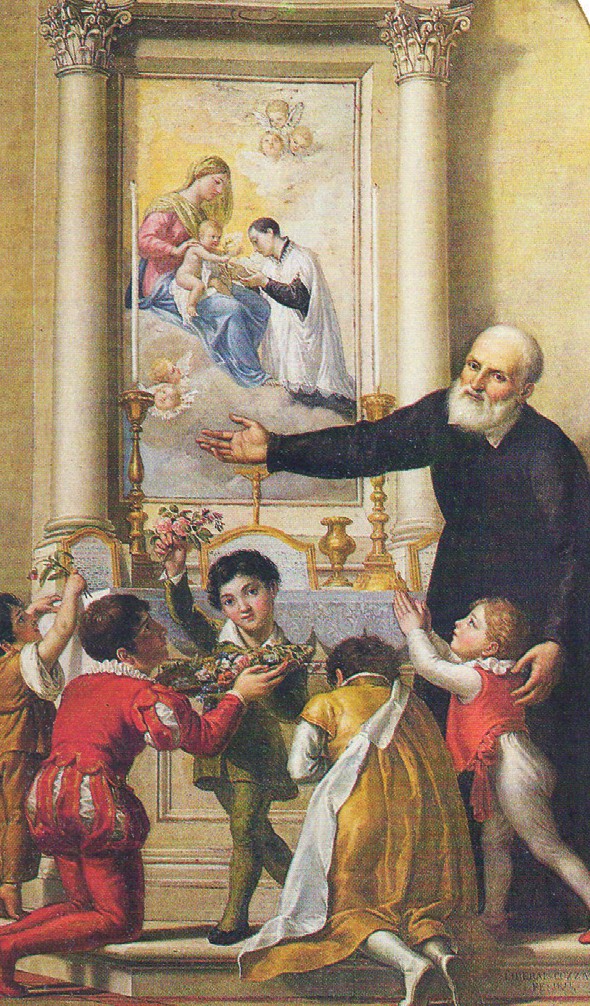
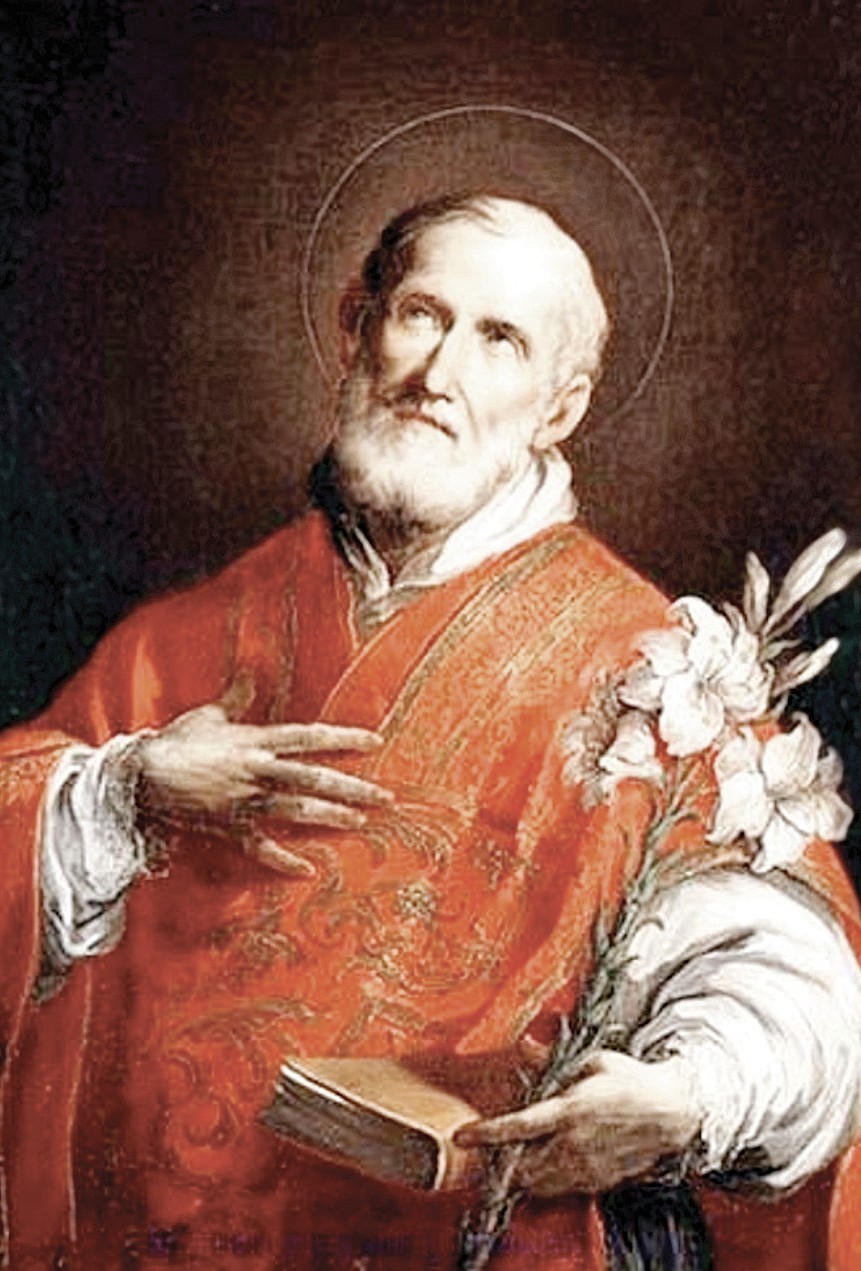
Philip Neri, founder of the Congregation of the Oratory, one of the greatest Christian saints and the “second apostle” of Rome, also known as the patron saint of joy, was born on 21 July 1515 in Florence. At the age of eighteen, his father sent him to San Germano, near Monte Cassino, to be a merchant, but he spent most of his time at the local centre of the Benedictine Order, where he decided to become a missionary in India. Thus he went to Ignatius of Loyola in Rome to ask for permission, yet stayed there for the rest of his life, seeing so many needy children in need of care and education.
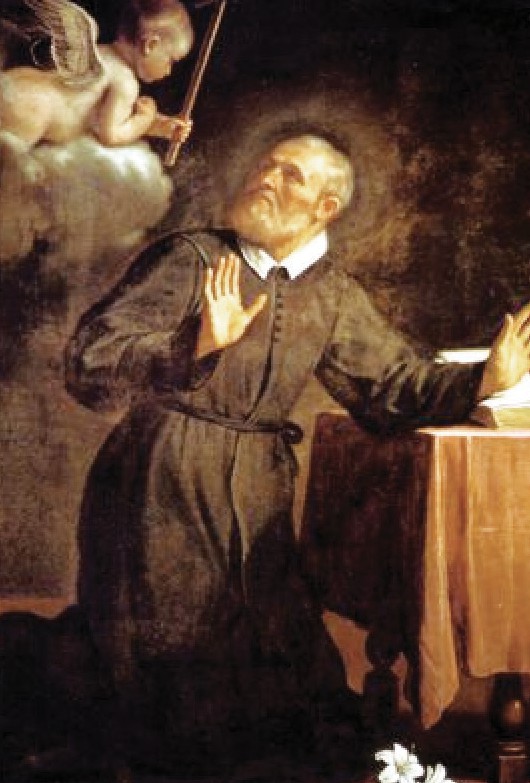
From a very young age, he spent long nights in the catacombs, practically without sleeping and continuously praying, while his days were spent preaching in the streets. He was very fond of living in holy poverty and sacrificing himself for the benefit of others. He worked a great deal and because of his constant work he never had time for himself. According to contemporary accounts, at the age of twenty-nine, on the day of Pentecost, in the church of St. Sebastian, a fiery orb entered his heart, expanding it to such a degree that two of his ribs were broken and bulged out from his chest. After this great mystical experience, divine love burned in his heart all his life. His body was so fervent and hot in prayer that his disciples could not bear to touch it. Because of the heat that radiated from his body, he had to sleep with the windows open in the winter and wear airy clothing. When the disciples gathered around him, they could hear his heartbeat from a great distance.
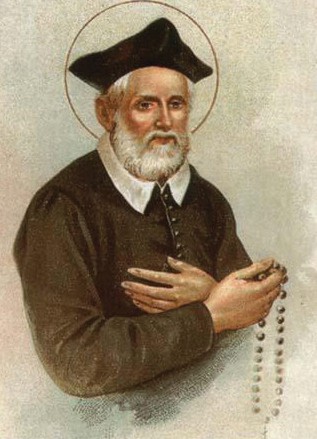
His main work was the so-called Oratory, an institution established by holy inspiration for the physical and spiritual nourishment of the poor and needy. Initially, Father Philip invited the needy into a sparse little room to spend time in spiritual conversation, singing and confession. In light of the saint’s exemplary life, more and more people joined him. The Oratory, located in San Girolamo, became the means of returning to the model of the apostles and was approved by the Holy See in 1575 by a papal bull issued by Pope Gregory XIII. Philip exuded cheerfulness and a natural presence. He sought to transform the Oratory into an organisation free of all appearances and open to all those in need.
Although Father Philip was characterised by extraordinary humility, compassion, humour, intelligence and wisdom, he was one of the toughest and most consistent Christian saints. His emphasis was on the proper way of living everyday life and he was always wary of the occult. Despite this pragmatic attitude, his life was full of mystical experiences. He is known to have fallen into raptures so great that he was often lifted off the ground. The aim of his work was to make a home for God in people’s hearts. For forty-five years, he worked almost every hour of the day on the inner rebirth of people. The news of his sainthood spread like wildfire when he resurrected a dead child. Yet he did not consider himself a saint and spoke of himself in the most modest terms.
St. John the Baptist is said to have appeared to him several times to give him instructions. During his Masses he often fell into a reverie that lasted for hours, and he trembled and wept so intensely that he was unable to preach. It is said that for forty-four years he served as the spiritual father of all of Rome. Huge crowds flocked to him for confession (which he considered his most important duty), and he performed this task even on the day of his death. The people of Rome were convinced that his mere sight or touch would banish their temptations. The Church offered him a high office on several occasions, yet he always wished to be a simple monk, and distanced himself from all worldly positions. He knew the exact time of his own death, and prepared for it with fatherly care. He departed from the earthly world on 26 May 1595. The process of his beatification began only two months after his death. He was finally beatified in 1622 together with Ignatius of Loyola, Francis Xavier and Teresa of Avila. His main work, the Oratory, which was once “the centre of the religious life of Rome” survived after his death and became a major institution. His work of conversion was continued by his disciples who were previously street urchins.
“Why prison bars the aspiring soul prevent / From leaving earth, above the stars to dwell, /
To die to self, to live to God, intent?” (excerpt from the only remaining sonnet of Philip Neri)
“Father Philip saw a ball of fire enter into his mouth and then felt his breast expand over his heart. The sensation of inner fire was so strong that Philip threw himself onto the ground and cried out, ‘Enough, Lord, enough! I cannot take any more!’” (excerpt from Pietro Consolini’s account of the mystic experience of Philip Neri)
“The cheerful are much easier to guide in the spiritual life than the melancholy.”
“If there were only ten people who were entirely indifferent to the matters of the world and who needed nothing but Christ, the world would be radically different.”
“The sanctity of a man lies in the breadth of three fingers (the forehead), that is to say, in mortifying the understanding, which would fain reason upon things.”
“On the evening of the Lord’s Day in 1595, he smiled and said to his companions:
Now I must die. Then he went to bed.
‘Are you not afraid?’ asked one of the brothers. Father Philip shook his head and said cheerfully:
No, I am not afraid. God is good. He will be a little lenient with his foolish and useless Philip.”