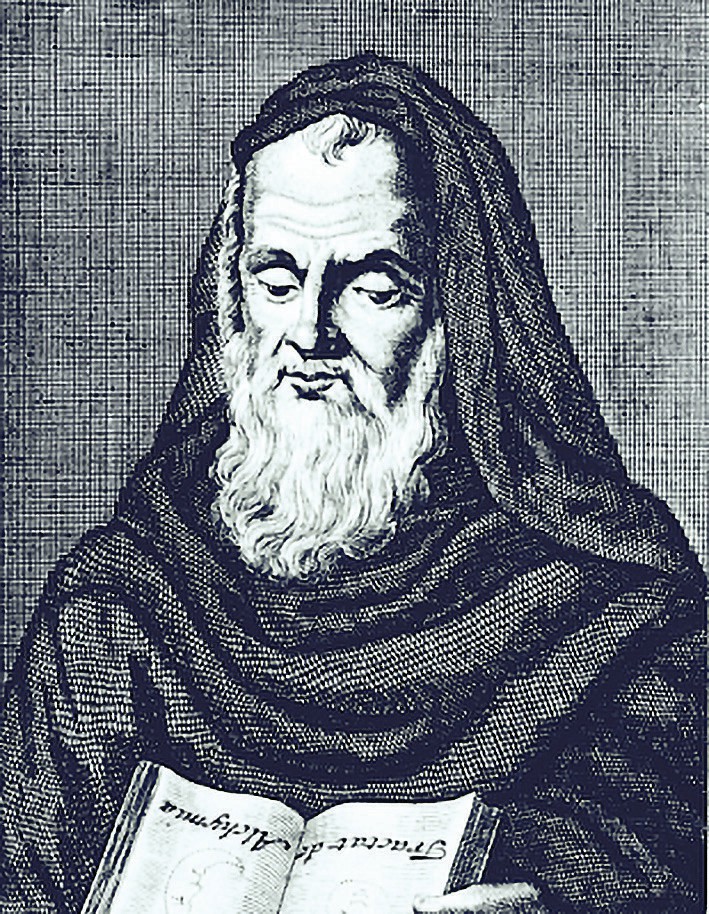
Roger Bacon
around 1214–around 1292, present-day England
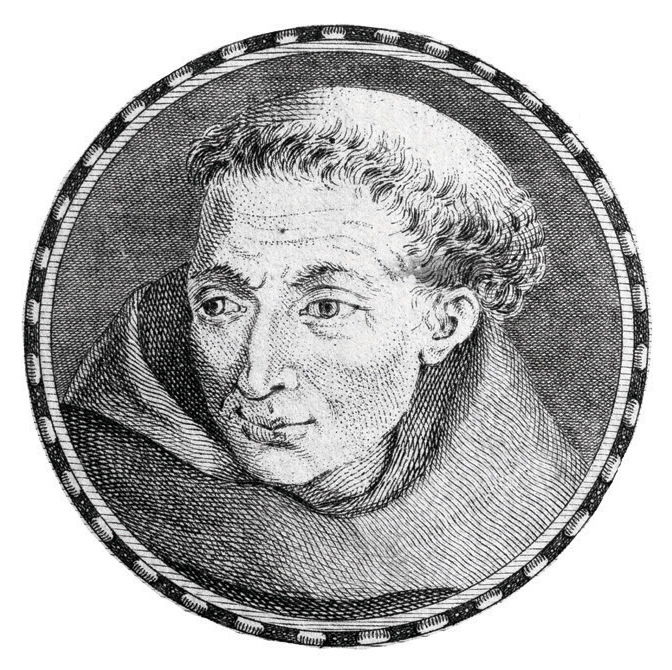
Roger Bacon, polymath scientist, Franciscan friar, alchemist, visionary and inventor, also known as “Doctor Mirabilis” (miraculous doctor), was born in Somerset, near Ilchester, in what is now England, around the year 1214. Bacon is certainly a key representative of the human intellect seeking renewal through the combination of religious and scientific approaches, yet was also a genius who was misunderstood by many in his lifetime and therefore treated extremely poorly towards the end of his life. His family was quite wealthy until the reign of Henry III, when their lands were confiscated and several members of the family were forced into exile.
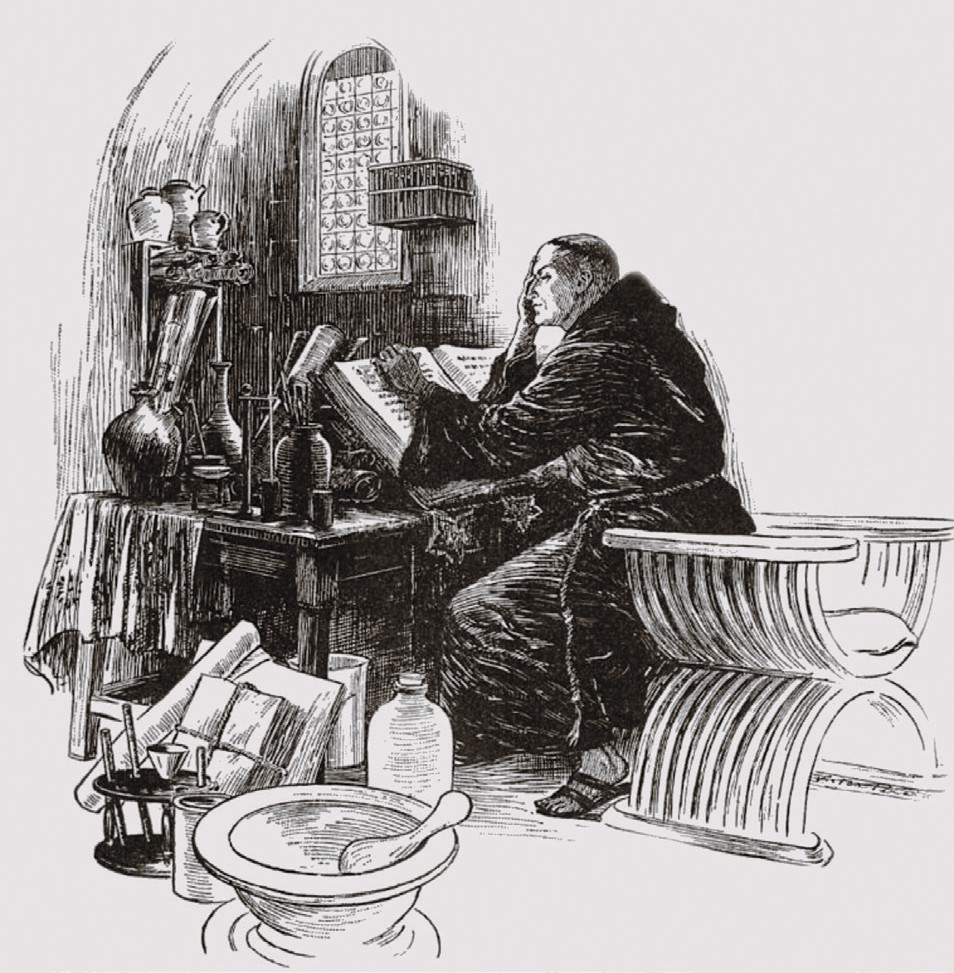
He studied and taught at Oxford University and later worked at the University of Paris. As a young lecturer, Aristotle’s teachings were central to his work and he became an expert of the subject. His interests were practically endless, ranging from linguistics to ethics, mathematics to philosophy, yet he was most deeply interested in natural sciences (optics, astronomy, and medicine). His approach was based on empirical work and experiments, yet also on a kind of intuitive inner knowledge. As practically all scientists of his time, he was deeply engaged in alchemy, yet he was also known as a visionary.
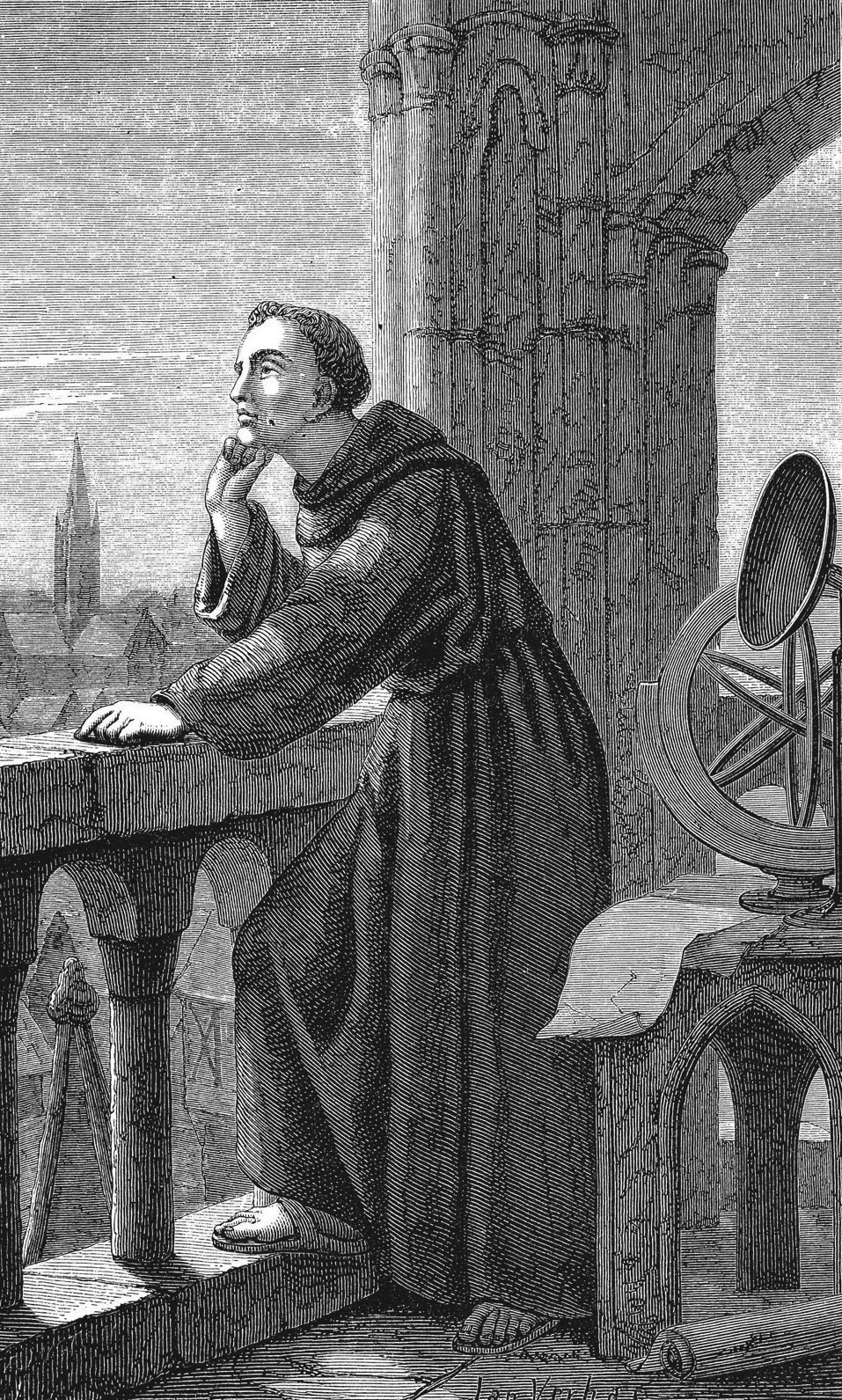
He is referred to as the “Verne of the Middle Ages”. In the 13th century, he sketched visions of cars, flying machines and great seafaring ships, and wrote about peculiar instruments, tools and inventions. He is credited, for example, with inventing the sail-less, self-propelled ship and the submarine, while his experiments led to the use of gunpowder for warfare. Bacon is credited with a cipher that has not been cracked to this day, which is the basis of the cryptic Voynich manuscript. Yet he is also credited as being the first to speak of the cell nucleus, which science discovered much later, and he is said to have perfected the telescope and the microscope. According to some sources, he had a secret laboratory where he carried out his scientific experiments.
One of the great mysteries of his life is that although he was an esoteric thinker and a gnostic, he still joined the Franciscan Order in 1247, which followed a completely different path. He was certainly a devout Christian who believed that his scientific work could help man better understand the world and therefore God. St Augustine encouraged Christians to learn from and make use of the teachings of pagan philosophers. Bacon strongly believed in this teaching of St Augustine and studied all the Greek and Arabic works he could get his hands on. For example, he was greatly influenced by the great physician-philosopher Avicenna, whose works he read in the original Arabic language.
Another peculiar detail of his life was that his old friend became Pope under the name of Clement IV, and during Clement’s time as the Pope (more than 3 years) he supported Bacon, who was free to carry out his experiments and give lectures. His most important work is the “Opus Maius” (Greater Work), which is divided into seven major themes, each with a chapter devoted to a major issue of his time. The work is an example of Bacon’s attempt to incorporate Aristotelian logic and science into a new theology. Bacon’s uncompromising nature, brusque manner, fierce debating skills and innovative thinking earned him the displeasure of the other members of his Order.
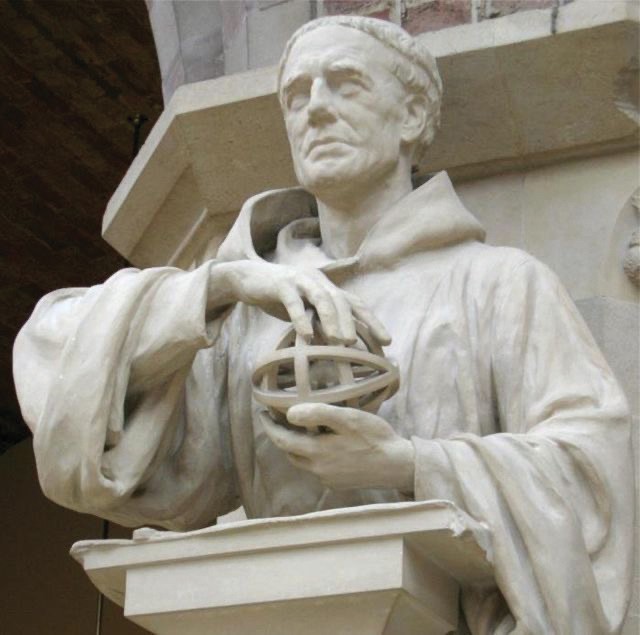
His contemporaries feared him for his novel approaches and unconventional views. For this reason, and because of his suspicious experiments, his fellow monks kept him locked in his cell for years. This so-called ‘house arrest’ lasted practically until his death, during which he was not allowed to give confession and was denied absolution. Consequently, this great spirit died alone and unknown in Oxford in 1292, shortly after his release from captivity. However, in the centuries that followed, the spirit of Roger Bacon served as a guiding light for those who intended to transcend the boundaries of dogmatic thinking. Although his greatness was not recognised in his own time, researchers in many fields of science still reference him today. The statue of Roger Bacon in the courtyard of the Oxford University Museum of Natural Science features an astrolabe and a caliper. The former symbolizes his scientific studies, while the latter his pursuit of harmony.
“The mind is disturbed by faults, just as a rusty mirror in which the images of things cannot be clearly seen, but the mind is prepared by virtue like a well polished mirror in which the images of things show clearly. On account of this, true philosophers have accomplished more in ethics in proportion to the soundness of their virtue, denying to one another that they can discover the cause of things unless they have minds free from faults.”
“I do not follow Aristotle, and the time will come when I will deviate from myself as well: the works of human reason are always being perfected.”
“It is a wretched argument that is supported by custom and tradition.”
“There are two modes of acquiring knowledge, namely by reasoning and experience.”
“Mathematics is the gateway and key of all the Sciences.”
“Authority is of no value if it cannot give an account of the cause of what is asserted: it cannot understand anything, it can only believe.”