
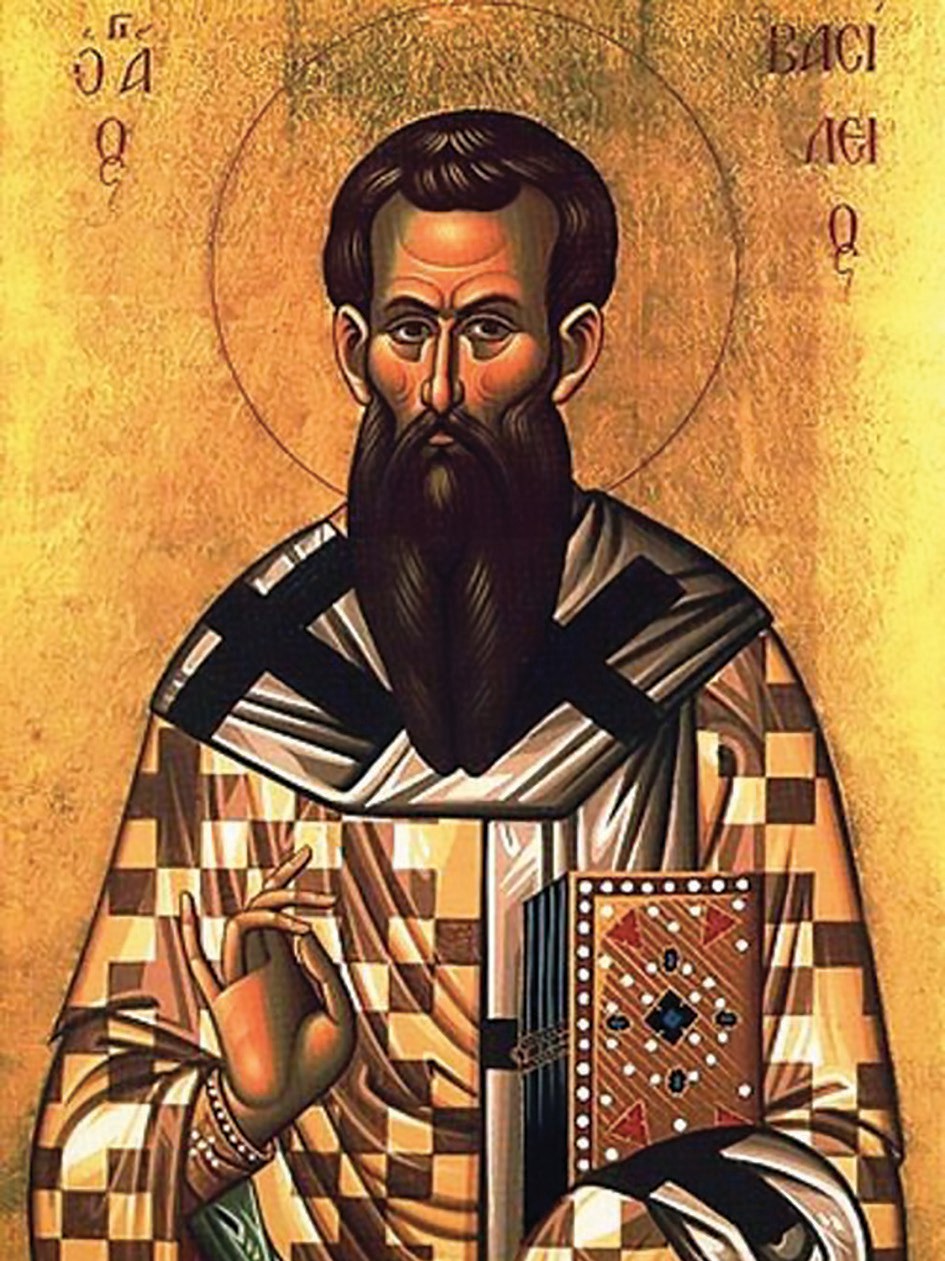
Saint Basil of Caesarea
330–379, Current-day Turkey
Saint Basileios, who is known as Saint Basil the Great or merely Saint Basil in the west, is the father of eastern monasticism, the writer of the first set of rules of Eastern Christian Churches, and the founder of The Congregation of St. Basil. He was born in 330 A.D. in the city of Caesarea in Cappadocia, in the region of the current-day Turkey. He was an exceptional man, both concerning his influence and his human greatness, which is why he gained the nickname “the Great”, which shows that he was a servant of everyone and and thus did a great service for humanity. He was from a prominent, educated, Christian family. His grandparents were the disciples of Gregory the Wonderworker, who suffered much at the time of the persecution of Christians and finally died as martyrs. Saint Basil was born in the same year as his future best friend and fellow brother, Gregory of Nazianzus, with whom he studied in Constantinople and Athens and encouraged each other to live their lives according to the Gospels. After years of studying, Basil could have had a promising career – however, he felt at unease in the worldly life and faced a major spiritual crisis.
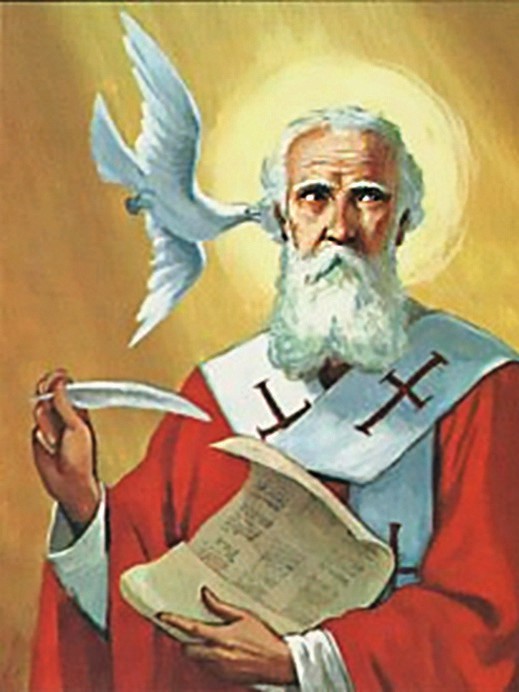
He recovered from this crisis after a long journey, during which he visited the hermitages and monasteries of Alexandria, Egypt, Palestine, the valley of Lebanon and Mesopotamia. This entailed a year-long pilgrimage, which he mainly accomplished on foot, during which Basil realized the true meaning of the following of Christ. The 28 year-old boy underwent a great change once he saw and experienced the religiousness of the monks living in secluded monasteries. He gave all he had to the poor and left the city, establishing a hermitage near the Iris River in Cappadocia. His ideal was to achieve “Hesychia”, or divine peace and harmony; however, he realized that he only lived for himself as a hermit and ascetic secluded from all. He thus elaborated a set of 55 lengthy and 313 brief rules, a set of Christian regulations which extended to the service of others, the role of community, as well as spiritually elevating work and the life of monks. In order to fulfill his mission, he soon left his secluded monastic life behind. He was ordained as a priest in 364; in 370 he became the bishop of Caesarea. He fought for the recognition of the Church and priests alike and did his utmost to dissolve the isolation of the hermits from the Church. He lashed out at the rich for their greed and firmly opposed Arianism, preaching that the Father and the Son are of the same nature.
He was an excellent orator, an accomplished philosopher, a superb organizer and spiritual leader. Thanks to his blessed efforts, he established a great social order: he created people’s kitchens, aid organizations, shelters and hospitals. The latter ages dubbed the foundation Basileias or Basil Institute. He bequeathed many important works to the world, for example, the Rule, in which he gives guidelines for the lives of monks. Thanks to his organizing work, the Order of Saint Basil and the Sisters of the Order of Saint Basil were formed. To this very day, his Rules have a special place within Orthodox Christianity, on which most of the Eastern Monastic Orders are based. He strove to organize the isolated monks of Asia Minor into communities. Monasteries of St Basil can be found in Asia Minor, the Balkans, Southern Italy and Russia, amongst many other places. Saint Basil the Great died at 49 years of age, on the 1 January, 379.
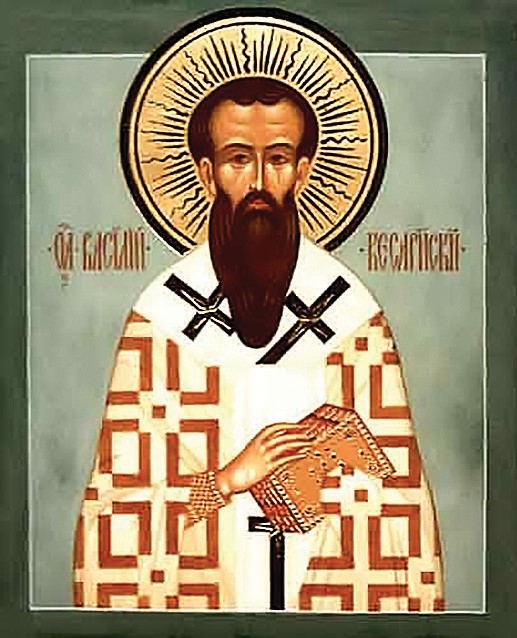
“… Do you not appropriate what you were granted to manage? A per- son who steals the clothes of another person is called a thief, but does not the person who has it in his power to clothe his brother, yet choose not to, also deserve to be called a thief? The bread you hold back belongs to the hungry, the clothes you keep in a chest belong to the naked, the shoes you have that go out of fashion belong to the shoe-less and the money you bury belongs to the needy. Thus you commit injustice on all whom you could aid…”
(Saint Basil the Great)
“He did not falter when the Byzantine Emperor threatened him through Modestus with confiscating his wealth, exile, torture and death, and fearlessly asked him, “Is that all? None of this concerns me. He who has no wealth has nothing to be confiscated, you would only get my old clothes and a few books – that is my wealth. I know no exile, since I am at home in all reaches of God’s world. Torture cannot sway me, since I know my body is fallible. However, I warmly welcome death, since I will find my way to God all the sooner. I desired death and have been hastening to- wards my grave for long.”
(excerpt from Walter Nigg’s book The Secrets of Monks on Saint Basil the Great)
“He who truly wishes to follow God must free himself from the shackles of earthly passions.” (excerpt from Saint Basil’s Rule)



