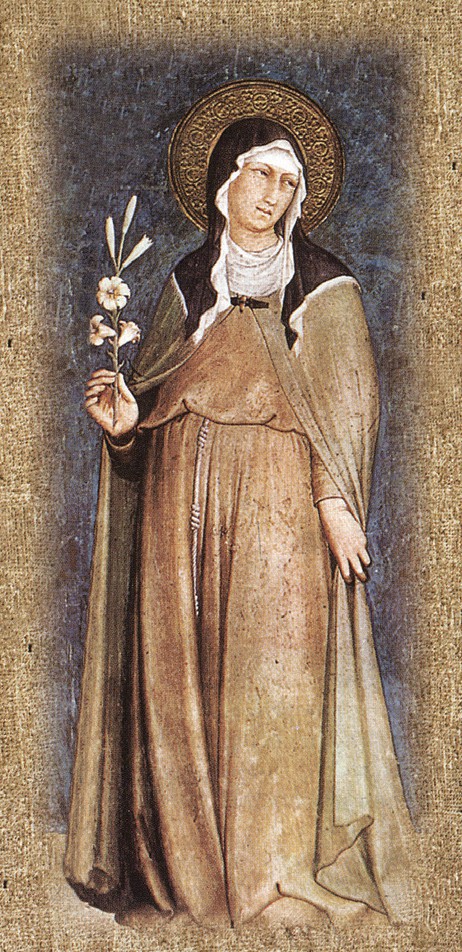
Saint Clare of Assisi
1194–1253, present-day Italy
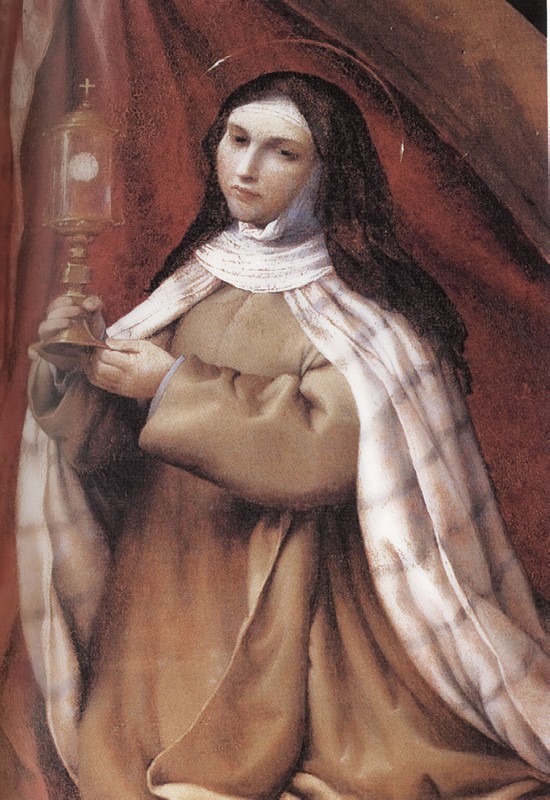
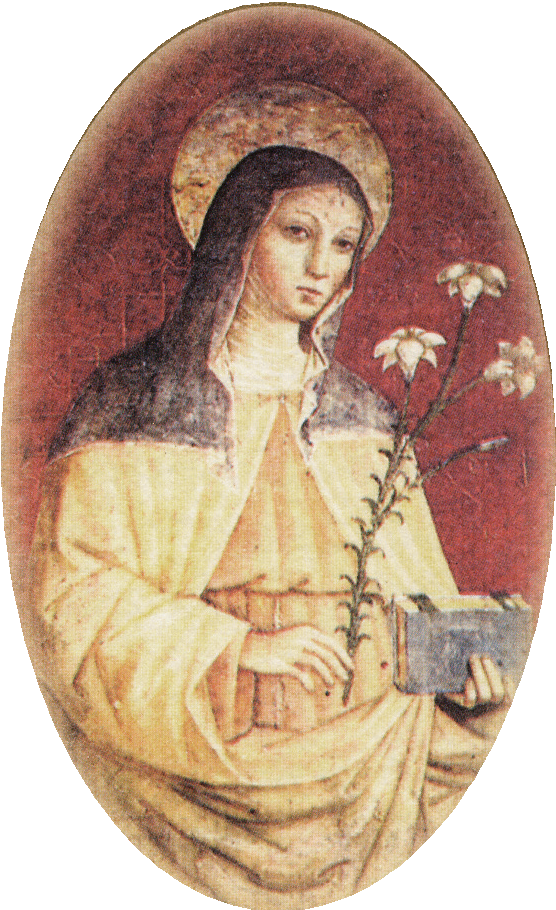
Saint Clare of Assisi, the founder of one of the three main Franciscan orders, the Order of Saint Clare and the soul mate to St. Francis of Assisi was born on 16 July 1194 – or 20 January according to other sources – as the child of a wealthy family. As the most important female disciple of Saint Francis of Assisi, she was one of the main supporters of Francis and his mission. She was originally raised in her family to live as a noble lady in wedlock. Clare, however, was deeply moved by Francis’ vow of poverty, his devotion to Christ and sermons. She turned to him for help and advice and Francis helped her understand how deceitful and fleeting earthly glories are and taught her to preserve her virginity for the one and true Bridegroom who became man out of his love for mankind.
When Clare was eighteen, one night she ran away from home to become a nun. Allegedly, Francis himself cut her hair and gave her a rough dress symbolizing repentance. Her family repeatedly attempted to take her home, even resorting to violence and Clare was forced to run from them on multiple occasions. After some time, she was followed by her younger sister, Agnes. Their relatives attempted to carry her home, yet as a result of Clare’s prayers, Agnes’ body became so heavy that a dozen strong men were unable to move her. Subsequently, Francis moved Clare to the church of San Damiano next to Assisi, where the nun’s first monastery and order was established as the Poor Ladies of San Damiano.
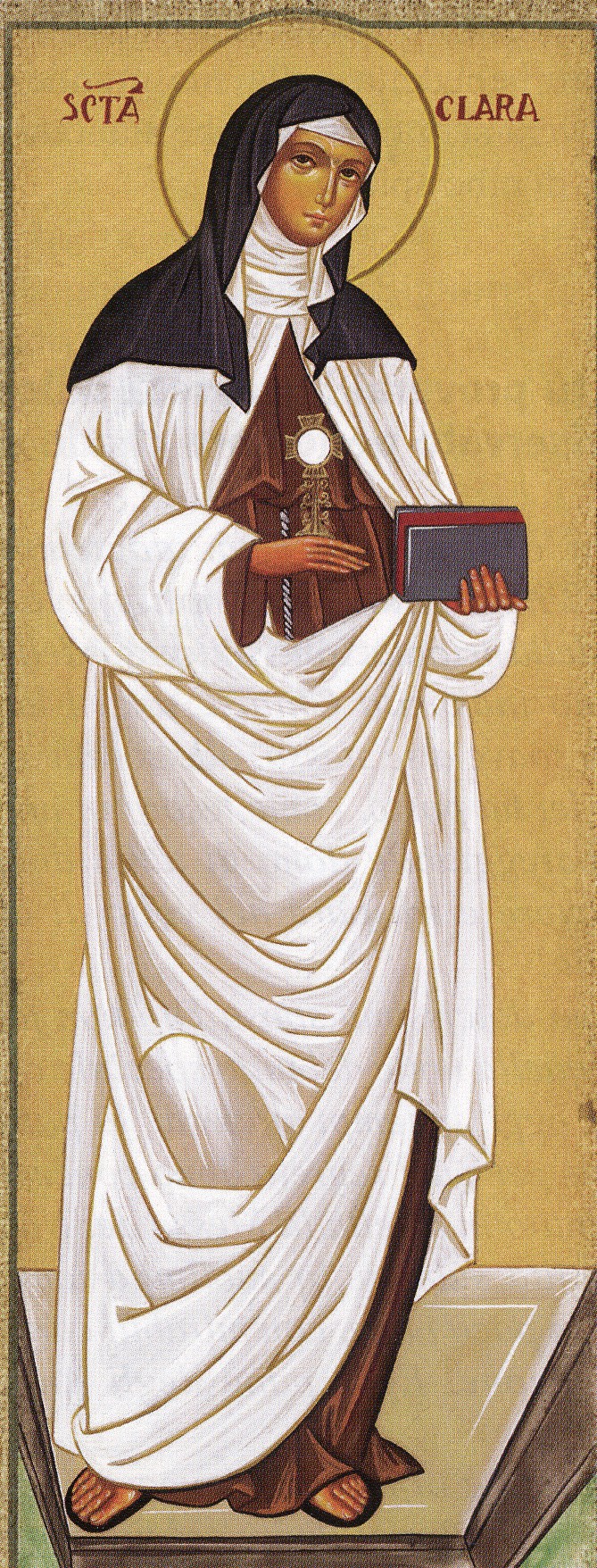
Clare spent the rest of her life here and her two sisters and even her mother joined as a nun. Clare served as a spiritual mother of sorts for the ladies at the monastery. The nuns lived their lives according to the strictest orders and did not wish to give up on their voluntary hardship. Clare and her disciples were attracted to the notion of poverty. Their operation was imbued by the spirit of devotion and prayer. The greatest struggle of Clare’s life was to have the Church recognise their community and their rules as one of complete renunciation and strict poverty. This was the most rigorous way of following Christ through a life of great physical and spiritual demands, which the Church considered too extreme.
Oddly enough, Clare received the approval of her rule only on the day of death, 11 August 1253. She considered this recognition the greatest joy of her life. She encouraged everyone in her surroundings and furnished them with practical advice despite the fact that she became bedridden in 1244, enduring a great deal of hardship and suffering. She was described as being surrounded by a wondrous power, confirmed by numerous accounts. On one occasion, she multiplied a number of loaves of bread, whilst on another occasion, an empty flask was filled with water after receiving her blessing. According to one famous story, Clare and her disciples visited Francis and his companions at the monastery of Porziuncola, where Francis’ sermon left them in such a rapturous state that they forget to eat, while the monastery was bathed in bright, radiant light. The villagers all rushed to the monastery in fear of a fire, only to find the enraptured monks.
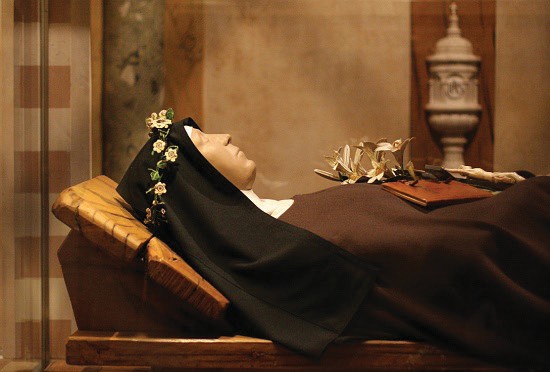
Following the demise of Saint Francis, one of Clare’s most important tasks was to unite the disciples and set a good example for them. Her entire being exuded a sense of nobility and holiness – whoever came close to her could sense the forces emanating from her – an experience that visitors to her shrine can still experience to this day. Her resting place and relics are located at the church bearing her name in the city of Assisi. Her funeral was attended by Pope Innocent IV, while his successor, Pope Alexander canonized her in 1255. The most important account of her life include her remaining letters as well as the collections of the life of Saint Francis of Assisi, such as the Fioretti (Little Flowers), or the Legend of Perugia. Clare’s being reflected the teachings and life example of Saint Francis. As a woman, she successfully realised the physically and mentally demanding life that Francis called for. Clare was both his soul mate and the example of the perfect disciple.
“Loving one another with the charity of Christ, may the love you have in your hearts be shown outwardly in your deeds so that, compelled by such an example, the sisters may always grow in love of God and in charity for one another.”
“In the Lord Jesus Christ, I admonish and exhort all my sisters, both those present and those to come, to strive always to imitate the way of holy simplicity, humility and poverty and to preserve the integrity of our holy way of living, as we were taught from the beginning of our conversion by Christ and our blessed father Francis…”
(excerpts from the testament of Saint Clare)
“O blessed poverty, who bestows eternal riches on those who love and embrace her!”
“If so great and good a Lord, then, on coming into the Virgin’s womb, chose to appear despised, needy and poor in this world, so that people in utter poverty and want and in absolute need of heavenly nourishment might become rich in Him by possessing the kingdom of heaven, then rejoice and be glad! Be filled with a remarkable happiness and a spiritual joy! Contempt of the world has pleased you more than its honours, poverty more than earthly riches, and you have sought to store up greater treasures in heaven rather than on earth, where rust does not consume nor moth destroy, nor thieves break in and steal. Your reward then, is very great in heaven! And you have truly merited to be called a sister, spouse, and mother of the Son of the Father of the Most High and of the glorious Virgin.”
(excerpt from Saint Clare of Assisi’s letter to Agnes of Bohemia)