Saint Teresa of Ávila
1515-1582, Ávila (current-day Spain)
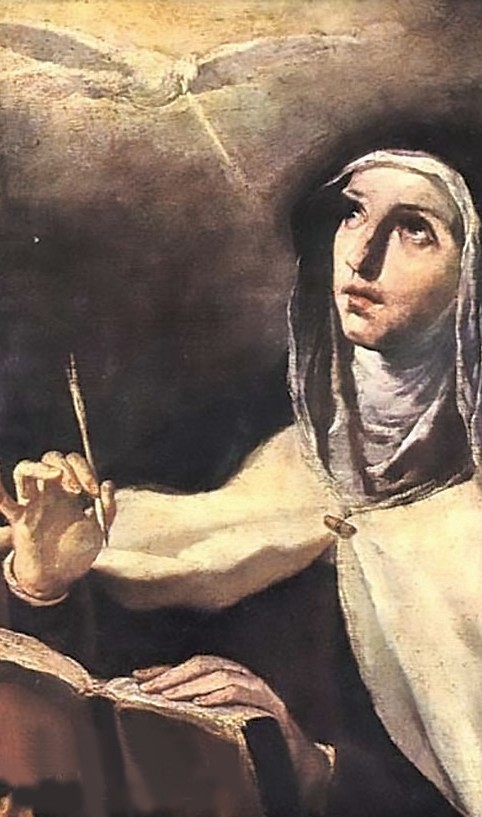
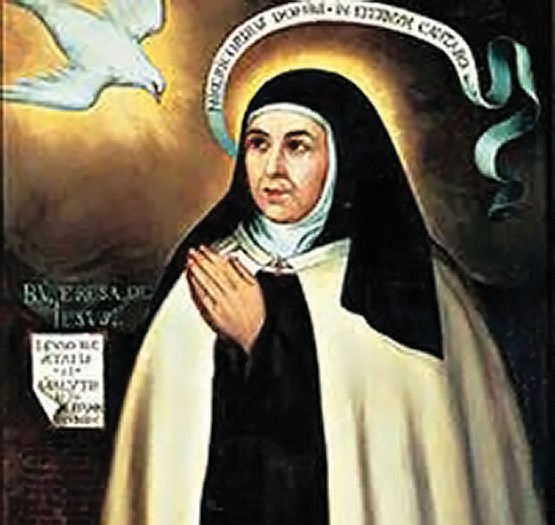
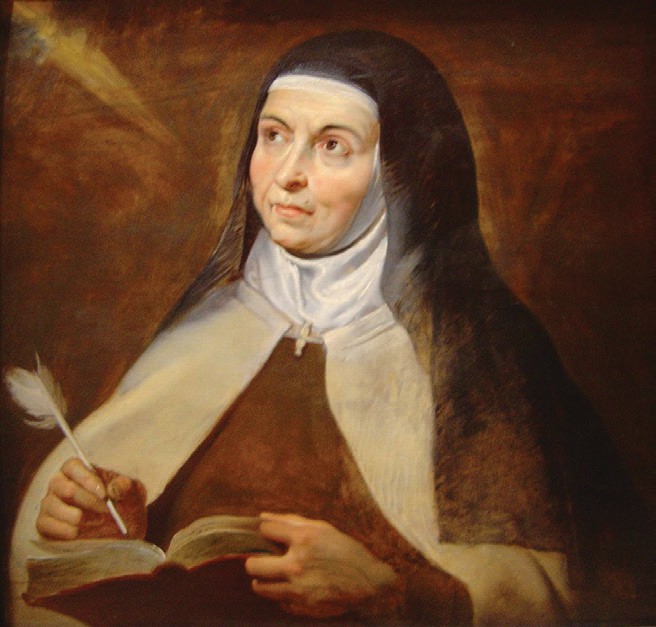
Teresa of Ávila is one of the best known Christan saints. Along with Saint Catherine of Sienna, she is one of the two female saints who were bestowed with the title of Doctor of the Church by the Roman Catholic Church. She made huge efforts for reforming the Carmelite order – and through it, the entirety of Christianity – which was founded in the 13th century on Mount Carmel in the Holy Land. The greatest effort of her life was to assist a style of life that is devoted to the imitation of Christ, known and practiced by early Christians, since many diverged from this ideal in her age. Teresa was born on the 28th of March, 1515 as one of twelve siblings of a Castilian noble family. Much to the shock of her surroundings, the spirited child gifted with a love of life chose the life of a nun at 18 years of age in the Avila Carmelite order. However, the importance of her decision effected her the most: she suffered convulsive spasms and was paralyzed, facing serious illnesses for over a year. They even dug her grave and nearly buried her, when she suddenly and miraculously recovered. This was followed by eighteen long and hard years, which put her perseverance to the test. However, her pure, exemplary and dedicated life bore its fruit: the sight of a statue of Christ gave Teresa such a powerful experience that she entirely devoted the rest of her life to the will of God.
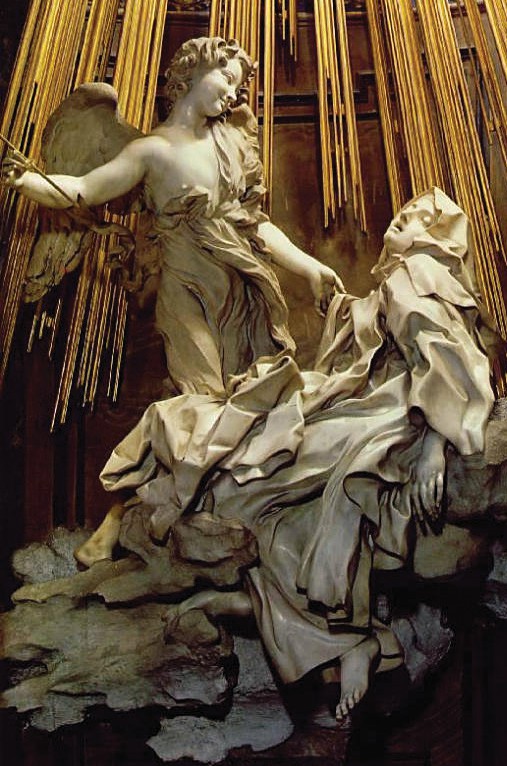
The people in her surroundings witnessed a string of mystical events: Teresa experienced periods of rapture when she floated three feet above the ground in front of everyone, while her face radiated an extraordinary glow. The Inquisition began examining her, while her fellow sisters began persecuting and attacking her. Teresa always thought more highly of the minor details of everyday life than any hazy, mystical matters and thus she devoted her special skills to improving the world around her and began her holy struggle for the reformation of the Carmelite order. She removed her sandals and lived her life according to the strictest of regulations and built the convent of Avila without any support, as a place for people who wished to imitate the life of Christ to come together. This brought about the formation of the Discalced Carmelites, who were heavily opposed by the Calced Carmelites and the objectors to the reformation. Teresa continued her work even amongst the greatest tribulations and attended hearings after hearings for twenty-two years. She founded thirty-two convents and helped everyone she could, from the lowliest commoners to lofty kings and bishops. She fought long and hard for the reformation of the Church and was invincible in disputes. She radiated a vast sense of wisdom tempered with a practical approach. She performed the lowliest domestic chores all by herself. She fasted and was a vegetarian and practiced self-restraint, praying and encouraging everyone in her surroundings and although she constantly was fraught with illnesses, she was always on the move, working and cheering up the people around her.
She loved humor and the beauty of life. She once had the following to say: “I am more afraid of one unhappy sister than a crowd of evil spirits.” One of her great helpers and contemporaries was John of the Cross, who assisted her in her efforts to renew the order. Her works were published in over 1200 editions and are regarded as some of the most significant cornerstones of Christian literature which give detailed guidelines for those seeking for a spiritual way of life (Autobiography, The Way of Perfection, The Interior Castle, Founders). She died on the 4th of October, 1582. Pleasant odors wafted from her grave for nine months after her death. Her heart remains as a token of her burning love, which they have been preserving in an undamaged condition for over 400 years at the convent of Alba de-Torres.
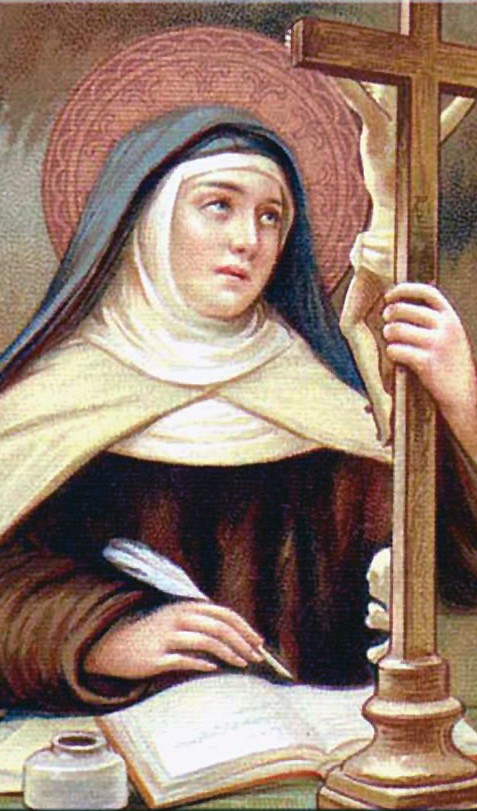
“The greatest level of perfection lies not in rapture nor visions, but rather in our will perfectly matching the will of God.”
“For the love of God, sisters, never be careless about offending God! Do your utmost to learn this and to turn it over in your minds!… Even when the soul has that firm inward determination which I have described, not to offend God for the sake of any creature, if may sub- sequently fall from time to time, for we are weak and cannot trust ourselves, and the more determined we are, the less self-confidence we should have, for confidence must come from God.”
(excerpt from the Way of Perfection)
“Let nothing disturb thee; Let nothing dismay thee; All things pass; God never changes. Patience attains all that it strives for. He who has God finds he lacks nothing: God alone suffices!’’
“Seek not for our own delight, but rather the delight of the Lord and praise the Lord amongst such difficult circumstances for his trust, as- suming that we will perform the task entrusted to us with the greatest care even without payment. Help the Lord carry the cross and contem- plate that he never felt its weight for his whole earthly life. Don’t long for dominion here below and cease not your inner prayer. In this way make a clear intention, even if this spiritual drought lasts throughout one’s life not to let our Lord Christ fall with his cross.”
(quoted from the Autobiography of Teresa of Ávila)