Shimon bar Yochai
around 80–160 CE, present-day Israel
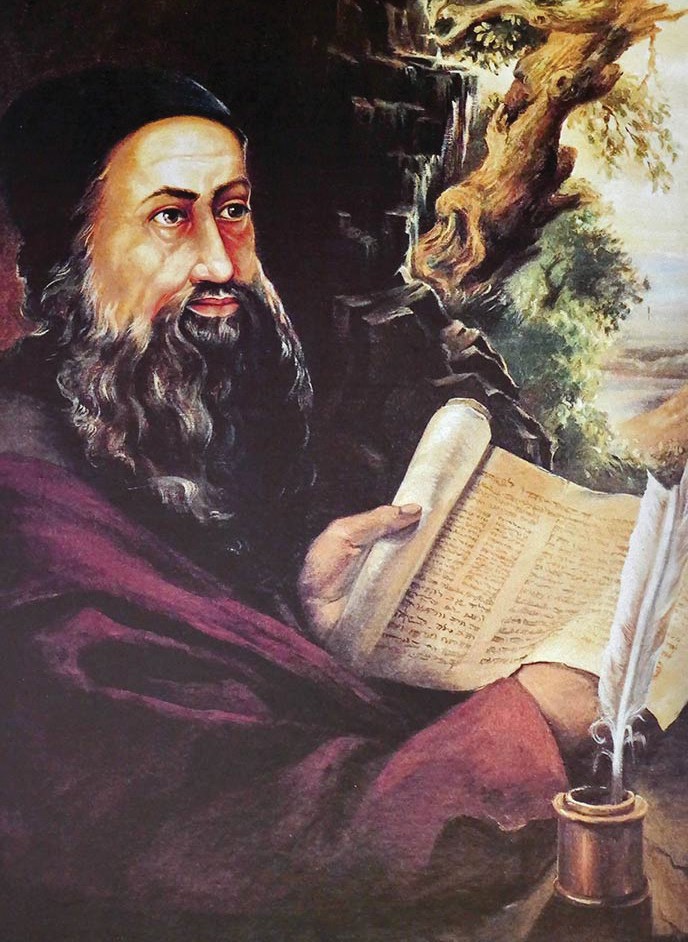
Rabbi Simon bar Yochai, Jewish mystic and Tanna (sage), one of the most distinguished disciples of Rabbi Akiva and author of the Zohar (The Book of Splendour), which is part of the Kabbalah, was born in Galilee around 80 CE. Most people refer to him simply as Rashbi. Even as a child, he was different from the others and was preoccupied with the great questions of life. His father, Yochai, was a man of wealth. From a young age, Shimon sat at the feet of the masters and eagerly absorbed their wisdom. He met his master, Rabbi Akiva, through his father.
Shimon was still young when Akiva ordained him as a rabbi and repeatedly referred to him as “my son”, which was a great honour for him. Shimon studied with him for 13 years and was faced with a great crisis when Akiva was executed by the Romans. He was of the fourth generation of rabbis in the Mishnah (the collection of Jewish teachings, laws and stories recorded after the Bible). In the beginning, Jewish tradition was not written down but rather passed on orally. The Tannaim passed on their knowledge to each other and knew the sacred texts by heart. In the literature of the time, Rashbi’s name was mentioned more than any other name. While the death of other sages became a day of mourning, at his request, the day of his death became a day of celebration in Israel. Rabbis are not only considered “mouthpieces of God”, but also interpreters and practitioners of divine will.
During Emperor Hadrian’s reign, they not only persecuted the Jewish sages, but also closed the schools and banned rabbinical training under pain of death. As Shimon was a patriot and openly rebelled against the Romans, he was forced into hiding. Subsequently, in order to spare himself, he fled with his son Eleazar to the Galilean mountains, where he lived for 12 years in a cave in Peki’in in northern Israel. According to legend, God helped them by providing a carob tree in the cave and having a spring flow at its entrance. It is believed that Rashbi and his son usually studied naked, buried in the sand of the cave, and dressed only for prayer. After many years, the prophet Elijah himself appeared to them, with the message that the emperor was dead and their exile was over.
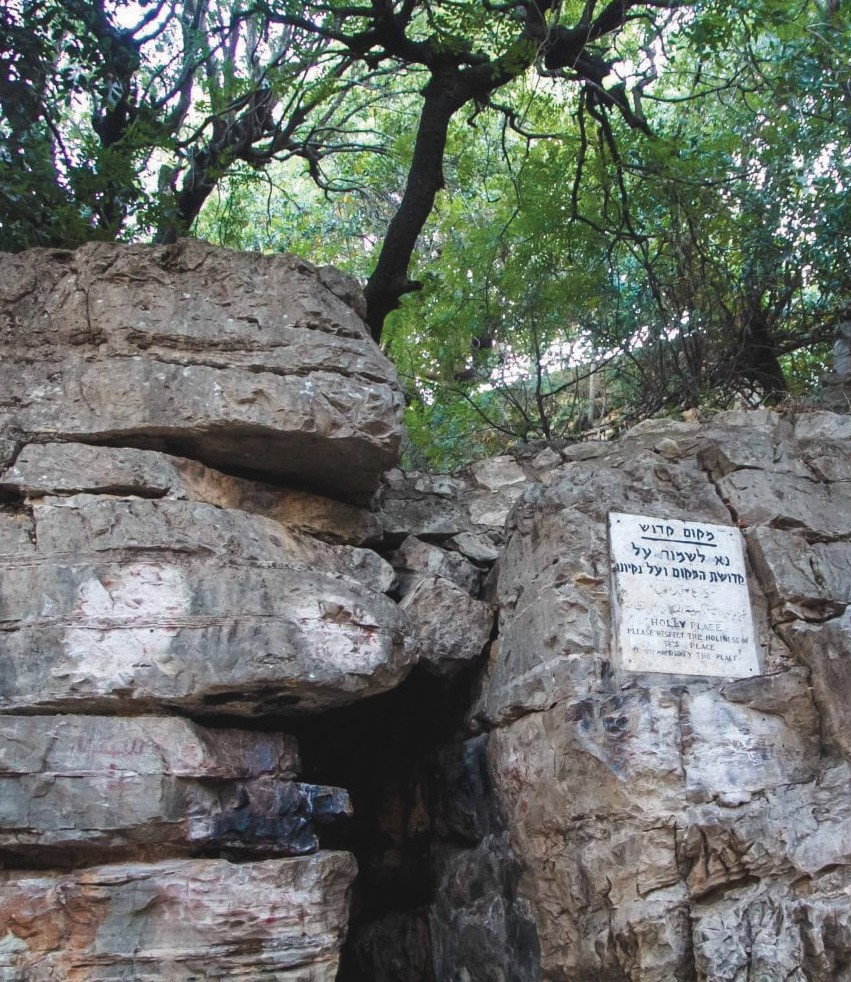
When they came out of the cave after 12 years, they were stunned to see people ploughing, sowing and doing all sorts of mundane things, instead of studying the Torah. Rashbi’s angry glare was said to practically burn the people who were not concerned with eternal life. Then a heavenly voice warned him: “Have you come out of the cave to destroy my world? Go back to your cave!” So it was that they had to spend another year in the cave, until Rashbi was reconciled and understood that not everyone has to be a great Tzaddik, a holy and righteous man. It is said that Rashbi and his son, in the twelve years they devoted to holy pursuits, reached such a high level of mystical knowledge that no one before them had ever attained.
However, there is no doubt that the additional year also brought great changes, since from that time onwards Rashbi’s attitude to the world changed and he became more compassionate towards others. When his father-in-law saw Rashbi’s sand-washed, scarred skin, he burst into tears. Rashbi said to him: “Do not grieve, but rather rejoice for these wounds made me who am I today.” According to Jewish tradition, the suffering of a righteous man has healing powers, particularly for those who put their faith in the transformative power of suffering. Rashbi also had a reputation as a miracle-worker.
The legends of the greatness of the spiritual level attained during the 13 years spent in the cave are particularly baffling. According to some teachings, the greatest Kabbalistic masters come to the world to help humanity attain a higher level of spirituality. Instead of the 30 or 36 righteous people recognised by Jewish tradition, whose merits are necessary for the survival of the world, Rashbi was believed to be able to bring balance to the world by himself. It was said that his merits were the reason why his entire generation was forgiven. According to the Haggadah, the ancient book of Judaism, as the direct successor or Rabbi Akiva, Rashbi provided a summary of over 3000 years’ worth of spiritual knowledge in the Kabbalistic Zohar.
Much of the knowledge hidden within this volume has yet to be deciphered. Many believe that Rashbi and his 9 closest disciples attained all the 125 levels of spirituality, or absolute perfection. Rashbi established his Yeshiva (Hebrew school) near the city of Meron in western Galilee, which is where Rashbi died in 160 CE. His tomb is visited by hundreds of thousands of people every year on the anniversary of his death.
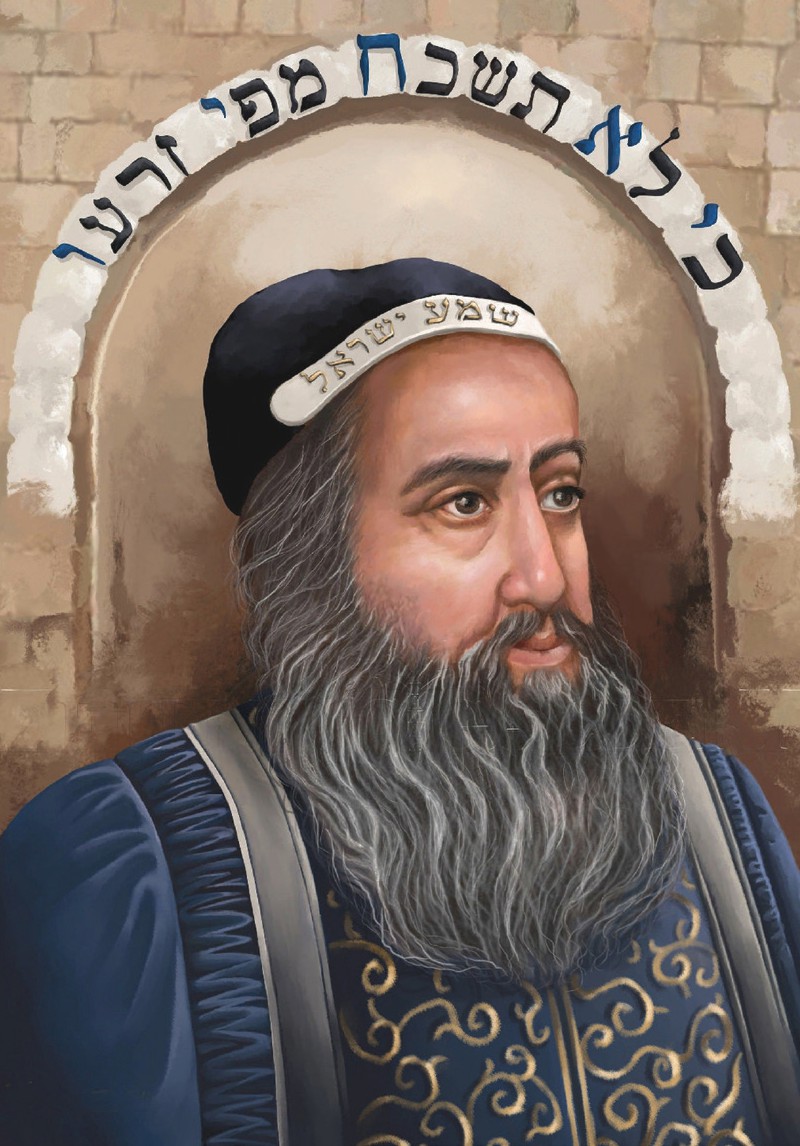
“A righteous man is the foundation of the world.”
“If a person sat and did not commit a transgression, he is rewarded as if he had done a mitzvah.”
Rashbi considered leaving the country, or yerida, a great sin, as he believed their country had everything one could possibly need. Once, a disciple left the Holy Land and returned a wealthy man. The other disciples saw this and were envious and also wanted to leave. Rashbi knew of this. He took them to a valley facing Meron and said: “Valley! Valley! Become filled with gold coins!” The valley started flowing with gold coins before them. Said Rabbi Shimon to his disciples: “If it is gold that you desire, here is gold; take it for yourselves. But know that whoever takes now is taking his portion of the World to Come. For the reward of Torah is only in the World to Come.”
Rashbi appreciated all Jews. “You are all royalty!” he said to them. However, he also greatly appreciated physical labour. He didn’t hesitate carrying baskets on his shoulders, and he also said that “work is glory”.
According to Jewish tradition, when Moses ascended to heaven to receive the Torah, the guardian angels of the Throne refused to let him have it. Moses fended off their attack with a spirit taken from the repository of spirits, which he carried as a shield. This was none other than the soul of Rashbi.