Silouan the Athonite
1866, Russia – 1938, Greece, Autonomous Monastic Republic of Athos
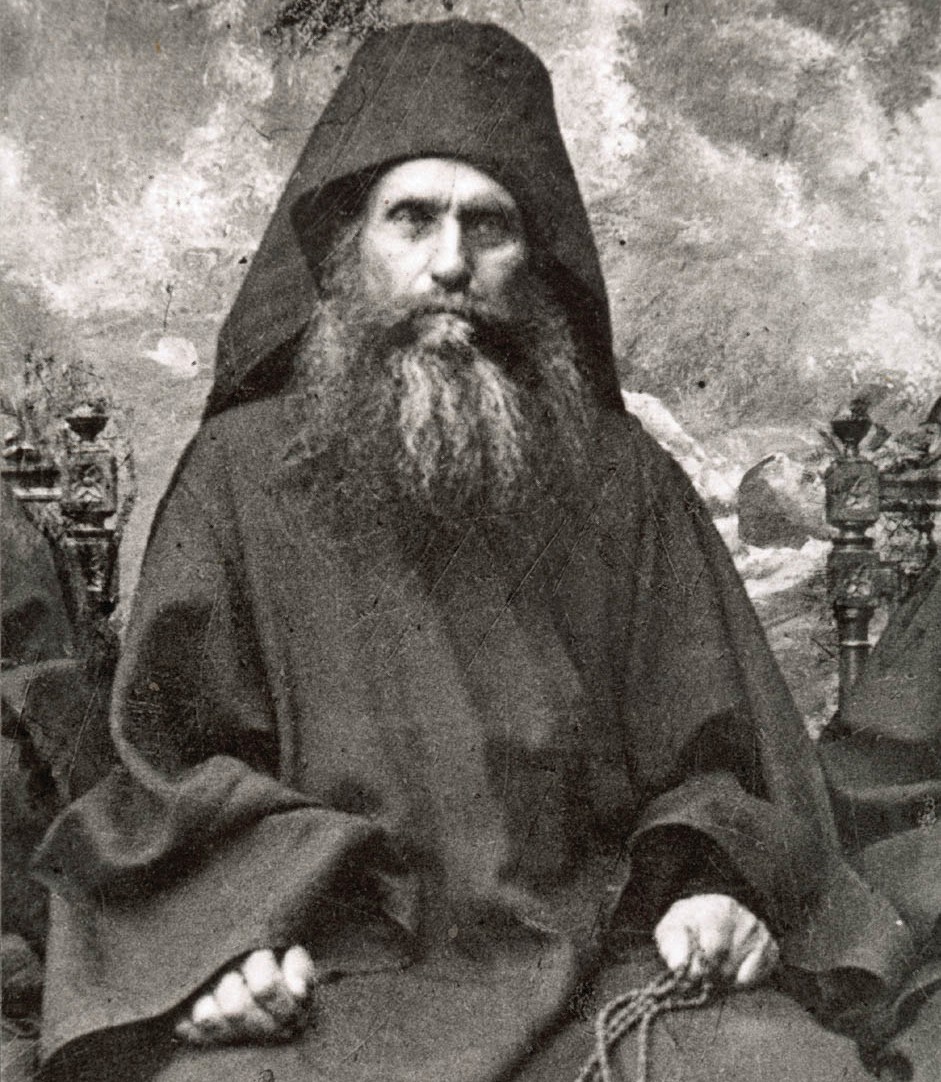
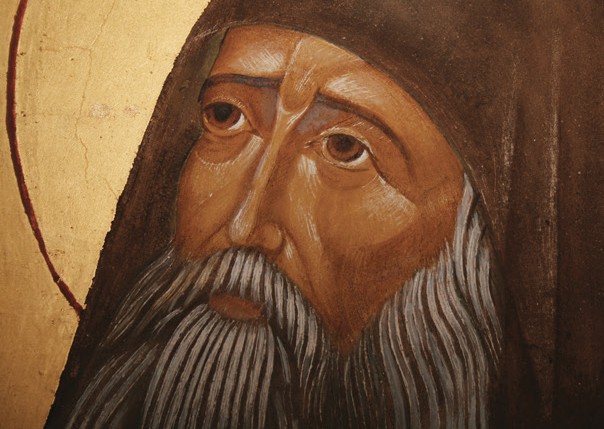
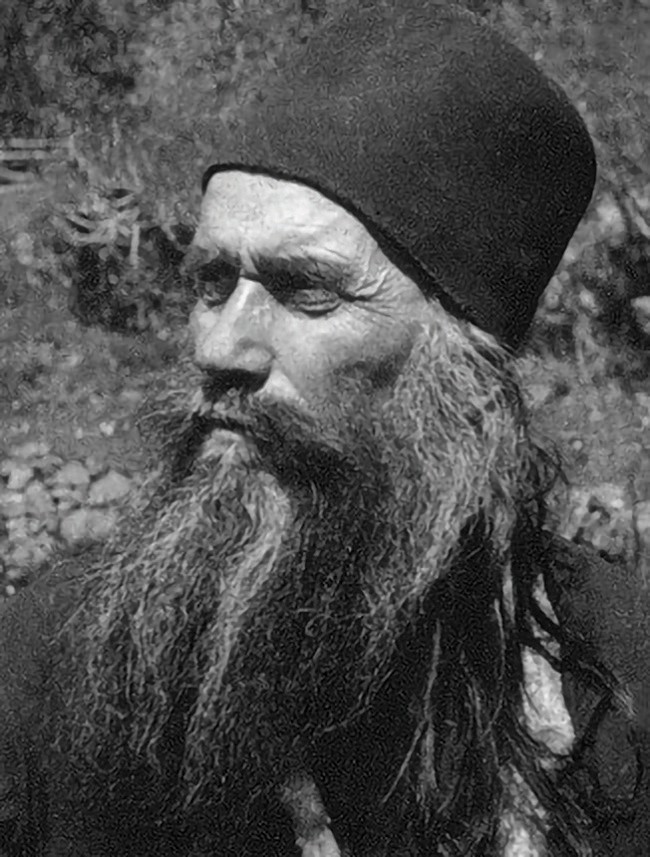
Staretz Silouan, better known as Silouan the Athonite, one the major figures of Eastern Orthodoxy and a famous saint of the monastic state of Mount Athos, was born Simeon Ivanovich Antonov in 1866 in the village of Shovskoye in Russia’s Tambov Governorate. Born into a poor family, he had no opportunity for extensive studies, yet he still began seeking God at four years of age. He is said to have possessed great strength, which he was unable to control as a young man. His boisterous youthful life ended when he nearly beat one of his rivals to death and the Virgin Mother of God appeared to him in a dream and he heard her voice speak to him: “You swallowed a snake in your sleep and you are disgusted. That is how unpleasant it is for me to see your actions!” The vision had a profound effect on him, utterly changing his life.
In order to make up for his mistakes, he greatly desires to journey to Mount Athos located on the Chalkidiki peninsula in Greece to live in one of the main centres of the Eastern Orthodox religion, the Autonomous Monastic Republic of Athos. The monastic republic is home to thousands of monks who have settled here and live their daily lives in a strict order, in total abstinence, striving for holiness of life. This monastic community, which has given countless saints to the world, is undoubtedly one of the most important sites in the spiritual life of our planet. Silouan first visited Mount Athos at twenty-six years of age, in 1892, after completing his military service. He became a novice at Saint Panteleimon, one of the twenty great monasteries.
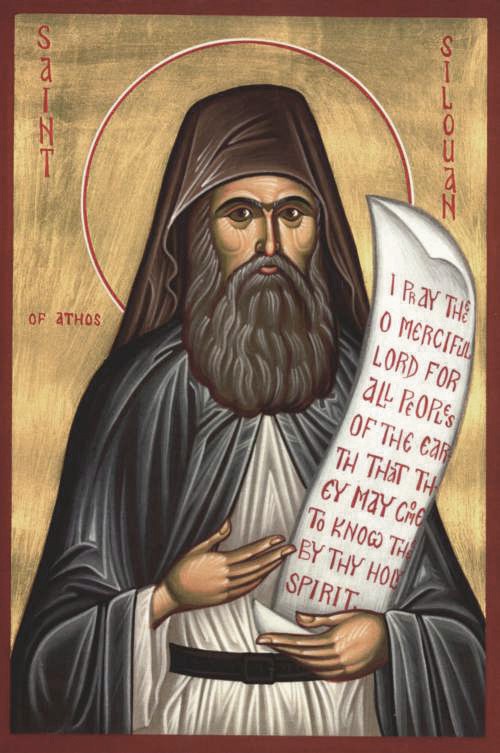
Initially, he was fiercely assailed by the Tempter. Allegedly, the demons attacked him both internally, as well as externally, assuming visible form. One of his most vital weapons against them was prayer, specifically the miraculously powerful prayer to Jesus, which many others also resorted to, by continuously repeating the phrase: “Lord Jesus Christ, Son of God, have mercy on me a sinner!” In his most gruelling period, he only slept for one or two hours at the most, endlessly praying to counter the demonic forces bearing down on him. Finally, in the dark night of the soul, when he reached out in heartfelt prayer, he was suddenly filled with grace: he experienced the love and joy of the presence of Christ.
It was precisely through his ceaseless struggles that Staretz Silouan became a holy man while – his pain reached the limits of his endurance time and time again. He consciously strove to ensure that little comforts would not give rise to smaller and then greater sins. “Keep thy mind in hell and despair not!” – this was his motto, which he received in response to the question he brought to the icon of Jesus Christ. Over forty-five years of monastic existence, Staretz experienced increasingly deeper states of mind: he followed what is known as the royal path of humility. For some years, he lived at the so-called Old Rossikon monastery, amongst the strictest of ascetics before returning to this former monastery, where he was appointed one of the stewards responsible for overseeing more than two hundred workers.
Still, he continued pursuing an intensive inner life even alongside such great commitments: he never eased the strictness of his ascetic lifestyle while the fervour of his prayers only heightened. In the morning, he visited the workshops to appoint tasks before returning to his cell and tearfully pray for humanity, families and the whole world. In fact, he was so modest and humble that most people only became aware of his holiness after his passing, thanks to Father Sophrony, who wrote his biography and published a work containing the writings of Silouan entitled The Hesychast of the Holy Mountain. The book – which captures his life and teachings, and how Silouan guided Father Sophrony through the various stages of initiation of inner spiritual life – became one of the most important documents of Eastern Orthodox monastic spirituality. Despite his lack of education, Saint Silouan was one of the wisest amongst the most studious and the most authentic amongst the most highly erudite monks. He departed from the earthly world on 11 September 1938. He spent his final days in silence, in deep inner contemplation and passed through the gates of death in the purest state of the silence of the spirit.
“The soul that has not known the Holy Spirit does not understand how one can love one’s enemies, and does not accept it.”
“I believe there is only one truly great thing: to humble ourselves, as [pride] won’t allow us to love others.”
“Only by always humbling ourselves can we overcome our selfishness. This is the real great science, and it is not easy to acquire. Fight your enemies with the weapon of humility! When you see your mind being challenged by another mind, choose humility and the warfare will cease. Fear not, if thou seest devils, only humble thyself, and they will disappear; but if fear seizes thee, thou shalt not escape unhurt!”
“Obedience is necessary not only for monks, but for all people. Even the Lord was obedient. The proud and self-regarding do not allow grace to live in them, and therefore they never have spiritual peace, while in the obedient soul the grace of the Holy Spirit enters easily and gives joy and peace.”
“Grace cannot touch a heart filled with pride.”
“Praying for people means shedding blood. But we must pray. Everything that grace has ever taught us must be performed to the end of one’s life. Sometimes the Lord will abandon the soul, but only to put it to test, so that the soul would reveal its wisdom and determination. If at such times man does not force themselves to take action, they will forsake grace, yet if they show determination, grace will live in them and never leave them.”