Socrates
469 – 399 B.C., current-day Greece
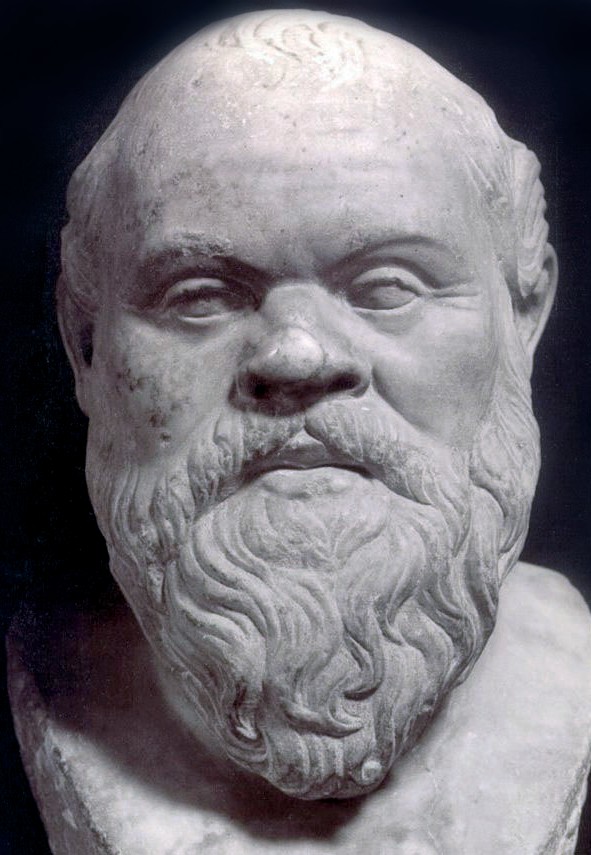
Socrates, one of the greatest masters of philosophy and thinking, was the initiate of Greek mystery schools. He was born in 469 B.C. on the slopes of mount Likabetos in the region of the current-day Athens as a child of a middle-class family. Many religious scholars list him amongst the most important masters of all time and some even regard him as one of the forerunners of Christ. A great change took place in philosophy thanks to Socrates (also known as the “Socratic method”), during which the attention of philosophy was directed from the observation of the outside world to the human soul. Socrates tried to stir the consciousness of people. He had two feet firmly planted on the ground and he tried guiding the hazy, mystical, high-flying philosophical speculations towards reality. As a citizen of Athens he was just as involved in public life as everyone else. He married at fifty; he had two wives who gave birth to his three sons. Although he took part in the military campaigns at the time, he was still basically unmoved by the events of the world. According to descriptions, he surpassed everyone in tolerating the hardships of a soldier’s life. He famously endured hunger and thirst, yet he also outdid his peers in reveling as well. Even in bone-chilling cold he only wore his common short cloak. He also wore the same clothes regardless of the weather, consisting of a tunic and a woolen cloak and he always went barefoot. Sometimes he stood still in the middle of a battlefield for days. He had a perfectly realistic view of the world and it wasn’t typical of him to be an ecstatic state at all. He never recorded any of his thoughts and he didn’t preach either.
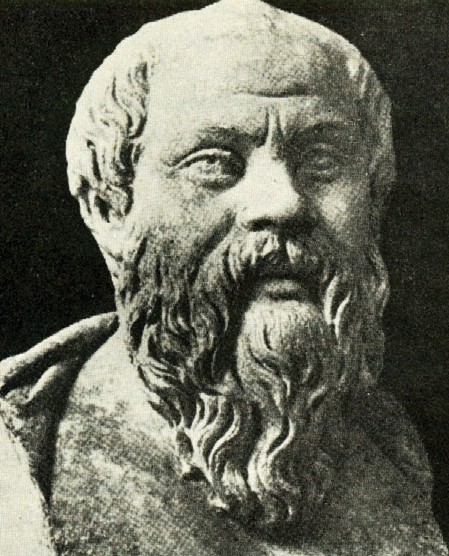
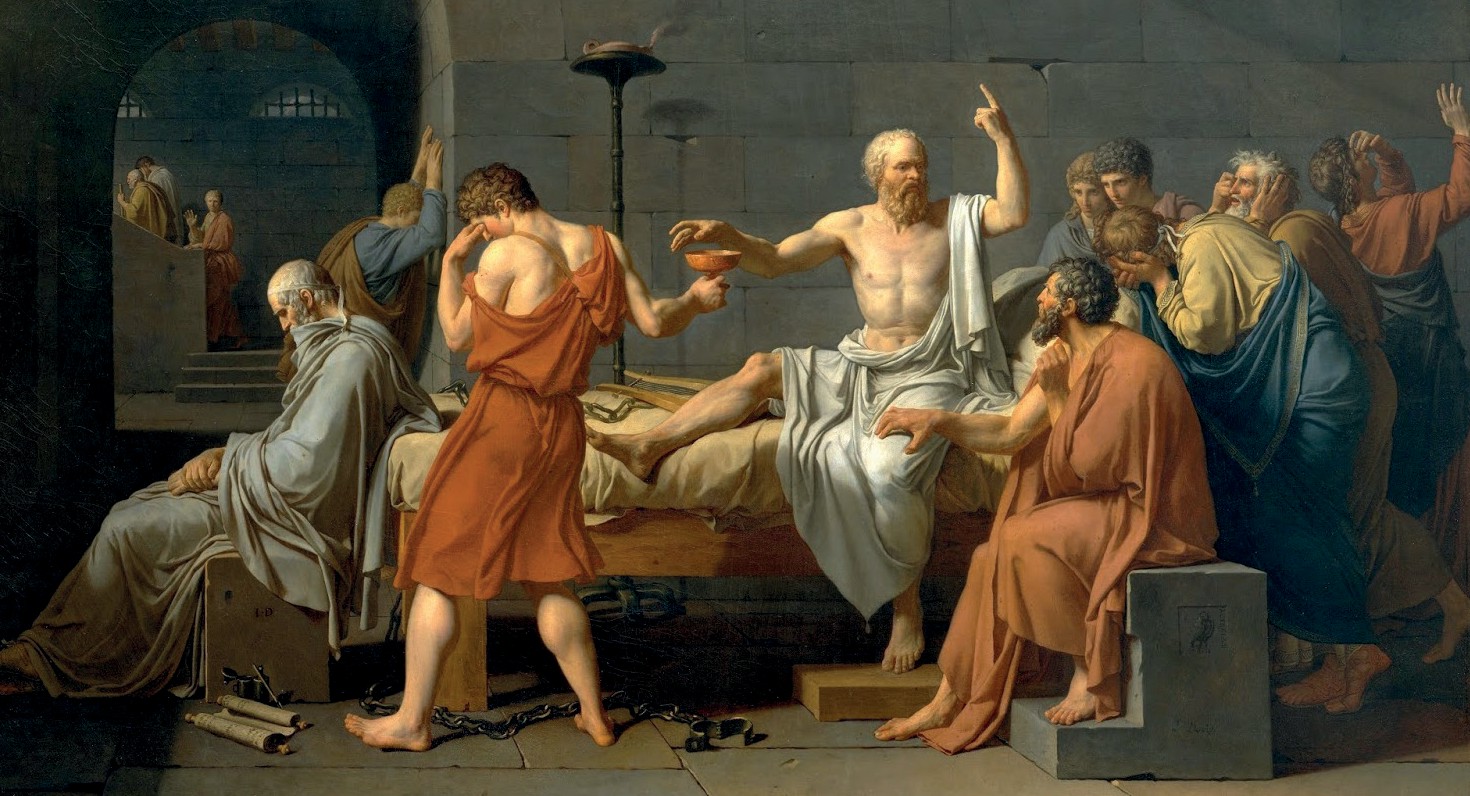
His question and answer method is often referred to a kind of “midwifery” during which he tried leading his conversation partner to the real answers through his questions. He asked a number of common questions on seemingly obvious issues, and in the process leading people to the most profound truths, whom he often upset so deeply that they tore at Socrates’ beard in their agony. He gained many enemies by relentlessly pointing out the truth. In the end, the citizens of Athens who couldn’t face themselves filed charges against him. At 70 of age, Socrates was sentenced by a 500-member court of Athens to drink a cup of poison. Paradoxically, the earthly envoy of God was sentenced for atheism. Socrates endured the proceedings with endless peace and self-composure, thus authenticating his teachings. Even in his final moments he devoted his attention to knowledge and the basic issues of ethics. A number of his most important disciples witnessed his death. Socrates gave a speech on the immortality of the soul and when the time came to drink his cup of poison, he did so as if merely lying down for his nightly sleep, before departing the world.
The citizens of Athens regretted their actions after his death: they closed the pleasure-houses and even sentenced Socrates’ main accuser to death in order to make amends. The comments of Xenophon, Plato and Aristotle are considered to be the most important documents on Socrates, as well as the book of Diogenes Leartius. Of his seven disciples, Plato was the most famous, who often mentioned Socrates in his works, although his figure of Socrates barely approximates the greatness of the original master. His followers founded 5 different schools of philosophy, including the most famous, the Academy of Plato. Socrates is still to this very day one of the most well-known and influential philosophers of the world, who anticipated the spirituality of the future in the 5th century before Christ with his new way of thinking and teaching, as if opening a door towards modern spiritual paths.
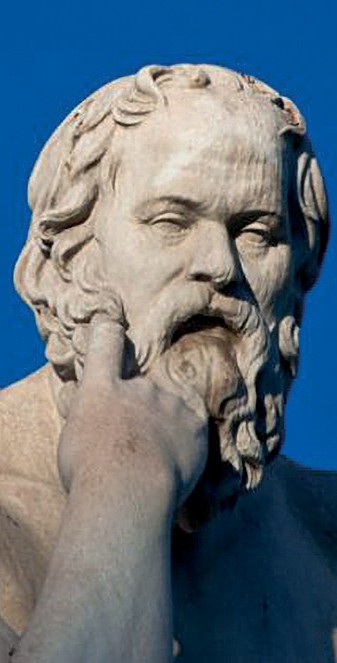
“…The philosopher looked him in the eye, blocked his way with his cane and asked:
“Do you know where they sell fish?” “Yes, at the market.”
“And do you know where men are made good and virtuous?”
“No.”
“Then follow me and learn.”
(Xenophon’s encounter with Socrates)
“One morning he was thinking about something which he could not resolve; he would not give it up, but continued thinking from early dawn until noon – there he stood fixed in thought; and at noon atten- tion was drawn to him, and the rumor ran through the wondering crowd that Socrates had been stand- ing and thinking about something ever since the break of day. At last, in the evening after supper, some Ionians out of curiosity (I should explain that this was not in winter but in summer), brought out their mats and slept in the open air that they might watch him and see whether he would stand all night. There he stood until the following morning.”
(Plato’s description of Socrates from the Symposium)
“I believe there is some future for the dead and the good have a brighter future than the bad.” (excerpt from Socrates’ teachings before his death)