Sri Chaitanya Mahaprabhu
1486–1533, India
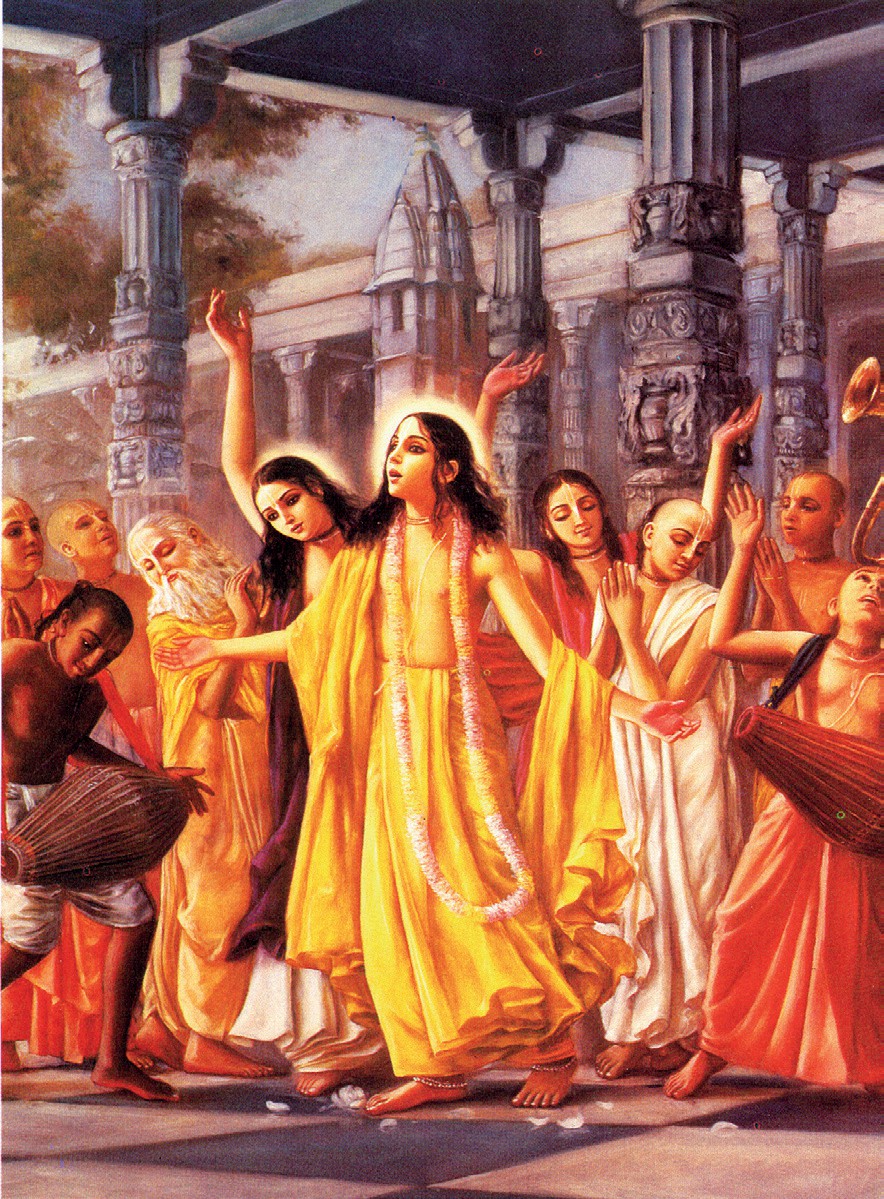
Sri Chaitanya Mahaprabhu was the great apostle of divine love, the creator of one of the most significant theist movement of India. He was born on the 18th of February, 1486 in Mayapur, Bengal, India in the city of Nadya as the tenth child of a Brahman family, who was given the name Nimai from his parents. His youth was captured by his contemporary and disciple, Srila Murari Gupta, whilst the second half of his life was put down by his secretary, Srila Svarupa Damodara, with great detail. He gave a number of signs of his divine being in his early childhood. He was a cheerful boy, who spoke of Shiva as one of his servants and blessed those who brought him gifts. He opened his own school at sixteen, where Krishna was in the center of his tenets. He was in possession of great wisdom at a rather tender age. At the time of his first marriage, in Navadvipa, he began preaching of chanting the Holy Names of the Lord. The governor prohibited this activity, but Nimai organized a protest and led a crowd of a hundred thousand people, successfully convincing the governor who ordered for no one to stop the movement of the Sankirtan, or the “chanting of the Holy Names of the Lord”.
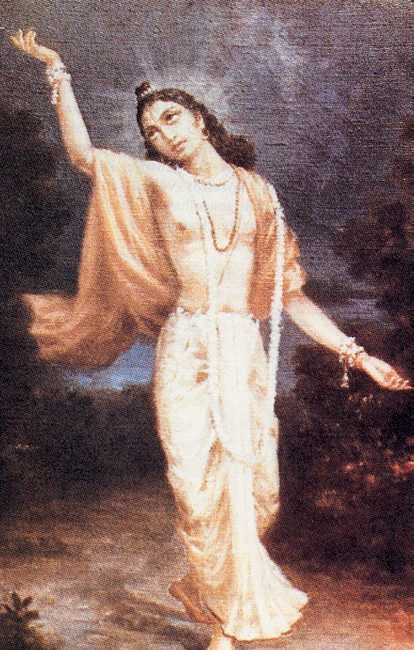
The organization soon blossomed into a huge movement. According to some holy scriptures, the chanting of the Lord’s Holy Name is capable of liberating the failed souls from their materialistic bounds. The Sankirtan movement initiated by Chaitanya Mahaprabhu recommends the chanting of the Lord’s 16 Holy Names in the current age (Hare Krishna, Hare Krishna, Krishna Krishna, Hare Hare / Hare Rama, Hare Rama, Rama Rama, Hare Hare). These are the names the young Nimai chanted, before foretelling that his chant will be taken up in all the villages and cities of the Earth. Nimai remarried after the death of his first wife before renouncing materialistic joys at 24 years of age, entering the Order of Sannyasa, taking the name Sri Chaitanya Mahaprabhu. He showed no compromise concerning the principles and rules of his chosen path and he was terribly strict with his disciples. According to the descriptions, he often fell into a state of transcendental ecstasy from which he was only willing to return at the sound of the chanting of the Lord’s name.
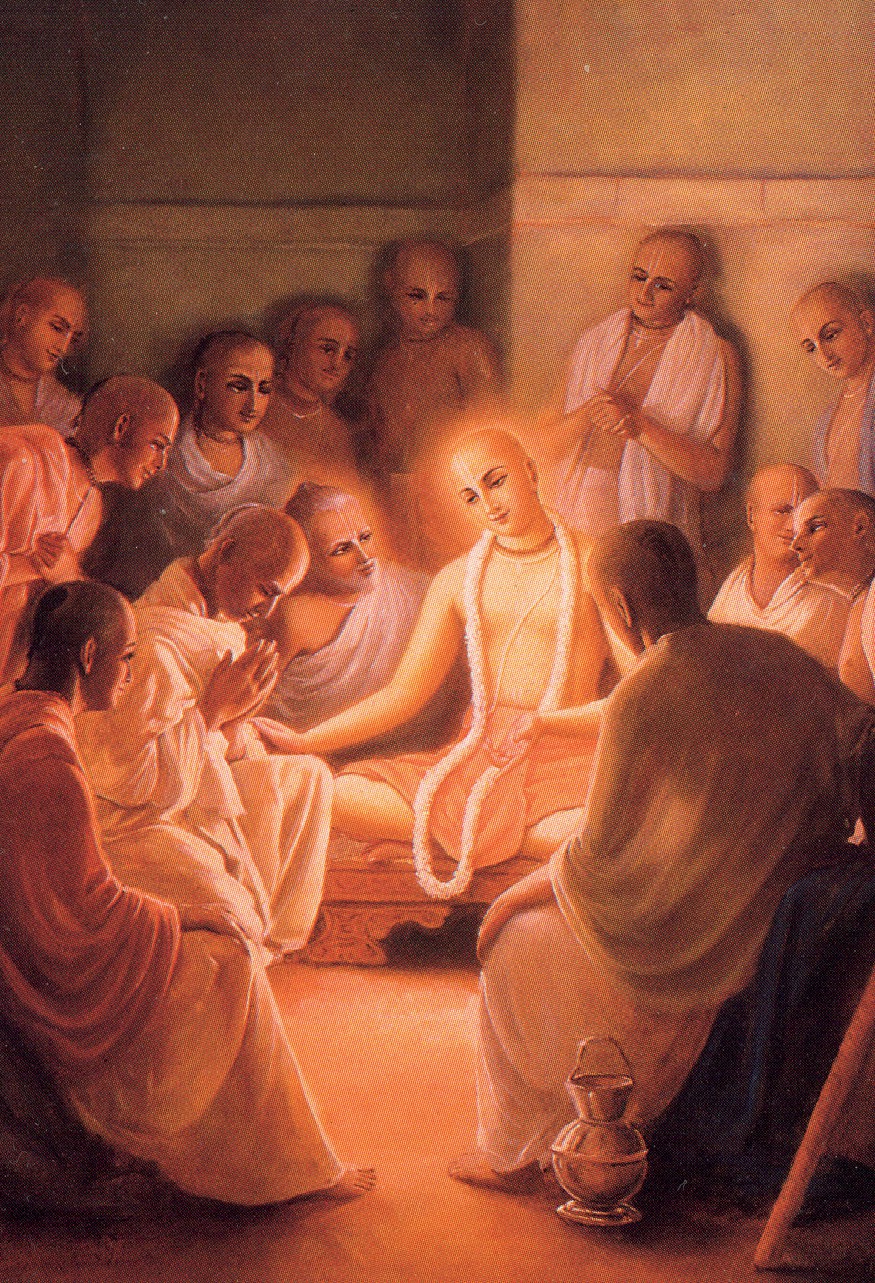
He traveled through South India for an extended period of time, where he preached about the messages of the holy books of Srimad Bhagavatam and the Bhagavad Ghita. Everyone he met was converted to the faith of Krishna, who later directed others to the devoted service of the Lord. He taught that the Bhaktas (the servants of the Lord) mustn’t insist on materialistic well-being and sensual pleasures, but should rather fully devote themselves to the Lord, praising him in their every action. He wandered continuously for six years and was met by great celebrating crowds wherever he went. According to the passages, he was even followed by wild animals, joining the group of people chanting the Holy Names of the Lord. His ecstasy and love caught on to others. He spent the final 18 years of his life in Puri, where he later died at the Tota Gopinatha temple while chanting the Lord’s names. He was surrounded by numerous followers wherever he went, who were his irreproachable disciples on the highest level or renunciation. All the saints of his age tried to be in his presence. Of all his thousands of followers, he had six disciples known as the Goswami – including Srila Nityananda Prabhu, whom he sent to preach in Bengal – sending them to Krishna’s city of birth, Vrindavan in order to rebuild the holy sites. Sri Chaitanya Mahaprabhu was venerated by his followers as the union of Krishna and Radha. The Sankirtan movement was reformed by the Krishna consciousness movement of the twentieth century started by Prabhupada.
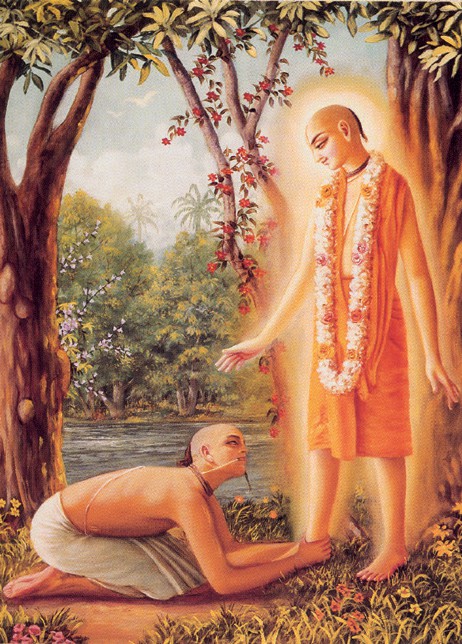
“Let us call out the Holy name of the Lord with the humblest mind and consider ourselves to be lowlier than the straw lying on the road. Let us be patient as the tree and let us be able to give all our respect to others without any false wish of authority. If our mind enters such a state we can continuously chant the Holy Names of the Lord…”
“The Lord, who is greater than the greatest, obeys even the most insignificant bhaktas in his devoted service. The wondrous and noble nature of devotional service is shown by the way the endlessly great Lord reduces himself to the endlessly minute creatures.”
(excerpt from the Sri Caitanya-caritamrta anthology)
“Oh, Almighty Lord, I long not for riches and beautiful women or for followers of my own. All I wish is to serve You from one life to the other through your unrighteous grace… Oh, Lord when will my eyes be graced with the ceaseless stream of the tears of love when chanting your Holy Name? When will my voice falter and my body shudder when voicing your name?”
(excerpts from the poems of Sri Chaitanya Mahaprabhu)
“The main goal in life is the devoted service of the Person of God…”
(Sri Chaitanya Mahaprabhu)