Therese of Lisieux
1873–1897, France
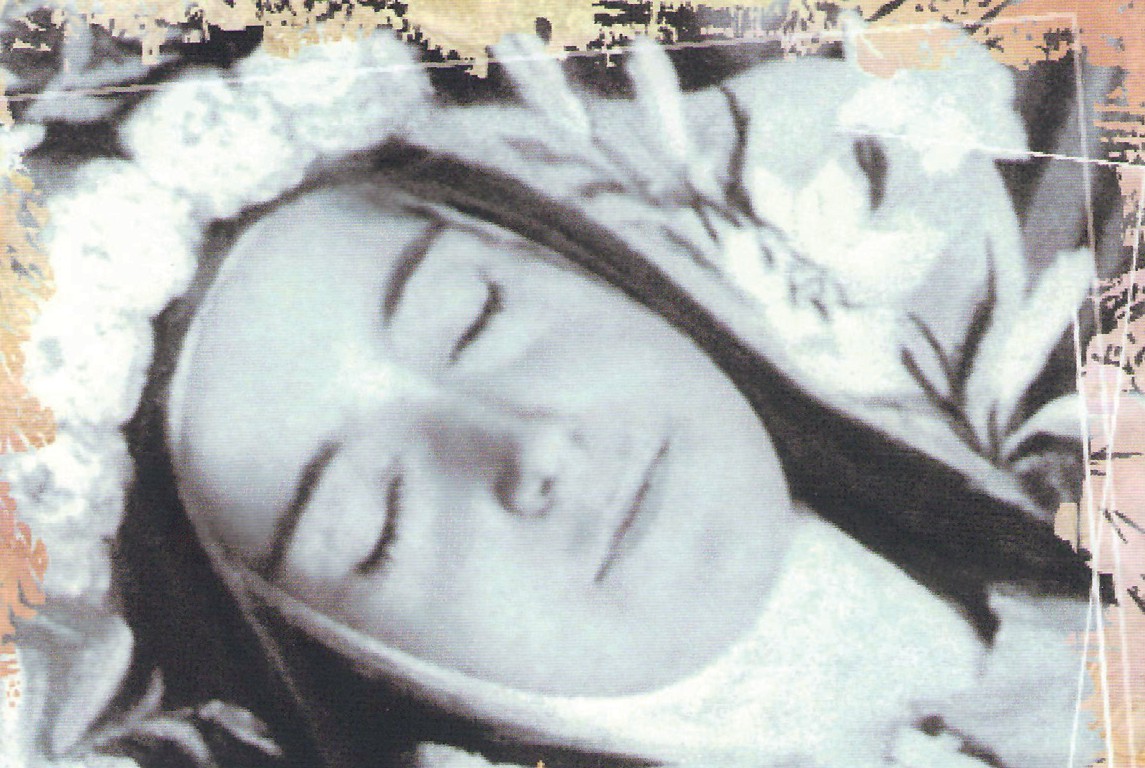
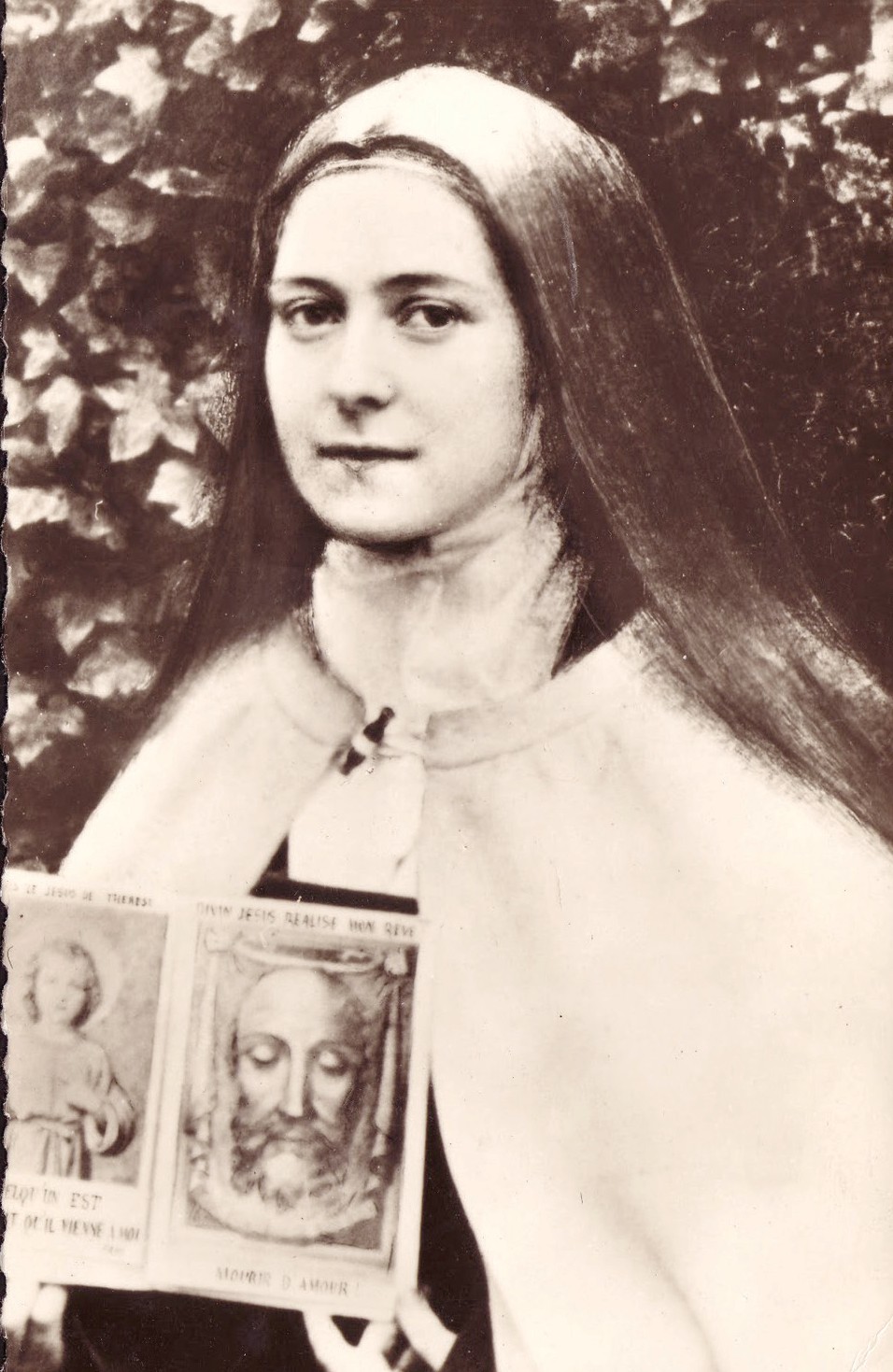
The French Carmelite nun, known as one of the most important and popular saints of modern times, was born as Marie-Françoise-Thérèse Martin on 2 January 1873 in the French town of Alençon as the ninth child of her family. Her lifework is known as the “Little Way”, indicating how one can find God even in entirely mundane surroundings while pursuing the joy of becoming the most insignificant of all. An uncorrupted, infinitely pure and innocent childlike spirit resided in Therese – this innocence was what helped her overcome her subsequent temptations.
Therese lost her mother at the very early age of four, and only five of her siblings lived to an older age. Her father, who worked as a watchmaker, was originally a monk, therefore becoming a nun was a family ideal. Therefore it is no wonder – although it is still extraordinary – that Therese and her four sisters became nuns. At only fifteen years of age, she requested permission to join the Carmelite monastery in Lisieux where her sisters lived. Her request was denied, yet Therese would go so far as to requesting an audience from Pope Leo XIII to receive permission. According to a well-known story, the members of the Noble Guard had to forcibly drag the tear-stricken girl from the papal throne when she fell at the feet of the head of the Church, asking for his blessing in vain. Yet as she returned to Lisieux, she was unexpectedly granted permission to join the Carmelites.
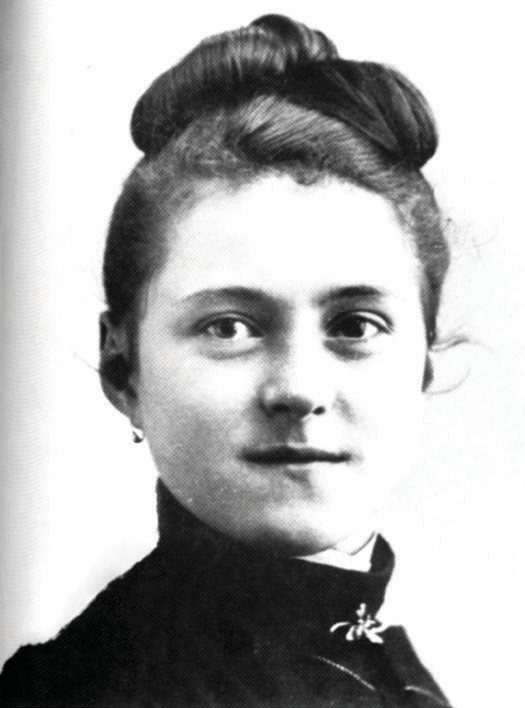
In less than a year’s time, she was allowed to don the habit while assuming the title “of the Child Jesus and of the Holy Face”. She spent nine years in Lisieux as a nun, performing her work with devotion. Her exemplary years spent as a nun were seemingly uneventful, yet her example of joyfully experiencing the sufferings of everyday life means more than any single miracle. The real feat was how Therese shaped her life according to God’s will, which she consistently followed throughout her life. She sanctified the teachings of the New Testament with the example set by her life. She knew the secret that sometimes the greatest things are manifested through the smallest of all: following the “little way” consisted of making the most of one’s skills and circumstances to achieve the sanctity of life.
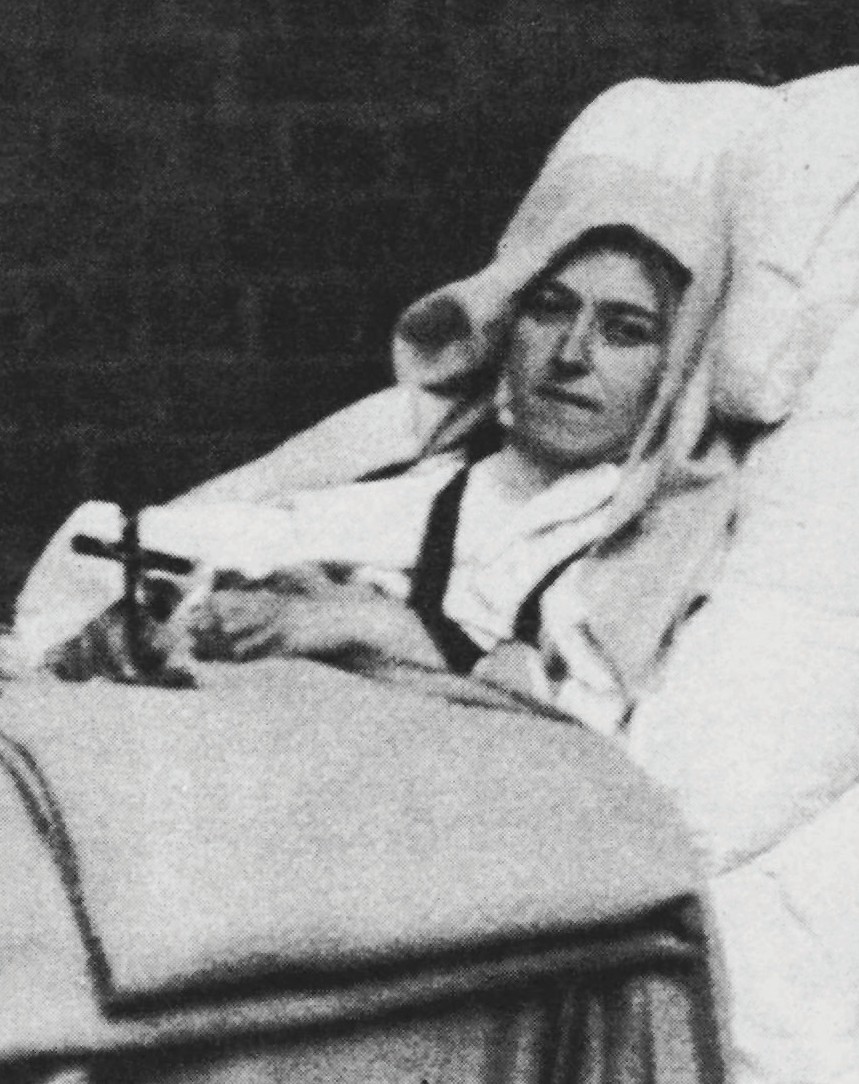
She was attracted to suffering, and her relationship with it are reminiscent of the great mystical saints. In her diary she wrote the following: “Suffering became my attraction; it had charms about it which ravished me without my understanding them very well.” She realised that suffering can be changed into joy. That is why her smile is referred to as “God’s smile” by the great theologian Walter Nigg. She loved God almost to the point of madness. She was overwhelmed by this love, and she both suffered and was enraptured in love. She lived in constant physical pain, temptation and spiritual torment, which she carefully concealed from her fellow nuns. Her final bedridden years were a real purgatory for her. Even in the face of tuberculosis and the spiritual suffering and struggles described in detail in her diary, she maintained her alertness. At the prior’s request, she wrote her autobiography, Story of a Soul, which became one of the most widely read Christian books of all time.
Lacking external miracles yet filled with internal sacrifices, her life can be truly grasped through the work. She cannot be truly understood without knowing the secret story of her inner torments and life of faith. She uttered the wonderful words “Everything is Grace!” on her sickbed. Therese departed the earthly world on 30 September 1897 at only twenty-four years of age with a serene smile on her face. Also known as „Little Therese”, she was called the greatest saint of modern times by Pope Pius X, and was made the second patron saint of missions and of France. Although she was practically unschooled, she was known for her wisdom and thus Pope John Paul II declared Therese a Doctor of the Church and Mother Theresa adopted her name in her honour. After departing from the world, Therese’s symbolic prophecy was fulfilled, when she said: “When I die, I will send down a shower of roses from the heavens.” To this day, many turn to her for help and countless miracles are performed through her intercession – and rose petals are often found at these sites.
“I felt charity enter into my soul, and the need to forget myself and to please others; since then I’ve always been happy.”
“I felt born within my heart a great desire to suffer…”
“To remain a child before God means to recognize our nothingness, to expect everything from God. It is not to become discouraged over our failings, for children fall often, but they are too little to hurt themselves very much. It also means not to accumulate merits or rise above other people, but for love, to please God as a child seeks to please her father.”
“No doubt, it is a great grace to receive the sacraments. When God does not permit it, it is good too! Everything is grace.”
“See this little bottle? One would think it contains some fine liquor, but it’s actually my most delicious medicine. That is the true image of my life: others see it as full of smiles and cheerfulness, they think I’m sipping fine liquor, but I’m actually draining the cup of bitterness. I say the cup of bitterness, yet my life has not been bitter, for even in my bitterness and anguish I have been able to draw joy.”
“I understand above all that charity must not remain hidden in the bottom of the heart.”