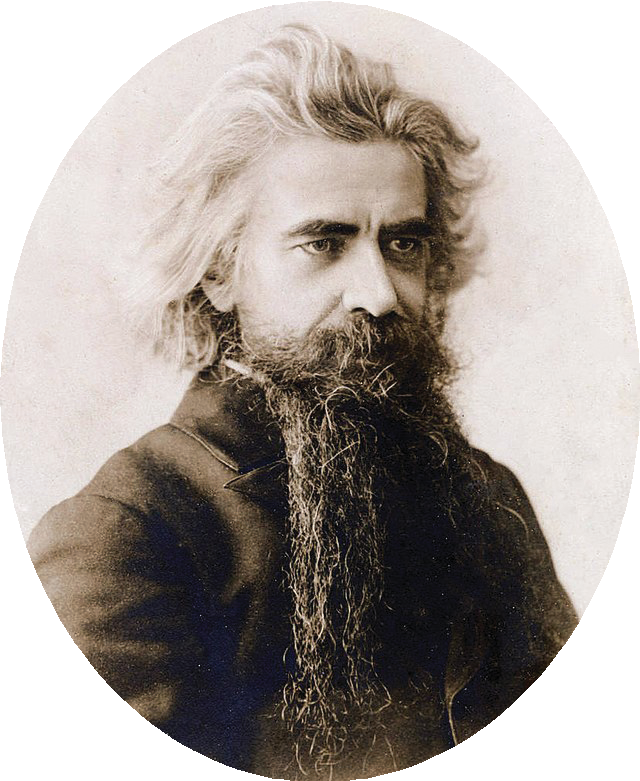
Vladimir Solovyov
1853–1900, Russia
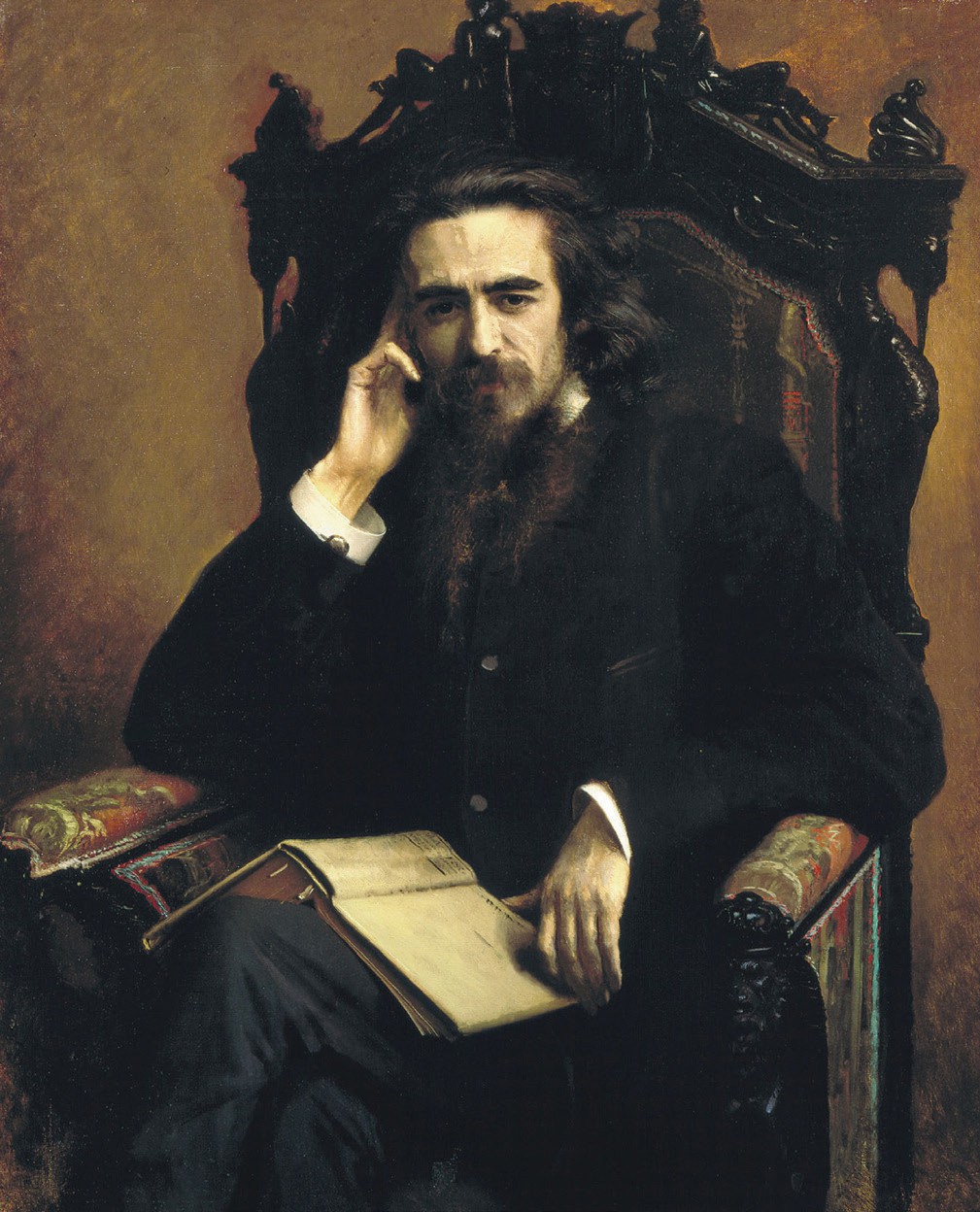
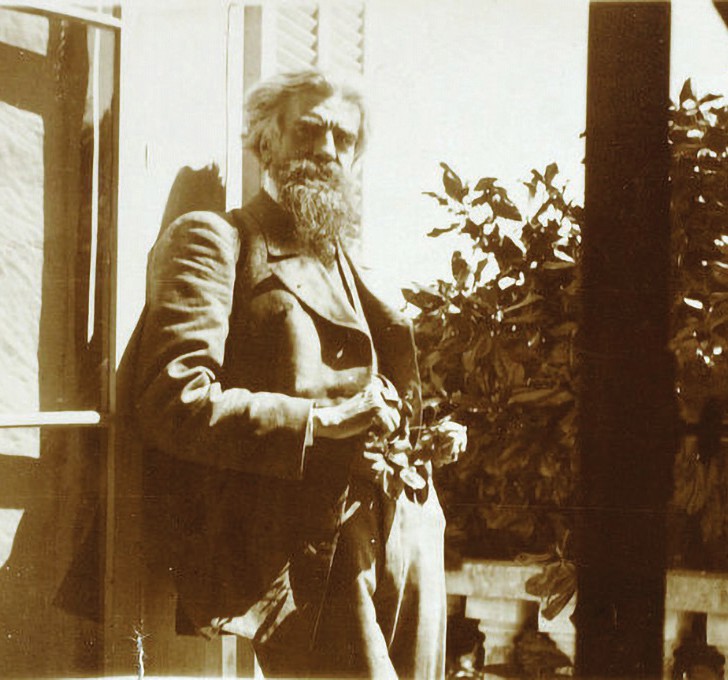
Vladimir Solovyov, Russia’s most influential mystic, a leading figure in the veneration of Sophia, the Mother of God, the father of the Eastern branch of Sophiology, was born in Moscow on 16 January 1853. He was a visionary religious philosopher, theologian, poet and literary critic whose transformative ideas played a pivotal role in the spiritual rebirth of philosophy and poetry. Solovyov’s mother was Ukrainian, his father Russian. His ancestors were Orthodox priests on his father’s side and philosophers on his mother’s side. Through his work, he explored the relationship between the Absolute and the world in the dimensions of logic, metaphysics and ethics, and argued for the primacy of faith over reason.
He sought to develop a theosophical system that could synthesise the worlds of science, philosophy and theology through faith. His name means nightingale, which signifies his mission in life as this bird is a symbol of poetry, philosophy and the Virgin Mary. Solovyov’s life was defined by his mystical relationship with the Mother of God (who is referred to as Sophia or the Blessed Virgin). The Mother of God is said to have appeared to him at the age of nine. Sophia is identical to the being described by the mystics of the Dominican order, who is also revered in Orthodox and esoteric Christianity.
Solovyov was greatly interested in mysticism from a very young age, despite his religious crises. His enthusiasm and his faith, which had seemed lost, were revived by reading Spinoza and the German idealists. His previous revelation was repeated and Sophia sent him to Egypt, where she appeared to him again in the same year. This experience had such an impact on him that he made the veneration of the Mother of God the basis of his life and philosophy. Based on this, he established the ‘doctrine of absolute unity’, a universal synthesis of all aspects of life and existence. This doctrine is very much in line with the philosophy of Rudolf Steiner, the founder of Anthroposophy.
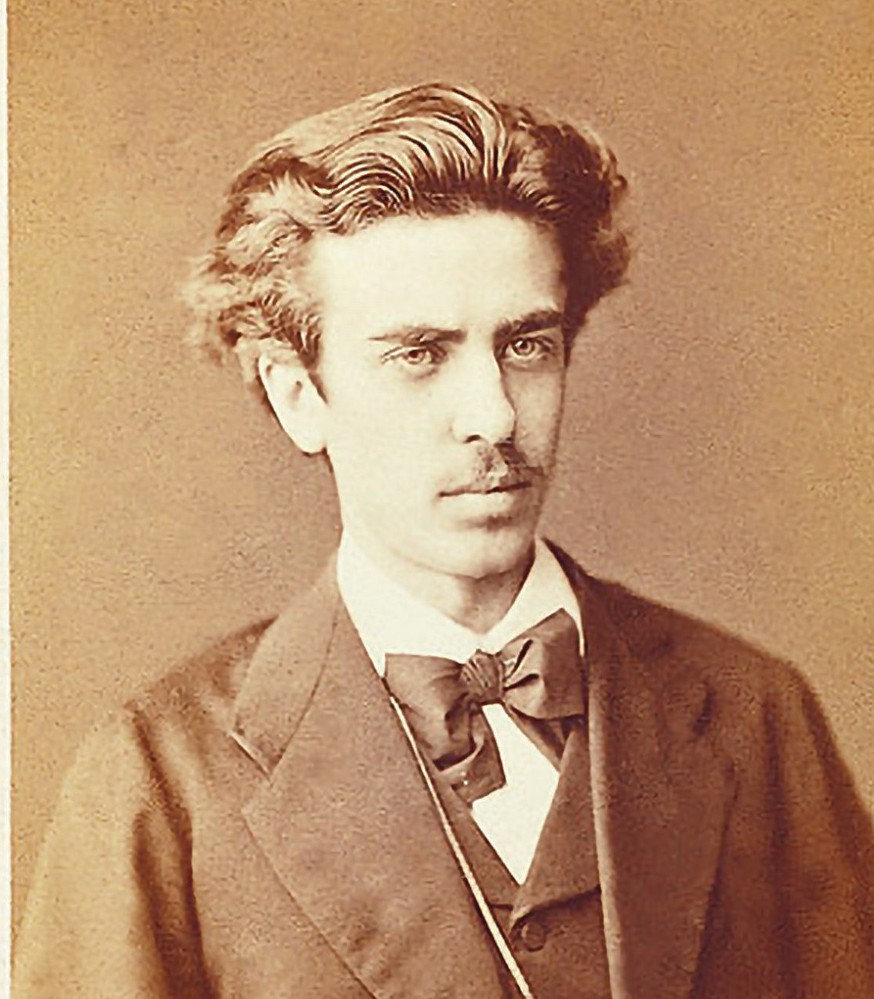
In his view, all that existed was initially in unity with the Logos, yet this unity was later disrupted. Evil then appeared in the world, manifesting itself in two ways: one, which acts in the inner world of man, enkindling egoism and hatred, which he referred to as Satan, while the other, which is present in the outer world and aims to corrupt social life, he referred to as the Demiurge. Solovyov saw these as God’s instruments for the development of complete freedom and love in human beings by overcoming these influences. Sophia is said to aid this process: through his relationship with her, man can overcome Satan in his inner world, while the Demiurge can only be defeated through joint efforts. This is how the theocracy of Christ can be realized.
Solovyov’s first work was published in 1877, yet he only became known through his series of lectures on divinity that began in 1878 and which were attended by Tolstoy and Dostoevsky, among others, with whom he was good friends. Solovyov was a highly charismatic yet divisive figure: some people admired him, while others accused him of heresy. His open goal was to introduce a kind of spiritual and purifying, renewing impulse to social life, and as part of this, he felt it his moral duty, out of divine vocation, to speak the truth without any guile, even at the cost of provoking the disapproval of others. This remained his goal even as the Tsar was assassinated and his successor condemned the perpetrators to death: he courageously spoke out against the death penalty, writing an open letter on forgiveness in the name of Christian spirituality.
From this point on, he was blacklisted by the authorities and was banned from public appearances. From 1894 until his death, he worked on The Tale of the Antichrist, in which he portrayed the Antichrist as a being who deceives humanity in the name of God and the Saviour, suggesting to man that he is capable of controlling the cosmos. Solovyov’s solution to all these predicaments was Sophia. According to the divine plan, man has the task and honour of becoming God’s associate. He retired to his eternal home on 31 July 1900, at 47 years of age. Some religious scholars posit that if the message of Solovyov’s philosophy had been more widely embraced by his contemporaries, the history of the 20th century would have been entirely different. Solovyov’s thoughts and prophecies still carry a timely message for modern mankind and offer answers for the challenges of the 21st century.
“I not only hope, but I am as certain as I am of my own existence, that the truth I have uncovered will sooner or later be understood by others and by everyone, and that it will then, through its inner power, transform this whole world of lies, and forever eradicate the untruth and evil in personal and social life. […] All this will be dispelled like a nightmare by the brightness of Christ’s eternal truth, which mankind has hitherto failed to understand and even rejected.”
“I believe that the reconciliation and peaceful common work of Christian peoples and states is not only possible, but is a necessity and a moral imperative: only in this way can the Christian world be saved from the inferior forces threatening to engulf it.”
“First and foremost we must live, then we must know life, and finally we must make life better.”
“Sophia is God’s body, the matter of Divinity, permeated with the principle of divine unity.”
“The Absolute realises good through truth and beauty.”
“Christ, as God, freely renounces the glory of God and thereby as man acquires the possibility of attaining that glory.”