Simone Weil
1909, France–1943, England
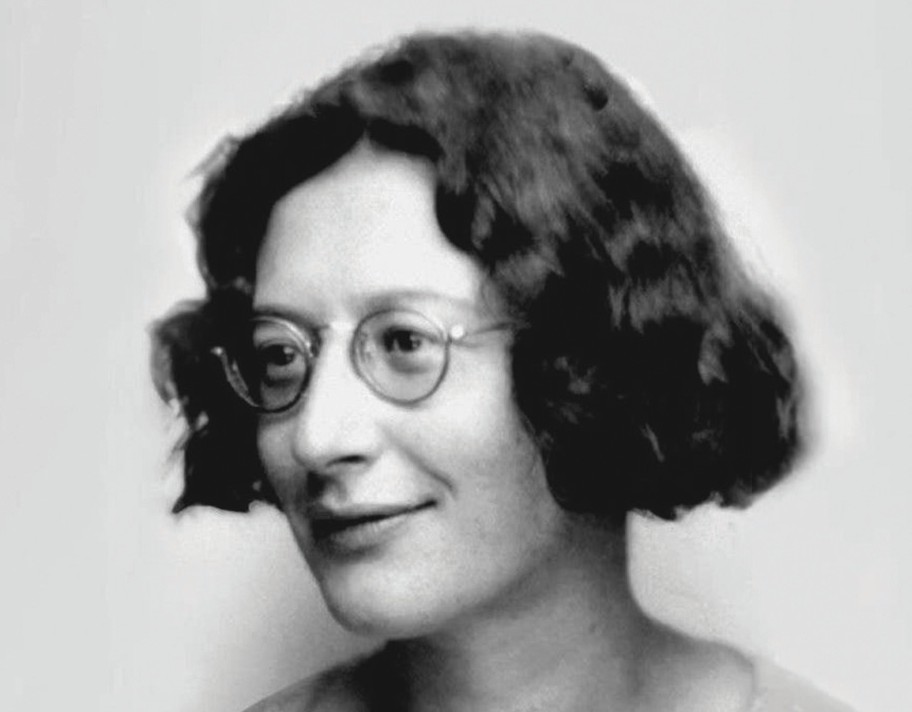
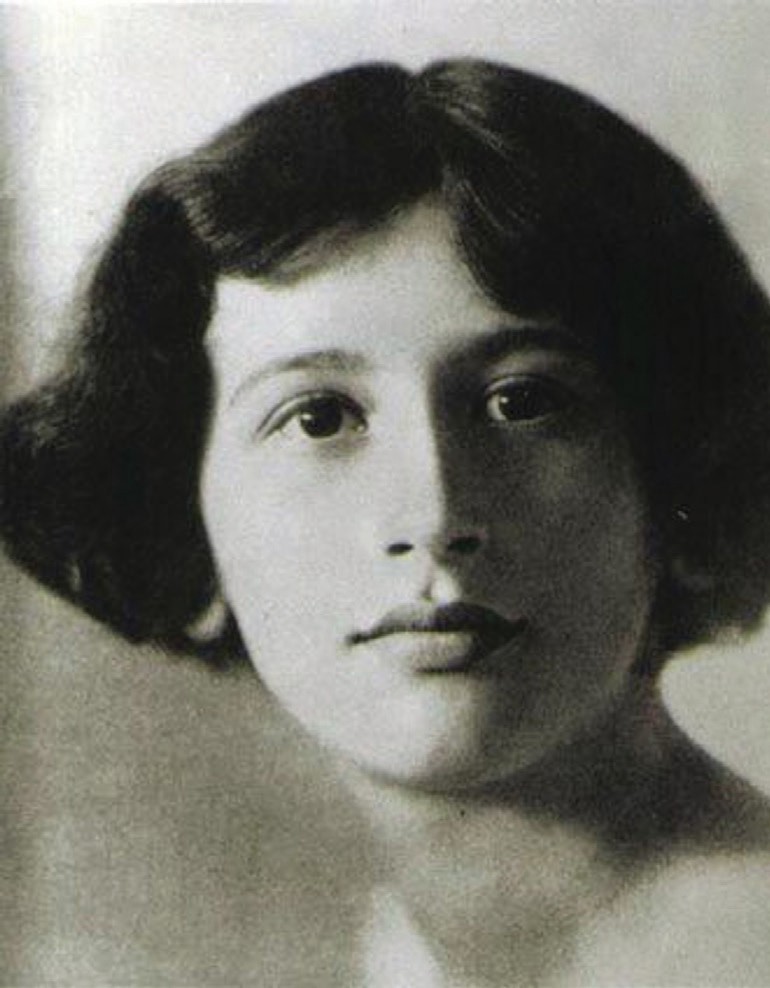
Simone Weil, French writer, activist, philosopher and mystic and one of the most important figures of modern intellectual life was born on 3 February 1909 in Paris into a wealthy, intellectual Jewish family. Albert Camus referred to her as ‘the only great spirit of our time’. Weil gave the world a new perspective that turned thinking upside down. She managed to descend into the darkest depths and search with the light of reason. Her thoughts, published as Cahiers (‘Notebooks’), are undoubtedly some of the most important spiritual works of all time, an exceptional example of the kind of unbiased thinking that few have ever managed to achieve. Although she did not belong to a church and refused to enter one, Weil is considered by many religious scholars to be one of the ‘greatest Christians’ of all time.
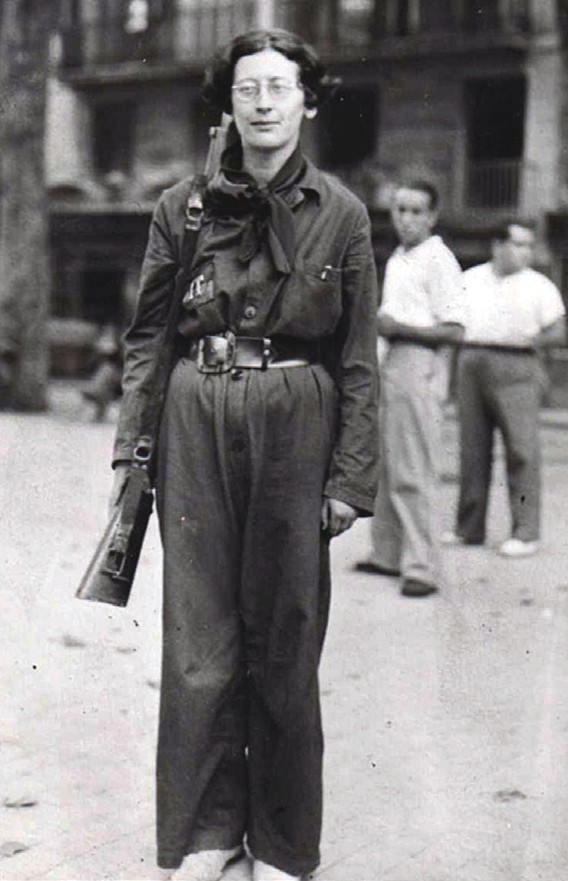
Educated in the secular world, her intelligence and sensitivity were evident from an early age. At the age of five, she first felt the pain of another human being’s suffering when she saw a prisoner of war, and this led her to give up eating sweets out of compassion. Believing that “any man, however vile his intellect, yet led by a singular and unquenchable desire for justice, can surely reach the realm reserved for geniuses,” she enrolled at the Sorbonne, where she studied philosophy, classics, philology and natural sciences. In the course of her short and adventurous life, she was involved in the Spanish Civil War, took part in the French Resistance for a time and was also imprisoned.
She qualified as a teacher in 1931 and taught philosophy and Greek in rural girls’ schools. Her social and political activities were mostly frowned upon by school authorities and she was often forced to change jobs. She focused her students’ attention on the common ground of knowledge, yet she valued sensitivity to problems and an attitude free of dogma more than knowledge itself. She wore a military-style greatcoat, wrote in left-wing publications and was simultaneously a socialist, a Christian and a revolutionary in the purest sense of the words. She was constantly rebelling, arguing and debating, and frequently participated in demonstrations, unable to tolerate injustice. She gave most of her income to the destitute, and she consciously wished to share in their fate.
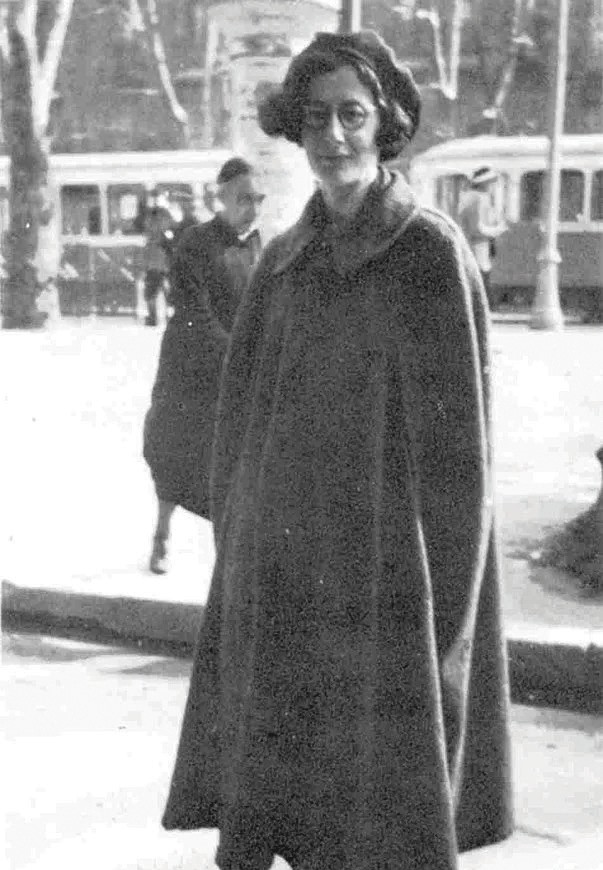
In 1934, she took a job at a car factory, where she learned of the soul-crushing effects of mechanised work and the lives of the exploited. Her faith in the revolution was shaken by the hypocrisy and manipulation she saw. During a visit to Assisi in 1937, she was touched by the simplicity and modesty of St Francis. In 1941, she met Father Perrin, a Dominican friar with whom she had regular conversations about Christian faith and being a member of the Church, yet despite his urging, she still remained unwilling to join the Church. She viewed people’s political and social activism as a substitute for religion. She believed it was “better for some sheep to stay outside the pen”. She never sought God, because, as she put it, she was “in his loving arms from the beginning”.
In the truest sense of the word, she felt and lived her life according to the true meaning of one’s ‘love of fate’. For Weil, the cross was an evident truth that symbolised both hope and suffering – the latter of which she extensively experienced throughout her life. After she arrived in England, exhausted by her forced emigration to America, she was already suffering from heart failure and tuberculosis. Her essays “Uprootedness” and “The Need for Roots: Prelude to a Declaration of Duties Towards Mankind” were a spiritual testament of sorts.
She finally passed away in Ashford, England, on 24 August 1943, at the age of 34, due to starvation as out of solidarity, she refused to accept more food than the rations provided to the surrounded Parisians. According to authentic sources, she was baptised at a hospital before her death by her friend, Simone Deitz. Her manuscripts were published shortly after her death thanks to Albert Camus, earning her worldwide recognition. Simone Weil’s oeuvre was authenticated by her voluntary solidarity with the suffering in the world.
“The things of this world are like flowers that are fragrant and beautiful only when they are plucked.”
“God crosses the universe and comes to us. Over the infinity of space and time, the infinitely more infinite love of God comes to possess us. He comes at his own time. We have the power to consent to receive him or to refuse. If we remain deaf, he comes back again and again like a beggar, but also, like a beggar, one day he stops coming. If we consent, God puts a little seed in us and he goes away again. From that moment God has no more to do; neither have we, except to wait. We only have not to regret the consent we gave him, the nuptial yes.”
“Appearance clings to being, and pain alone can tear them from each other.”
“We must prefer real hell to an imaginary paradise.”
“God exists: God does not exist. The devil exists: The devil does not exist. “To you I grant all this power.”
“I still think today, that one can never wrestle enough with God if one does so out of pure regard for the truth. Christ likes us to prefer truth to him because, before being Christ, he is truth. If one turns aside from him to go toward the truth, one will not go far before falling into his arms.”
“Joy is nothing other than the feeling of reality. Sadness is nothing other than the weakening or disappearance of this feeling.”
“There is a period when the soul is already detached from the world without being yet able to attach itself to God: void, terrible anguish, dark night.”